/search_thin.svg)
/currency.svg)
/heart.svg)
/user.svg)
/cart.svg)
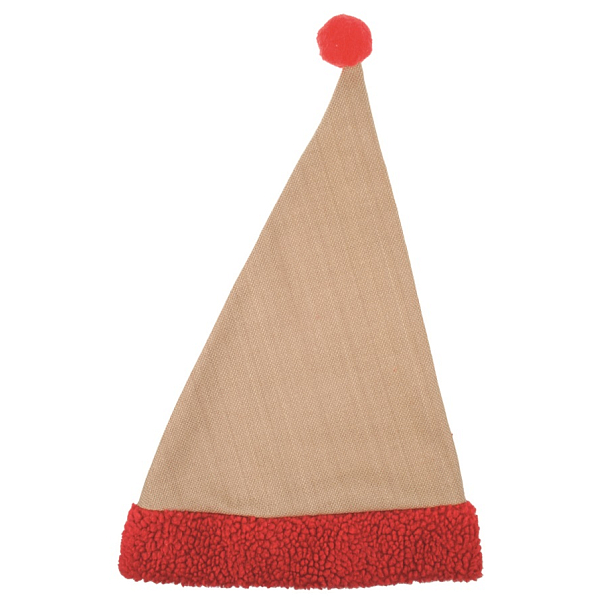
Hessian Santa Hat with Red Trim 47 cm
Produkt již není možné zakoupit. V případě zájmu Vám náš zákaznický servis sdělí informaci o dostupnosti zboží.
Product description Hessian Santa Hat with Red Trim 47 cm
| Manufacturer | Made in PCR |
| Species | Santa hat |
| Packaging | 144 |
Hessian Santa hat
- with red trim
- 47 cm
- 1 piece
Saint Nicholas of Myra was a bishop in Myra, Lycia. Even during his lifetime, he was very popular among people, renowned for his generosity towards the needy, as a defender of faith against paganism, and as a savior of the unjustly accused. Due to the numerous miracles that occurred through his intercession, he is sometimes called Nicholas the Wonderworker (Νικόλαος ὁ Θαυματουργός, Nikolaos ho Thaumaturgos). He is one of the most venerated saints in all of Christianity, and in the Eastern Churches, he is the second most venerated saint overall (after the Virgin Mary).
In the Western liturgical tradition, his feast day falls on December 6th, and the celebration of this feast is associated with giving gifts to children (usually on the eve of December 5th). He was an inspiration for the creation of the mythical figure of Santa Claus, with the addition of other attributes.
Saint Nicholas is revered as the patron of sailors, merchants, archers, children, pharmacists, lawyers, students, and prisoners. He is also the patron of countries (Russia) and cities (Amsterdam, Bari, Barranquilla, etc.).
Like all saints of his time, St. Nicholas of Myra was never officially declared a saint; his veneration simply became part of the faith of broad social strata and gradually spread, with the greatest expansion occurring from the 8th century in Russia, where he is a patron. Gradually, his cult spread to other Slavic countries and from the 10th century to Europe, especially Germany, France, and England. He is recognized as a saint by all Christian churches that practice veneration of saints; among the Orthodox, he is considered the most venerated saint[3] (excluding the Virgin Mary), and he is also very popular in the Netherlands, Germany, and the USA.
Throughout Europe, we often find cycles depicting scenes from Nicholas's life – for example, in the German city of Konstanz from the 15th century or in the Church of the Virgin Mary in Gdańsk. Across the world, there are tens of thousands of churches dedicated to Saint Nicholas, including the Basilica di San Nicola in Bari, where his relics are kept, from which liquid has been flowing for several centuries, attributed with healing properties[4][5]. In the Czech Republic, there is, for example, the Cathedral of St. Nicholas in České Budějovice, and in Prague, there are churches in the Old Town Square, in Malá Strana, and a baroque one in Vršovice. In Brno, there was the Church of St. Nicholas in Náměstí Svobody. More about the topic can be found in the article List of Churches Dedicated to Saint Nicholas.
In the Czech Republic and Slovakia today, during the so-called Nicholas gift-giving, Nicholas is portrayed in bishop's robes with a long white beard and is accompanied by angels and devils. This group visits households with children on December 5th, the eve of St. Nicholas' feast day. Angels and Nicholas distribute gifts, while devils take care of symbolic punishment and scaring naughty children. However, Nicholas was not always accompanied by an angel and a devil. Sometimes, a local policeman would accompany him. The angel is the most modern version among all companions. Overall, Nicholas serves as a kind of preparation for Christmas, when gifts that are not very valuable and permanent are given, but rather just some treats or small gifts for luck; however, at the time when this tradition originated, when similar delicacies and certain types of fruit were less accessible, this was valued much more than today. In all times, this tradition was primarily about the experience rather than the gifts.
| Manufacturer | Made in PCR |
| Species | Santa hat |
| Packaging | 144 |
Hessian Santa hat
- with red trim
- 47 cm
- 1 piece
Saint Nicholas of Myra was a bishop in Myra, Lycia. Even during his lifetime, he was very popular among people, renowned for his generosity towards the needy, as a defender of faith against paganism, and as a savior of the unjustly accused. Due to the numerous miracles that occurred through his intercession, he is sometimes called Nicholas the Wonderworker (Νικόλαος ὁ Θαυματουργός, Nikolaos ho Thaumaturgos). He is one of the most venerated saints in all of Christianity, and in the Eastern Churches, he is the second most venerated saint overall (after the Virgin Mary).
In the Western liturgical tradition, his feast day falls on December 6th, and the celebration of this feast is associated with giving gifts to children (usually on the eve of December 5th). He was an inspiration for the creation of the mythical figure of Santa Claus, with the addition of other attributes.
Saint Nicholas is revered as the patron of sailors, merchants, archers, children, pharmacists, lawyers, students, and prisoners. He is also the patron of countries (Russia) and cities (Amsterdam, Bari, Barranquilla, etc.).
Like all saints of his time, St. Nicholas of Myra was never officially declared a saint; his veneration simply became part of the faith of broad social strata and gradually spread, with the greatest expansion occurring from the 8th century in Russia, where he is a patron. Gradually, his cult spread to other Slavic countries and from the 10th century to Europe, especially Germany, France, and England. He is recognized as a saint by all Christian churches that practice veneration of saints; among the Orthodox, he is considered the most venerated saint[3] (excluding the Virgin Mary), and he is also very popular in the Netherlands, Germany, and the USA.
Throughout Europe, we often find cycles depicting scenes from Nicholas's life – for example, in the German city of Konstanz from the 15th century or in the Church of the Virgin Mary in Gdańsk. Across the world, there are tens of thousands of churches dedicated to Saint Nicholas, including the Basilica di San Nicola in Bari, where his relics are kept, from which liquid has been flowing for several centuries, attributed with healing properties[4][5]. In the Czech Republic, there is, for example, the Cathedral of St. Nicholas in České Budějovice, and in Prague, there are churches in the Old Town Square, in Malá Strana, and a baroque one in Vršovice. In Brno, there was the Church of St. Nicholas in Náměstí Svobody. More about the topic can be found in the article List of Churches Dedicated to Saint Nicholas.
In the Czech Republic and Slovakia today, during the so-called Nicholas gift-giving, Nicholas is portrayed in bishop's robes with a long white beard and is accompanied by angels and devils. This group visits households with children on December 5th, the eve of St. Nicholas' feast day. Angels and Nicholas distribute gifts, while devils take care of symbolic punishment and scaring naughty children. However, Nicholas was not always accompanied by an angel and a devil. Sometimes, a local policeman would accompany him. The angel is the most modern version among all companions. Overall, Nicholas serves as a kind of preparation for Christmas, when gifts that are not very valuable and permanent are given, but rather just some treats or small gifts for luck; however, at the time when this tradition originated, when similar delicacies and certain types of fruit were less accessible, this was valued much more than today. In all times, this tradition was primarily about the experience rather than the gifts.
Products similar to Hessian Santa Hat with Red Trim 47 cm you can also find in the following categories:
Recently visited products