/search_thin.svg)

/currency.svg)
/heart.svg)
/user.svg)
/cart.svg)

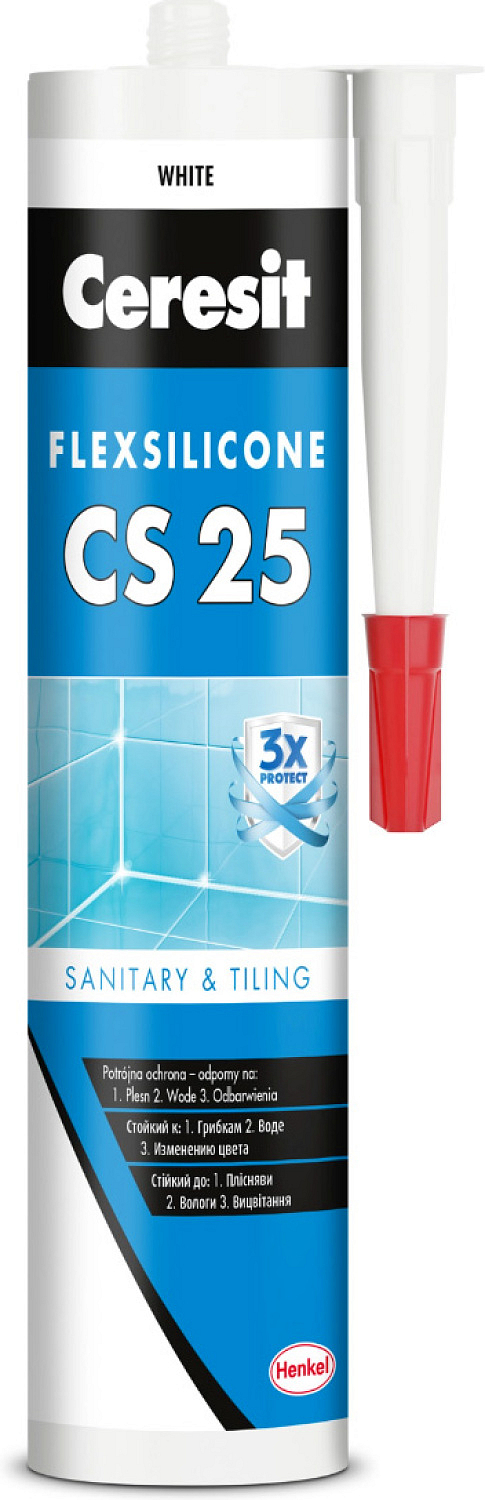
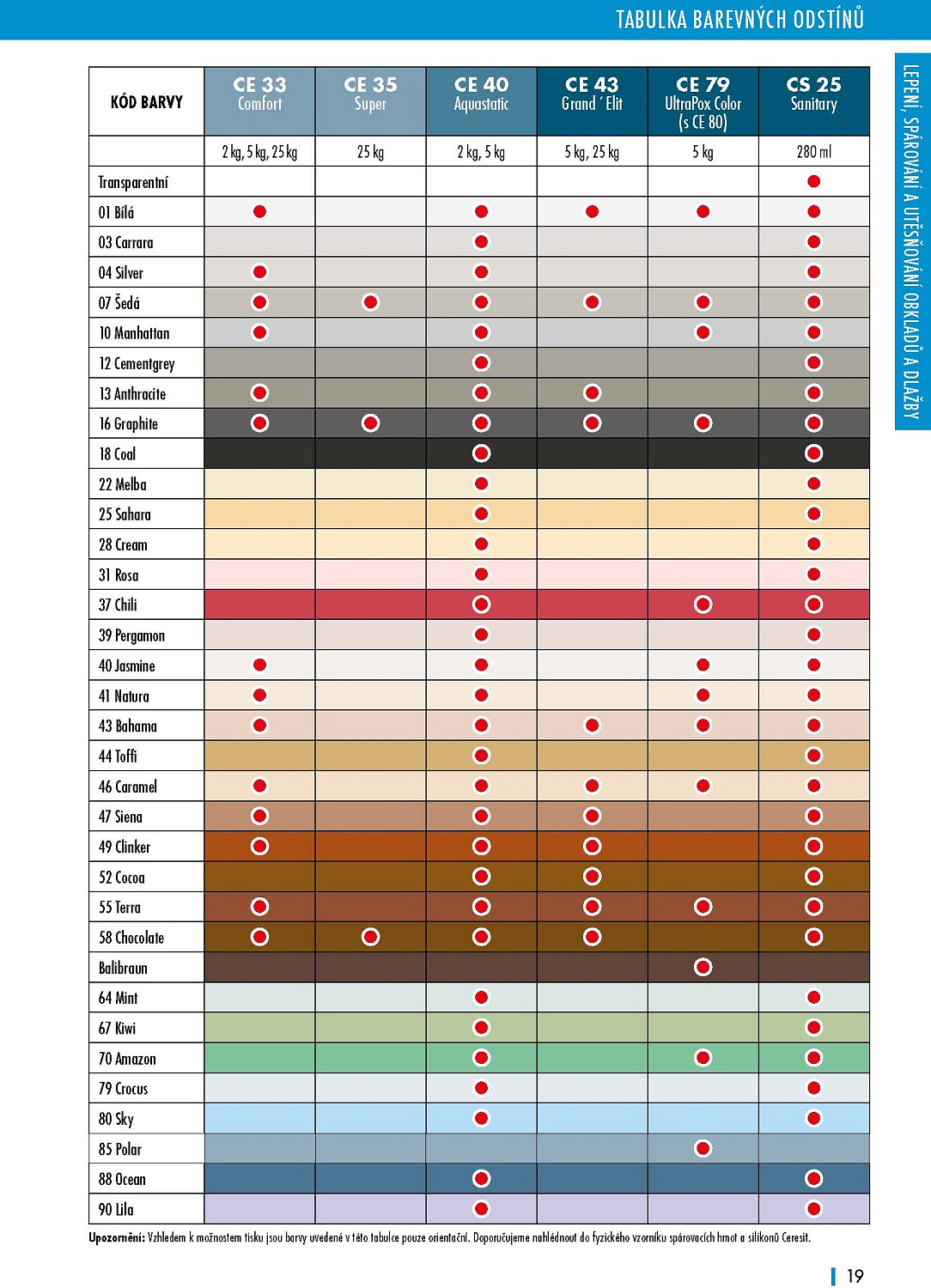
Ceresit CS25 sanitary silicone, transparent, 280 ml
Code: 63076100%
1 review
In stock
Date and method of delivery
Producer:
Schwarzkopf & Henkel, Germany
:
Henkel Ceresit (web)

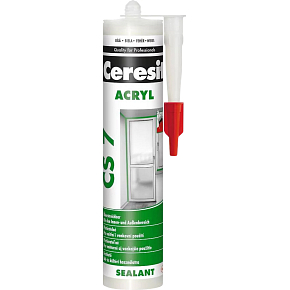
Designed for filling expansion and connecting joints between ceramic tiles and flooring in corners or at the junction of walls, floors, and for fixing sanitary appliances in sanitary areas.Read more
Choose a discounted package
Quantity discounts
/envelope.svg)
Query
/bell.svg)
Watch
/share.svg)
Share
PARAMETERS
Producer:
Code:
63076
ean:
8691451080400
Status:
Manufacturer:
Schwarzkopf & Henkel, Germany
Packaging:
12
Health hazard:
Health hazard
Description Ceresit CS25 sanitary silicone, transparent, 280 ml
The Ceresit CS 25 sanitary silicone is designed for filling expansion and connecting joints between ceramic tiles and flooring in corners or at the junction of walls, floors, and for fixing sanitary appliances in sanitary areas. It is intended for filling joints where conventional grouts show cracks and fissures. Thanks to its permanent elasticity and water resistance, it is suitable for areas permanently exposed to moisture, such as: kitchens, showers, bathrooms, toilets, balconies, terraces, etc.
The unique TrioProtect formula protects the silicone from mold, fungi, and other undesirable microorganisms. The material has excellent adhesion to dry and non-absorbent substrates such as glass, ceramics, porcelain, etc. For filling joints and cracks in masonry, plasters, marbles, concrete, and cement screeds, use other sealants from the Ceresit range. The Ceresit CS 25 sanitary silicone is suitable for use in drinking water tanks.
CS 25 is not recommended for use in environments with permanent water exposure, therefore it is unsuitable for gluing aquariums. The silicone is not suitable for bonding mirrors and metals subject to corrosion (such as lead, zinc, copper, iron).
PROPERTIES:
- increased resistance to mold - triple MicroProtect protection
- permanently elastic
- waterproof
- resistant to high temperatures
- for indoors and outdoors
Product safety warnings (H-statements)
- H317: May cause an allergic skin reaction.
- H412: Harmful to aquatic life with long-lasting effects.
Safety handling instructions (P-statements)
- P101: If medical attention is needed, have product container or label at hand.
- P102: Keep out of reach of children.
- P262: Avoid contact with eyes, skin, or clothing.
- P271: Use only outdoors or in a well-ventilated area.
- P273: Avoid release to the environment.
- P280: Wear protective gloves/protective clothing/eye protection/face protection.
- P501: Dispose of contents/container in accordance with product instructions.
| Health hazard: | Health hazard |
Preparation of the substrate:
Sanitary silicone Ceresit CS 25 can be applied to dry substrates free from substances affecting adhesion such as fats, resins, dust (in these cases, the substrates need to be degreased). Remove contaminants and layers with insufficient adhesion, and if necessary, degrease and clean the substrate. Clean the joints and edges of the tiles from adhesive residue. Apply the sealant when the previous materials (adhesive mortars and jointing materials) are sufficiently dry and cured. The edges of the joints can be bordered with adhesive tape, which facilitates the removal of excess silicone from the surrounding area. In the case of sealing expansion joints, first press Ceresit CS 40 polyethylene cord into the pre-cleaned joint so that the silicone can adhere only to the sides of the elements defining the joint, but not to the substrate (avoid a solid three-point bond). The thickness of the joint filling must be at least 1/2 of its width, see technical data CS 25 (i.e., 5–30 mm).
Application:
Unscrew the applicator nozzle from the CS 25 cartridge and cut off the cap at the top end. Screw the nozzle back on and cut it at an angle to the appropriate diameter according to the joint width. Insert the cartridge into the caulking gun and extrude the sealing sealant into the joints so that no voids are left under the sealant. During the first 5 minutes, lightly moisten the joint area with clean water mixed with a small amount of soap or cleaning agents. With a spatula dipped in the solution, remove the excess material in one direction. Ensure that no depressions are formed on the surface of the silicone, where water can accumulate. Smooth the surface of the sealant by lightly running a finger moistened in soapy solution over it. If using adhesive tape, remove it immediately after smoothing. Fresh sealant can be washed away with water mixed with a small amount of detergent or soap (or technical alcohol). Cured material can only be removed mechanically (e.g., with a utility knife). If work is interrupted for a longer time, screw the cap back on the tip of the applicator nozzle. When reusing, remove any cured material from the applicator nozzle. We recommend processing opened packages as soon as possible. Silicone consumption depends on the size of the joint.
Use within 18 months from the date of manufacture (marked on the packaging). Store in a dry and cool environment, protect from frost.
'
The product is also suitable for use in households. Density = 0.97 g/cm3. VOC <0.01 kg/kg. TOC: 0.35 kg/kg.
May cause sensitization upon skin contact. Keep out of reach of children. Avoid contact with skin. In case of contact with skin, wash with water and soap and treat with a suitable moisturizing cream. In case of eye contact, rinse with running water for about 10 minutes and seek medical attention. If swallowed, rinse mouth, drink 1-2 glasses of water, and seek medical attention. Use only in well-ventilated areas.

Nebezpečnost pro zdraví - dráždivé látky
Nebezpečí
Může způsobit podráždění dýchacích cest. Může způsobit ospalost nebo závratě. Může vyvolat alergickou kožní reakci. Způsobuje vážné podráždění očí. Dráždí kůži. Zdraví škodlivý při požití. Zdraví škodlivý při styku s kůží. Zdraví škodlivý při vdechování. Rozkladem ozonu v horních vrstvách atmosféry poškozuje veřejné zdraví a životní prostředí.
Varování. Pokyny pro bezpečné zacházení
Zamezte vdechování prachu/dýmu/plynu/mlhy/par/aerosolů. Používejte pouze venku nebo v dobře větraných prostorách. Při vdechnutí: přeneste postiženého na čerstvý vzduch a ponechte jej v klidu v poloze usnadňující dýchání. Při požití: necítíte-li se dobře, volejte TOXIKOLOGICKÉ INFORMAČNÍ STŘEDISKO nebo lékaře. Používejte ochranné rukavice / ochranný oděv / ochranné brýle / obličejový štít. Při styku s kůží: omyjte velkým množstvím vody a mýdla. Při zasažení očí: několik minut opatrně vyplachujte vodou. Vyjměte kontaktní čočky, jsou-li nasazeny, a pokud je lze vyjmout snadno. Pokračujte ve vyplachování. Při používání tohoto výrobku nejezte, nepijte ani nekuřte. Uchovávejte mimo dosah dětí.
Documents
Bezpečnostní list
/document.svg)
Katalogový list
review Ceresit CS25 sanitary silicone, transparent, 280 ml
100%
1 review
1
Not rated
Not rated
Not rated
Not rated
Verified customer
Do koupelny
Review verified by Heureka
Related products
AKCE

Code:
70116
94%
8.10 EUR
4.05EUR/1ks
In stock
/heart.svg) Favorite
Favorite/compare.svg) Compare
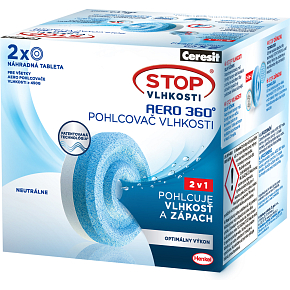
CompareReplacement filling for the Ceresit Stop Humidity Aero 360° moisture absorber.
AKCE
Code:
2009445
9.58 EUR
4.79EUR/1ks
In stock
FavoriteCompareCeresit Aero 360° replacement tablets – Freshness of Waterfalls effectively absorb moisture and neutralize odors for up to 3 months. With essential oils and the fresh scent of nature.
AKCE
Code:
76345
92%
10.57 EUR
23.49EUR/1kg
In stock
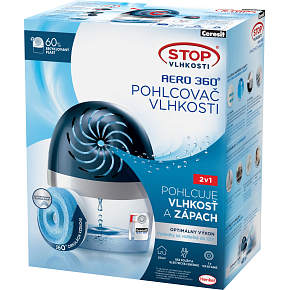
FavoriteCompareThe Ceresit Stop Humidity Aero 360° moisture absorber helps to optimize excess humidity in the air and neutralizes odors through airflow.
AKCE
Code:
1806528
100%
10.64 EUR
23.64EUR/1kg
In stock
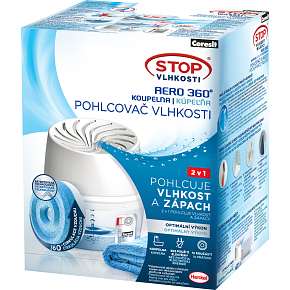
FavoriteCompareThe moisture absorber absorbs excess moisture, reduces the formation of mold, and neutralizes odors, releasing a pleasant fragrance.
AKCE
Code:
89483
100%
14.11 EUR
7.84EUR/1kg
In stock
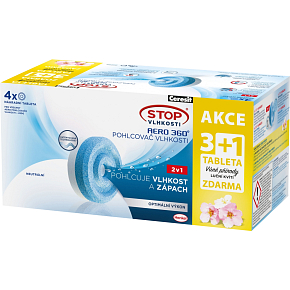
FavoriteCompareReplacement refill for the Ceresit Stop Moisture Aero 360° dehumidifier.
AKCE
Code:
58081
83%
4.03 EUR
2.02EUR/1ks
In stock
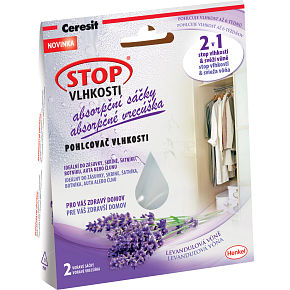
FavoriteCompareAbsorption bags for individual use; ideal for very small, enclosed spaces with an area of 1–2 m² and poor air circulation.
AKCE
Code:
1601468
4.03 EUR
2.02EUR/1ks
In stock
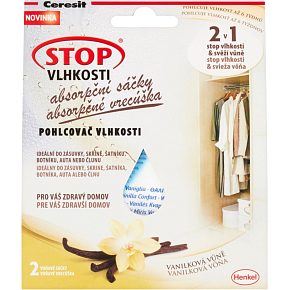
FavoriteCompareCeresit Stop Moisture Absorbent Bags with a gentle vanilla scent effectively absorb moisture and fragrance small spaces for up to 6 weeks.
AKCE
Code:
1601757
4.03 EUR
2.02EUR/1ks
In stock
FavoriteCompareCeresit Stop Moisture Absorbent Bags with energetic fruit scent absorb moisture, release a fresh scent, and keep your belongings dry and fragrant for up to 6 weeks.
AKCE
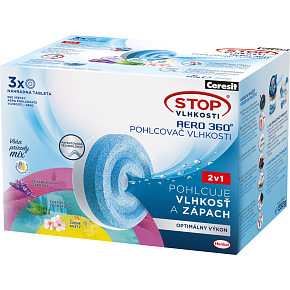
Code:
2500164

13.01 EUR
4.34EUR/1ks
In stock
FavoriteCompareRefill for the moisture absorber Ceresit Stop Moisture Aero 360°.
AKCE
Code:
81498
92%
11.99 EUR
26.64EUR/1kg
In stock
FavoriteCompareMoisture absorber with 360° air circulation. Reduces moisture and odors.
AKCE
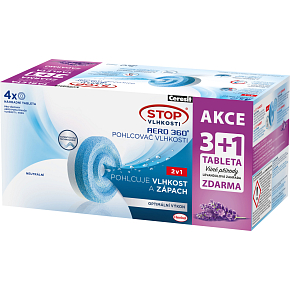
Code:
82562
100%
14.11 EUR
3.53EUR/1ks
In stock
FavoriteCompareReplacement cartridge for the Ceresit Stop Moisture Aero 360° moisture absorber.
Variants of this product
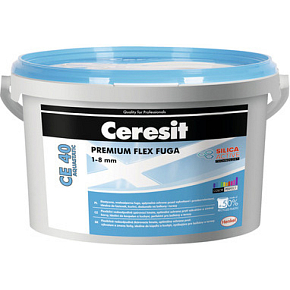
Code:
2506941
10.11 EUR
5.06EUR/1kg
In stock
FavoriteCompareCeresit CE 40 Aquastatic is a high-quality flexible grout designed for joints with a width of 2 to 8 mm.
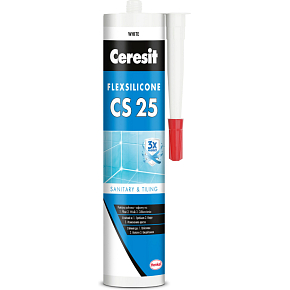
Code:
2506890
9.37 EUR
33.46EUR/1l
In stock
FavoriteCompareDesigned for filling expansion and connection joints between ceramic tiles and pavings in corners or at the junction of walls, floors, and for installing sanitary ware in the sanitary area.
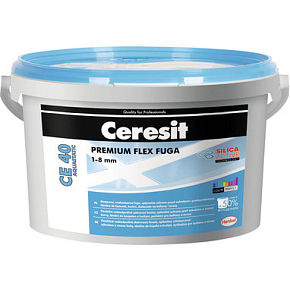
Code:
2506951
10.11 EUR
5.06EUR/1kg
In stock
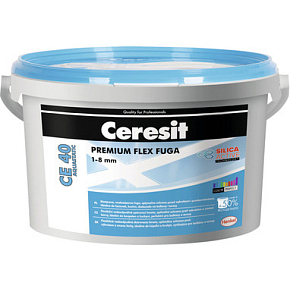
FavoriteCompareCeresit CE 40 Aquastatic is a high-quality flexible grout intended for joints 2 to 8 mm wide.
Code:
2506969
18.77 EUR
3.75EUR/1kg
In stock
FavoriteCompareCeresit CE 40 Aquastatic is a high-quality flexible grout designed for joints of 2 to 8 mm wide.
Code:
2600672
13.36 EUR
2.67EUR/1kg
In stock
FavoriteCompareCeresit CE 33 is a grout for ceramic, glass, and stoneware coverings and tiles in interiors without requirements for water tightness or chemical resistance.
Code:
65763
100%
2.79 EUR
9.96EUR/1l
In stock
FavoriteCompareDispersion sealing sealant for filling joints and cracks indoors and outdoors.
AKCE
Code:
2600552
3.54 EUR
12.64EUR/1l
In stock
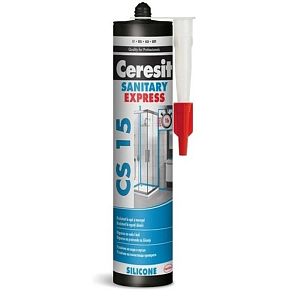
FavoriteCompareCERESIT CS 15 Express Sanitary is a quick-drying silicone sealant that reliably seals joints in the bathroom and kitchen, providing protection against moisture, water, and mold after just one hour.
Code:
62755
100%
9.37 EUR
33.46EUR/1l
In stock
FavoriteCompareDesigned for filling expansion and joining joints between ceramic tiles and flooring in corners or at the junction of walls, floors, and for setting sanitary ware in the sanitary area.
Code:
2506648
10.08 EUR
33.6EUR/1l
In stock
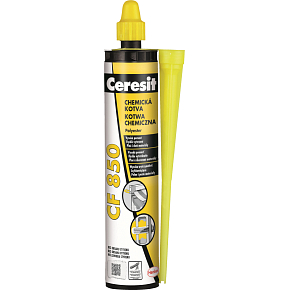
FavoriteCompareSecure anchoring in all types of materials, completely replacing dowels.
Code:
2600685
10.11 EUR
5.06EUR/1kg
In stock
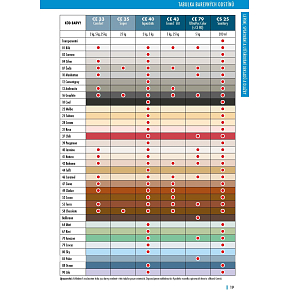
FavoriteCompareCeresit CE 40 Aquastatic is a high-quality flexible grout designed for joints 2 to 8 mm wide.
Code:
2507970
11.24 EUR
13.22EUR/1l
In stock
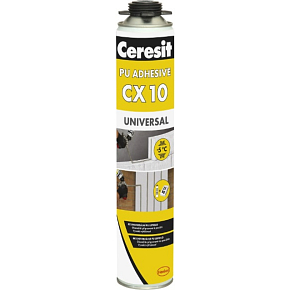
FavoriteCompareCERESIT CX 10 is a universal polyurethane adhesive designed for fast bonding of various construction materials with high adhesion, particularly suitable for non-load-bearing interior walls.
Code:
2600670
6.93 EUR
3.47EUR/1kg
In stock
FavoriteCompareCeresit CE 33 is a grout for ceramic, glass, and stoneware tiles in interiors without demands for waterproofing or chemical resistance.
Recently visited products