
/currency.svg)
/heart.svg)
/user.svg)
/cart.svg)

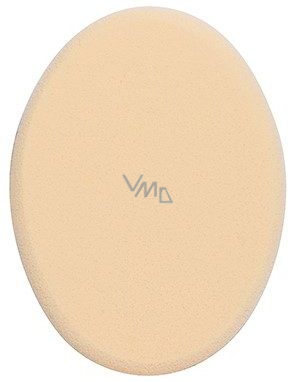
Makeup sponge 7.5 x 6 cm
Code: 1904656dnů:2
Date and method of delivery
Producer:
Made in PCR
:
Augustus

Houbička na make-up k nanášení a roztírání líčidel. Vykouzlit dokonalý make-up je kumšt. Některá nedRead more
Choose a discounted package
Quantity discounts
/envelope.svg)
Query
/bell.svg)
Watch
/share.svg)
Share
PARAMETERS
Producer:
Code:
1904656
ean:
8591090409733
Status:
Packaging:
1
Color:
Manufacturer:
Made in PCR
Description Makeup sponge 7.5 x 6 cm
Houbička na make-up k nanášení a roztírání líčidel. Vykouzlit dokonalý make-up je kumšt. Některá nedá dopustit na štětce, jiná spoléhá na jemné doteky bříšek prstů. Hitem posledních let jsou ale především měkké houbičky různých tvarů.
| Color: |
Most sponges are used when wet.
It is therefore necessary to soak them and gently, but really thoroughly, squeeze the water out of them. Moisture prevents the sponge from absorbing too much product (which is why you should choose ones with smaller pores). It also allows for an even application of makeup in a very thin layer without streaks. The surface of the skin then appears natural and compact. You can apply a tinting texture with a sponge, whether it has a solid or liquid consistency. Apply it to the back of your hand or directly onto the sponge and gently and lightly work it into the skin by "dabbing," from the center of the face to its edges. The sponge adapts to the surface of the skin, mimicking it, and the products do not settle into small imperfections, wrinkles, or lines. You can use the same technique to apply concealer, highlighter, or powder. It will help you create truly seamless transitions.Cleaning the sponge is essential
Although there are still disposable sponges, many of them today boast longer durability and can last for several months. However, it is necessary to take care of them. First and foremost, wash them regularly and gently. There are special cleaners for this, but you can easily handle it with a makeup remover or very mild soap or baby shampoo. Give them care. It will reward you with flawless makeup that you can create in just a few minutes.
Stubborn and hard sponges for applying makeup have until recently discouraged most of us. Their appearance has hardly changed since the 1920s, when they were introduced to the world of film cosmetics by the company Max Factor. For a simple reason. Make-up at that time existed in such a solid form that it needed to be diluted with water to release the color pigment. Small triangular sponges were perfect for that.Up to 21. The century, thanks to new manufacturing technologies and materials used, once again secured them a place in the spotlight. Today, they have such qualities that they have become indispensable cosmetic helpers.
The basic measure to recognize a quality sponge is softness, flexibility, and low porosity. But there is no guaranteed guide on how to choose the right one. What suits one person may not meet the requirements of another. To achieve the best possible result, it is probably best to try out what it can do. They can be latex, foam, made from natural materials, and the latest trend is silicone. The raw materials used for production therefore differ in their properties. Moreover, they can have various shapes, which can also affect the use of the sponge. Generally, smaller shapes can be successfully used on small surfaces. For example, under the eyes, in the corners of the eyes, around the nostrils, and so on. Larger ones will perfectly handle the remaining parts of the face.
One of the basic shapes is the triangle.
You can get it in various sizes. With the fine edges of the small ones, you can apply a tinting texture even to the smallest corners, while the large ones are suitable for application on the forehead or cheeks. The oval shape of the sponge is ideal for larger surfaces. You can usually apply makeup with it quickly, but with less precision. Popular are sponges with handles. They also come in various shapes and sizes, suitable for applying unifying or other products, as well as for popular contouring.Among the recent favorites are sponges with a conical shape, or let's say in the form of a drop. Thanks to the tip and the more robust base, you can flawlessly apply any product with them, covering the entire face down to the smallest crease. From concealer to foundation, eyeshadow to blush. Also various serums and sunscreen products. Their tip easily handles contouring.Related products
-19%Discount

Code:
40288
0.35 EUR
0.43 EUR
In stock
/heart.svg) Favorite
Favorite/compare.svg) Compare
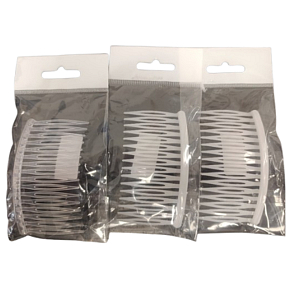
CompareCreate your account according to your imagination with the plastic hair comb. It is also suitable