/currency.svg)
/heart.svg)
/user.svg)
/cart.svg)
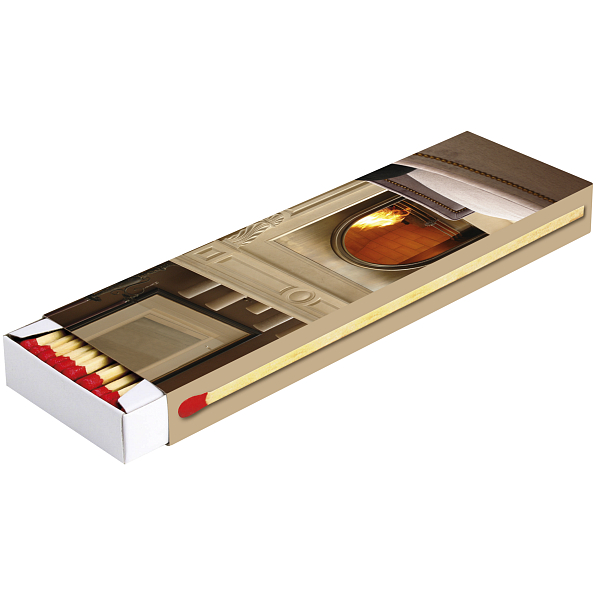
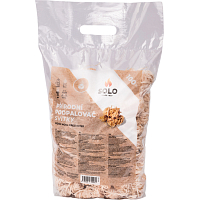
KM Camino Maxi fireplace matches 20 cm 45 pieces
Produkt již není možné zakoupit. V případě zájmu Vám náš zákaznický servis sdělí informaci o dostupnosti zboží.
Product description KM Camino Maxi fireplace matches 20 cm 45 pieces
| Manufacturer | Km Plus spol.s.r.o. |
| Flammable | Flammable |
| Species | matches |
| Packaging | 24 |
Matches (also matches) are elongated pieces of wood, e.g. aspen, spruce or poplar, less often cardboard, with an ignitable substance at one of its ends, which are used to start a fire. The shafts are also partially or completely saturated with a substance that facilitates combustion. The ignitable substance at the end of the shaft, the so-called head, catches due to friction.
Light at a safe distance from the body.
| Manufacturer | Km Plus spol.s.r.o. |
| Flammable | Flammable |
| Species | matches |
| Packaging | 24 |
Keep out of the reach of children. Light at a safe distance from the body.
To start a fire, our Stone Age ancestors used two suitable sticks, which were rubbed together until the friction surfaces reached a sufficient temperature. Then they added tinder and blew on the fire to ignite it. This system is still used by primitive peoples today. Later, people developed flint, where the spark ignited a sponge. Then people invented chemical lighters and matches.
- Nowadays, most matches catch solely as a result of a suitably vigorous scratching of the head against a specially prepared surface - the striker.
- This solution virtually eliminates spontaneous or uncontrolled ignition of the match by accidental rubbing of the match against another surface.
- Prior to this, phosphorus matches were used for a long time, which ignited when vigorously struck against any dry and rough surface (e.g. the sole of a shoe).
Match heads are now composed mainly of potassium chloride, antimony sulphide, sulphur, dye and ground glass, which gives the head a roughness to increase friction. Match shafts are saturated with liquid paraffin, which facilitates burning, and sodium phosphate, which prevents the match from smouldering after the flame has been extinguished. The striker contains red phosphorus, ground glass and a binder. The striking of the match against the striker produces a temperature of about 200-1100 °C at the point of contact, which is sufficient to ignite the head and subsequently the shank. This type is called a safety match.
Itwas invented in 1848 by the Frankfurt chemistry professor Rudolph Christian Boettger (1806-1861). The invention was not interested in Germany, so it was bought by the Swedes. The Swede Johan Edward Lundström improved the matches, including a retractable box, and started to produce them industrially in 1855. At the turn of the 19th and 20th centuries, the match heads were made of a substance that contained poisonous white phosphorus or phosphorus sulphide. White phosphorus was banned for the production of matches in 1903.
Related products to the product KM Camino Maxi fireplace matches 20 cm 45 pieces
 PE-PO matches, 55 mm, 100 pcs
0.28 EUR
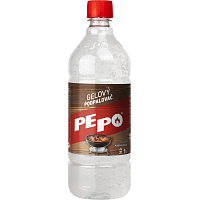 PE-PO Gel Fire Starter, 1 l
3.73 EUR
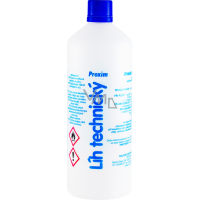 Proxim technical alcohol, 800 g
4.45 EUR
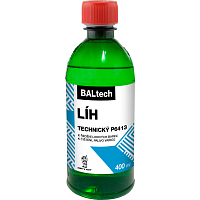

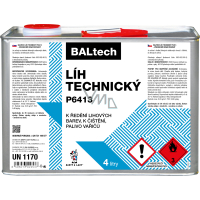 BALTECH technical alcohol P6413, 4 l
13.59 EUR