


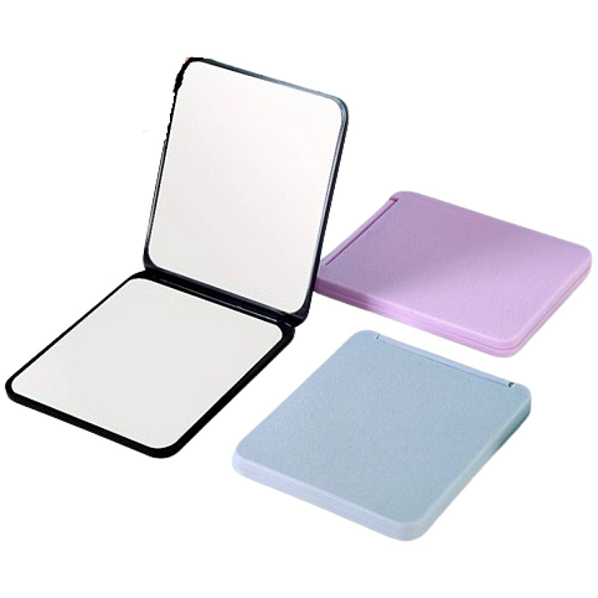
Magnifying mirror mix of colors 7.5 x 6 cm
Produkt již není možné zakoupit. V případě zájmu Vám náš zákaznický servis sdělí informaci o dostupnosti zboží.
Product description Magnifying mirror mix of colors 7.5 x 6 cm
| Packaging | 1 |
| Manufacturer | Made in PCR |
The first mirror was probably the water surface, where people could observe the image of their surroundings or also their own "picture".
Sometimes at 6. millennium BC n. l. polished obsidian slabs appear, serving as mirrors. Od 2. century BC n. l. metal mirrors made of polished bronze are beginning to be produced. These mirrors were generally used by the ancient Egyptians, Greeks, and Romans. The Greeks and Romans sometimes used polished silver for a similar purpose.The use of glass mirrors dates back to the Middle Ages.
The first types of these mirrors appeared in Italian Venice around the year 1300, from the 16th. century, they have been produced here in large quantities. The original method of production involved coating the back side of the glass with a compound of mercury and tin. The first attempt to use a silver solution for this purpose was made by the German chemist Justus von Liebig in 1836.Gradually, various methods of production were developed, depending on the method of reducing silver salts to metallic silver.
Today, a solution of silver nitrate is used, which is poured onto the surface of the glass and left to act for about 1 hour. During this time, the reduction of silver nitrate to metallic silver gradually occurs. This layer is dried, coated with shellac, and painted with a characteristic brown color.In recent times, aluminum has also been used in the production of mirrors, which among other things has. the advantage that it better resists corrosion (oxidation).
Mirrors are also made for industrial and scientific purposes.
They are often made by evaporating silver, rhodium, or aluminum and depositing them on the front surface of polished glass in a vacuum. The reflective layer reaches a thickness of about 0.1 micrometers and must be surface-protected (with silicon).


