/search_thin.svg)

/currency.svg)
/heart.svg)
/user.svg)
/cart.svg)
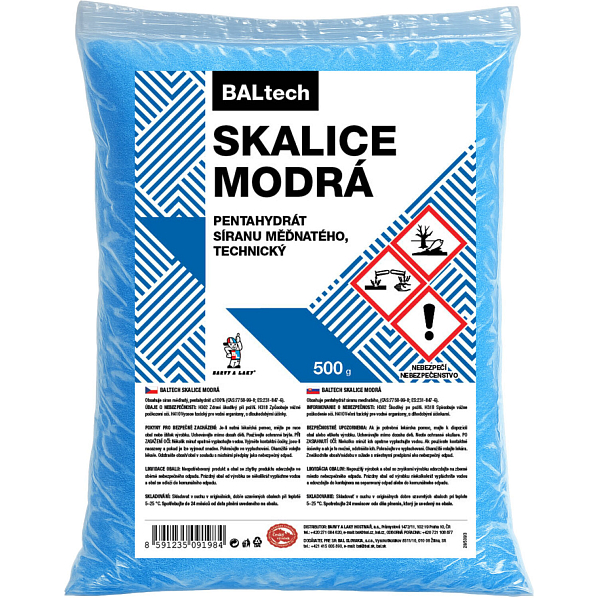
BALTECH blue vitriol copper sulfate, 0.5 kg
Product description BALTECH blue vitriol copper sulfate, 0.5 kg
| Packaging | 30 |
| Species | ostatní |
| Manufacturer | Colors and Varnishes Hostivař a.s. |
| Health hazard | Health hazard |
| Dangerous for the environment | Dangerous for the environment |
| Corrosive/Caustic | Corrosive/Caustic |
Copper sulfate is known as blue vitriol. It is one of the most common compounds of copper and is the most industrially produced copper salt. Suitable against fungi on plants, for the impregnation of wood against fungi.
What is blue vitriol:
Blue vitriol, i.e. copper sulfate, contains 25% copper. For example, 4 g of vitriol contains 1 g of copper. Copper acts as a biocide, inhibiting the growth of undesirable organisms and works very well specifically as an algicide, i.e., against algae. The difference between vitriol and chlorine is that chlorine has a significant problem with already growing algae. A sufficiently effective and life-safe concentration of copper is 1 to 2 mg/l, which corresponds to 4 to 8 mg/l of blue vitriol, i.e., 4 to 8 g/m³.
Use in agriculture:
Blue vitriol is intended for supplemental nutrition of agricultural crops with higher demands for this element (wheat, barley, oats, clover, and others). Copper positively affects the stability of chlorophyll and prolongs the period of active photosynthesis. In the case of copper deficiency, nitrogen utilization from fertilizers is significantly reduced. A characteristic symptom of copper deficiency is white spots and white tips of leaves, which particularly affect legumes. Copper sulfate is suitable for foliar application, which should not be carried out in direct sunlight. Copper sulfate is also used to suppress moss, lichens, and diseases in plants.
Dosing in agriculture:
Fertilization (by watering and spraying) 0.5 g per 1 l of water per 1 m². Pre-sowing soaking of seeds (when sowing in soils with low Cu content) solution 0.02 - 0.05%, i.e., 0.2 - 0.5 g of fertilizer per 1 liter of water. Suppression of lichens, moss, and fungal diseases (by watering and spraying) 10 - 20 g / 1 l of water (it cannot be precisely determined how much area this dose will cover, as it depends on the size of the leaf area or crop)
Use plant protection products safely. Always read the label and product information before use.
Product safety warnings (H-statements)
- H302: Harmful to health if swallowed.
- H317: May cause an allergic skin reaction.
- H318: Causes serious eye damage.
- H350: May cause cancer.
- H360d: May damage the fetus in the womb.
- H373: May cause damage to organs with prolonged or repeated exposure.
- H410: Very toxic to aquatic life with long-lasting effects.
Safe handling instructions (P-statements)
- P101: If medical advice is needed, have product container or label at hand.
- P102: Keep out of reach of children.
- P201: Obtain special instructions before use.
- P260: Do not breathe dust/fume/gas/mist/vapours/aerosols.
- P273: Avoid release to the environment.
- P280: Wear protective gloves/protective clothing/eye protection/face protection.
- P305+P351+P338: IF IN EYES: Rinse cautiously with water for several minutes. Remove contact lenses, if present and easy to do. Continue rinsing.
- P308+P313: IF exposed or concerned: Get medical advice/attention.
- P310: Immediately call a POISON CENTER/doctor
- P501: Dispose of contents/container to the instructions on the product.
Related products to the product BALTECH blue vitriol copper sulfate, 0.5 kg
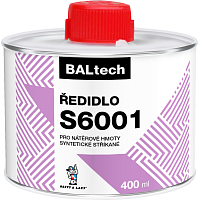 BALTECH thinner S6001, 400 ml
2.01 EUR
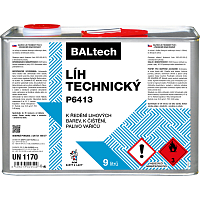 BALTECH Technical Alcohol P6413, 9 l
25.51 EUR
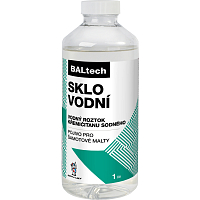
 BALTECH thinner S6006, 700 ml
2.92 EUR