
/currency.svg)
/heart.svg)
/user.svg)
/cart.svg)

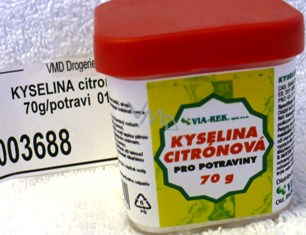
Via-Rek Citric acid for food proven household product 70 g
Code: 03688dnů:2
Date and method of delivery
Producer:
VIA-REK Ltd. Ltd.

Kyselina citrónová používá se jako dochucovací prostředek jídel a jako přísada ke konzervaci a k ochRead more
Choose a discounted package
Quantity discounts
/envelope.svg)
Query
/bell.svg)
Watch
/share.svg)
Share
PARAMETERS
Description Via-Rek Citric acid for food proven household product 70 g
Kyselina citrónová používá se jako dochucovací prostředek jídel a jako přísada ke konzervaci a k ochucení ovoce, džemů, zeleniny, nápojů a sirupů. Velmi dobře odstraňuje vodní kámen v kávovarech a konvicích.
1. Při zavařování ovoce a zeleniny.
2. Na dochucení ovocných salátů, kompotů a salátových zálivek.
3. Na podporu želírovacího procesu při výrobě džemů, marmelád a želé.
4. Na dochucení nápojů.
5. Na odstranění vodního kamene, např. v kávovarech apod.
6. Kyselinu citronovou lze použít i při odstraňování vodního kamene, např. ve varných konvicích, kávovarech.
Použití:
Kyselina citronová má mnoho využití. V potravinách je to především díky schopnosti regulovat jejich kyselost a zásaditost. Taktéž zabraňuje růstu bakterií, kvasinek a plísní, proto se používá i jako konzervant. V tucích a olejích zabraňuje žluknutí a nežádoucí změny barvy a působí zde jako andioxidant.
Nalezneme ji hlavně v nealkoholických nápojích, džusech, víně, tucích, instantních nápojích, v marmeládě, kandovaném a mraženém ovoci, mražených mléčných výrobcích, v sýrových pomazánkách, majonéze, v salátovém dresingu a mnoha dalších potravinách. Kyselinu citronovou nalezneme také v kosmetice, farmaceutických výrobcích a v chemické výrobě.
Dissolve one teaspoon of citric acid in 1 litre of water and immerse the peeled fruit to be preserved in this solution. In this way we can conveniently treat the fruit before subsequent preservation, e.g. by drying or heating.
'
it is a weak acid from the carboxylic group. It occurs naturally in citrus fruits, especially lemons, limes, grapefruit, oranges and, to a lesser extent, other fruits and vegetables.
Production:
There are several methods of production. Citric acid can be obtained naturally from citrus juice by fermenting raw sugar.However, common industrial production uses the fungal culture Aspergillus niger and sucrose (mainly molasses, hydrolysed corn starch or other cheaply obtained sugars). The addition of calcium hydroxide (known as slaked lime) produces a salt from which sulphuric acid yields the final citric acid.Annual global production is estimated at 1.7 million tonnes, more than half of which is produced in China.
Adverse effects:
In general, citric acid is considered a safe substance and can be added to all foods, including baby food, in the necessary amounts. In the USA it is included in the GRAS list of substances.Excessive use of citric acid can damage tooth enamel. For example, by eating lemons themselves. Like all acids, it will cause an irritant reaction on contact with the eye, and in higher concentrations and quantities can cause blindness. However, the amount in food is far below this limit.
Additional information:
Thanks to alarmist chain emails, citric acid has been attributed with many bad properties, especially carcinogenicity. This is indeed a misinformation, which was caused by a wrong translation of the word Krebs. This word in German really means cancer, but in conjunction with citric acid it refers to the scientist Hans Krebs, who won the Nobel Prize in 1953 for discovering the so-called "cancer". Citrate cycle, sometimes also called the Krebs cycle.
Causes severe eye irritation. Wash your hands thoroughly after handling. Wear protective gloves/ protective clothing/ protective goggles/ face shield. If hit, rinse gently with water for a few minutes. Remove the contact lenses if they are in and if they can be removed easily. Continue rinsing. If eye irritation persists seek medical attention and treatment.
Keep dry.
Related products
-22%Discount

Code:
56807
3.88 EUR
4.98 EUR
In stock
/heart.svg) Favorite
Favorite/compare.svg) Compare
CompareFloating plastic dispenser for swimming pools with a regulatory grid for large chlorine tablets. Th
Recently visited products

Via-Rek Citric acid for food proven household product 70 g

Blumarine Les Eaux Exuberantes Mon Petit Chou Eau de Toilette for women 1,2 ml with spray, vial

Gastro Paper napkins 2 ply 33 x 33 cm 50 pieces colored dark blue

Bione Cosmetics Argan Oil & Shea Extra Greasy Nourishing Face Cream for All Skin Types 51 ml