/search_thin.svg)

/currency.svg)
/heart.svg)
/user.svg)
/cart.svg)
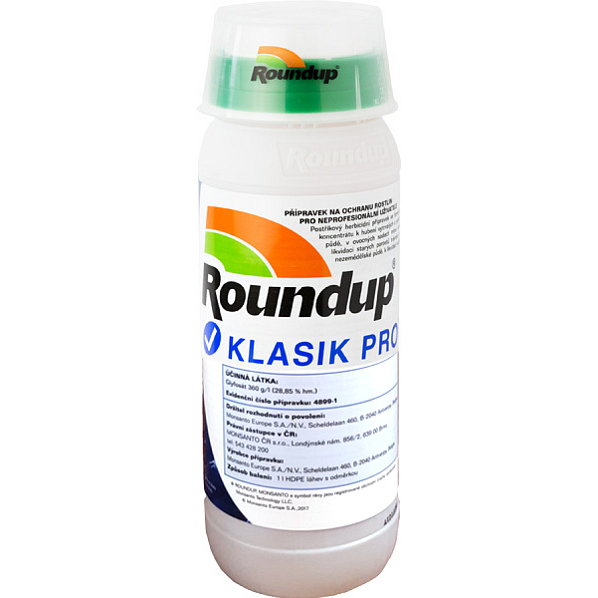
Roundup Klasik Pro for controlling perennial and annual weeds, 1 l
Product description Roundup Klasik Pro for controlling perennial and annual weeds, 1 l
| Manufacturer | MONSANTO Belgium |
| Packaging | 1 |
| Corrosive/Caustic | Corrosive/Caustic |
| Health hazard | Health hazard |
| Dangerous for the environment | Dangerous for the environment |
Roundup Klasik Pro is a spray herbicide in the form of a liquid soluble concentrate for controlling perennial and annual weeds in arable land, in fruit orchards except for peach trees, vineyards, and for the destruction of old lawns for their restoration and on non-agricultural land, for the elimination of unwanted vegetation.
Suitable for:
- Pome fruits, stone fruits except for peach, grapevine: milk thistle, thistle, couch grass, field bindweed: 3–6 l/max. 200 l water/ha
- Forestry crops: invasive woody plants, controlling suckers: 2.5–15 %
- Pome fruits, stone fruits except for peach, grapevine: milk thistle, thistle, couch grass, field bindweed 5 l/ha + 2 l/ha DAM - 390
- Pome fruits, stone fruits except for peach, grapevine: Canadian thistle: 2 l/max. 200 l water/ha
- Pome fruits, stone fruits except for peach, grapevine: retardation: 0.5–1 l/ha (0.5–1 %)
- Pome fruits, stone fruits except for peach, grapevine: milk thistle, thistle, couch grass, field bindweed: 3–6 l/max. 200 l water/ha + 0.5 % surfactant
Suitable as a spray for weeds:
- Arable land: perennial weeds, couch grass: 3 l/max. 200 l water/ha
- Arable land: perennial weeds, couch grass: 2.5 l/max. 200 l water/ha + 5 kg/ha Ammonium sulfate - TM
- Arable land: perennial weeds, couch grass 3 l/ha 200 l water /ha max. + 0.5 % surfactant
- Potatoes, maize, soybeans: annual emerged weeds, perennial emerged weeds, couch grass: 1.5–2 l/100–150 l water/ha, before sowing
- Potatoes, sugar beet: overgrown weeds: 1–2 l/ha (33–50%), application with a wick frame, OL 30
- Non-productive areas: annual weeds, perennial weeds: 2–5 l/ha
- Pine, deciduous trees, spruce: overgrown weeds: 33–50 %, seedlings and crops, wetting
- Pine, spruce: annual weeds, perennial weeds: 3–5 l/max. 200 l water/ha, after ripening of shoots, full-area spraying
Also suitable for:
- Peas, vetch: facilitating mechanical harvest: 2–3 l/150–200 l water/ha
- Irrigation channels: unwanted woody plants, coastal weeds: 5 l/ha
- Meadows, pastures: retardation: 0.5–1 l/ha (0.5–1%)
- Flax: perennial weeds, couch grass: 3–4 l/max. 200 l water/ha, before harvest
- Strawberry: overgrown weeds: 1–2 l/ha (33–50%), application with a wick frame, after harvest
- Non-agricultural land: unwanted vegetation: 3–6 l/max. 300 l water/ha
- Railways: giant hogweed, Japanese knotweed, weeds - expanding species: 7–10 l/300–400 l water/ha, full-area spraying
- Railways: giant hogweed, Japanese knotweed, weeds - expanding species: 4 %, individual plants
- Forest nurseries seedlings and older seedlings of woody plants: annual weeds, perennial weeds: 1–3 l/ha, treated with covers, after ripening of shoots
- Compost, forest soil - preparation for plantings: annual weeds, perennial weeds: 3–5 l/max. 200 l water/ha
- Cereal crops except for multiplication stands: perennial weeds, couch grass: 3 l/max. 200 l water/ha, lodged or heavily weed-infested stands, before harvest, OL 10
- Oilseed rape: overgrown weeds, couch grass: 3–4 l/max. 200 l water/ha, 2/3 brown grains, OL 10–14
- Meadows, pastures: restoration of permanent grassland: 3–6 l/max. 200 l water/ha, OL 21
Use plant protection products safely.
Always read the label and product information before use.
Product safety warnings (H-phrases)
- EUH401: Follow the instructions for use to avoid risks to human health and the environment.
- H319: Causes serious eye irritation.
Instructions for safe handling (P-phrases)
- P102: Keep out of reach of children.
- P280: Wear protective gloves/protective clothing/eye protection/face shield.
- P305+P351+P338: IF IN EYES: Rinse cautiously with water for several minutes. Remove contact lenses, if present and easy to do. Continue rinsing.
- P337+P313: If eye irritation persists: Get medical advice/attention.
Related products to the product Roundup Klasik Pro for controlling perennial and annual weeds, 1 l
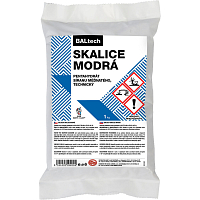
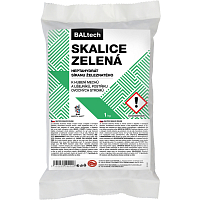 BALTECH green vitriol, 1 kg
2.72 EUR