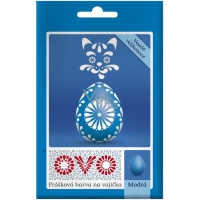
OVO powder colors set for eggs, 4 colors
Produkt již není možné zakoupit. V případě zájmu Vám náš zákaznický servis sdělí informaci o dostupnosti zboží.
Product description OVO powder colors set for eggs, 4 colors
| Manufacturer | Druchema, chemical manufacturing cooperative |
| Packaging | 20 |
| Color | různé barvy |
Dissolve the contents of the packet in 1/3 liter of hot water /approx. 70°C/ with 2-3 tablespoons of vinegar and place clean, degreased, and hard-boiled eggs for 2 - 5 min. Remove the colored eggs and let them dry. For more intense shades, use less water; by mixing individual colors, you will achieve different shades. To achieve shine, rub the egg with fat.
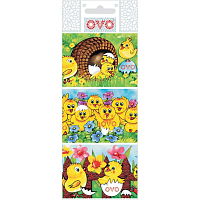
Health safe. For decorative coloring of eggs only. Not intended for alternative use in food. After working, wash your hands and treat your skin with a regenerating cream. For decoration, Ovo transfers can be used.
Dyeing procedure
1. Place the eggs for 2 - 5 min.
2. Remove the colored eggs and let them dry.
Yield: 1 packet (5 g) = 10 - 15 eggs
| Manufacturer | Druchema, chemical manufacturing cooperative |
| Packaging | 20 |
| Color | různé barvy |
Dyeing eggs
The typical colors of Easter are colors - yellow, green, red, reddish-brown, brown, black. All these colors can be obtained from natural sources. At the end of the 19th century, they were replaced by chemical sources.
Egg dyeing can be done with natural means:
- yellow color - saffron (stigmas), oat straw, tea, linden blossom. The caroller who brought home a full basket of yellow eggs did not have to fear the future. However, he had to pay close attention to his sharp tongue.
- yellow-green color - nettles (roots)
- yellow-brown color - decoction from onion skins, tea
- green - Green eggs in the basket promised good health and plenty of work. Such a young man received a diligent and wise girl as his wife, who turned every penny twice in her hand before spending it.
- dark green color - decoction from spinach, young nettles, parsley
- light green color - linden blossom, cumin, or saffron
- red color - juice from red beet. The caroller who brought home the most red eggs was promised wealth, happiness, and health in the future. It could also predict that the boy would soon marry and receive a hardworking, clever, and kind wife with a large dowry.
- black color - alder bark, willow (roots)
- purple color - black elder (dried fruits)
- white color - If the young man had most of the eggs white as fallen snow, a marriage out of pure love awaited him, but with a girl as poor as a church mouse.
- blue color - cornflower, blueberry fruits
- egg wrapped with herbs - wrap a white egg with small leaves such as yarrow, clover, dandelion, place it on a nylon stocking or cloth and wrap it. Tie tightly at both ends and dip it into the dye or decoction. After boiling, unwrap the egg and remove the leaves. Polish the egg with lard for shine.
| Manufacturer | Druchema, chemical manufacturing cooperative |
| Packaging | 20 |
| Color | různé barvy |
4 powdered colors designed for dyeing Easter eggs. Easy and quick application, vibrant colors.
Instructions for use:
Dissolve the contents of each bag in 1/3 liter of hot water (about 70°C) with 2 - 3 tablespoons of vinegar and place clean, degreased, and hard-boiled eggs for 2 - 5 minutes. Remove the dyed eggs and let them dry. For deeper shades, use less water. By mixing individual colors, you can achieve various shades. To achieve a shine on the egg, coat it with fat.
| Manufacturer | Druchema, chemical manufacturing cooperative |
| Packaging | 20 |
| Color | různé barvy |
Saturated food coloring intended for traditional coloring of Easter eggs, 1 packet = 1 color.
Symbol of the egg
The egg contains the embryo of life, which is why it is considered a symbol of fertility, vitality, the return of spring, safety (due to the shell), and resurrection. In Christianity, the egg is interpreted as a symbol of the closed tomb from which Christ rose, as a symbol of immortality. In connection with folk tradition, the custom of painting these eggs arose.