
/currency.svg)
/heart.svg)
/user.svg)
/cart.svg)
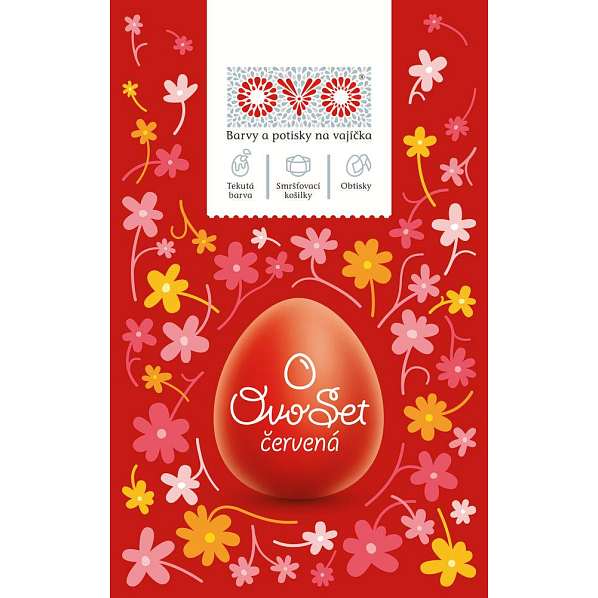
Ovo Set of Red Prints and Shirts
Produkt již není možné zakoupit. V případě zájmu Vám náš zákaznický servis sdělí informaci o dostupnosti zboží.
Product description Ovo Set of Red Prints and Shirts
| Manufacturer | Druchema, chemical manufacturing cooperative |
| Packaging | 1 |
| Color |
Pour out the contents of the bag and dissolve in 1/4 litre of hot water (approx. 70 °C) with 1 - 2 tablespoons of vinegar and put the hot hard-boiled eggs in for approx. 30 - 60 seconds. Remove the dyed eggs and leave to dry. You can adjust the shade saturation by extending the dyeing time or using less water.
Instructions for use on decals:
Immerse the decal in warm water for a few seconds, remove and place the print face up on a smooth board (surface). Once the decal can be moved, place the decal paper on top of the boiled egg (even dyed) with the image face up, pull the paper out from under the decal and smooth the wet side of the paper to squeeze out water and air bubbles. Once the egg is dry, brush the decal with grease.
Instructions for use on shirts:
Cut the picture from the strip. Put the shirt on top of the boiled egg. Place the egg and shirt on a spoon and immerse in hot 80-95°C water for 3 seconds. Remove the egg from the water and allow to dry.
| Manufacturer | Druchema, chemical manufacturing cooperative |
| Packaging | 1 |
| Color |
The bag contains:
Liquid paint, decal sheet and 8 shrink shirts.
| Manufacturer | Druchema, chemical manufacturing cooperative |
| Packaging | 1 |
| Color |
The typical colors of Easter are the colors used - yellow, green, red, reddish brown, brown, black. All these colors can be obtained from natural sources. At the end of the 19th century they were replaced by chemical sources.
Dyeing eggs can be done by natural means:
- yellow paint - saffron (slime), oat straw, tea, lime blossom. The caroller who brought home a basket full of yellow eggs did not have to fear the future. He did, however, have to be careful of his sharp tongue.
- yellow-green - nettles (roots)
- yellow-brown colour - onion peel decoction, tea
- green - Green eggs in a basket promised good health and plenty of work. Such a young man got a diligent and sensible girl for a wife, who turned every penny in her hand twice before spending it.
- thedark green colour - a decoction of spinach, young nettles, parsley
- light green - lime blossom, caraway or saffron
- red colour - beetroot juice. The caroller who brought home the most red eggs was promised wealth, happiness and health in the future. It could also predict that the boy would soon marry and get a hardworking, clever and good wife with a large dowry.
- black colour - alder bark, willow (roots)
- purple color - elderberry (dried fruits)
- white - If a bachelor had most of his eggs as white as fallen snow, a marriage of pure love awaited him, but to a girl as poor as a church mouse.
- blue - Cornflower, blueberries
- herb-bound egg - tie a white egg with small leaves e.g. yarrow, clover, dandelion, place on a silk stocking or cloth and wrap. Roll up tightly at both ends and dip in paint or decoction. After boiling, unwrap the egg and remove the leaves. Coat the egg with lard for shine.
Related products to the product Ovo Set of Red Prints and Shirts
Variants of this product to the product Ovo Set of Red Prints and Shirts
Products similar to Ovo Set of Red Prints and Shirts you can also find in the following categories:
Recently visited products