





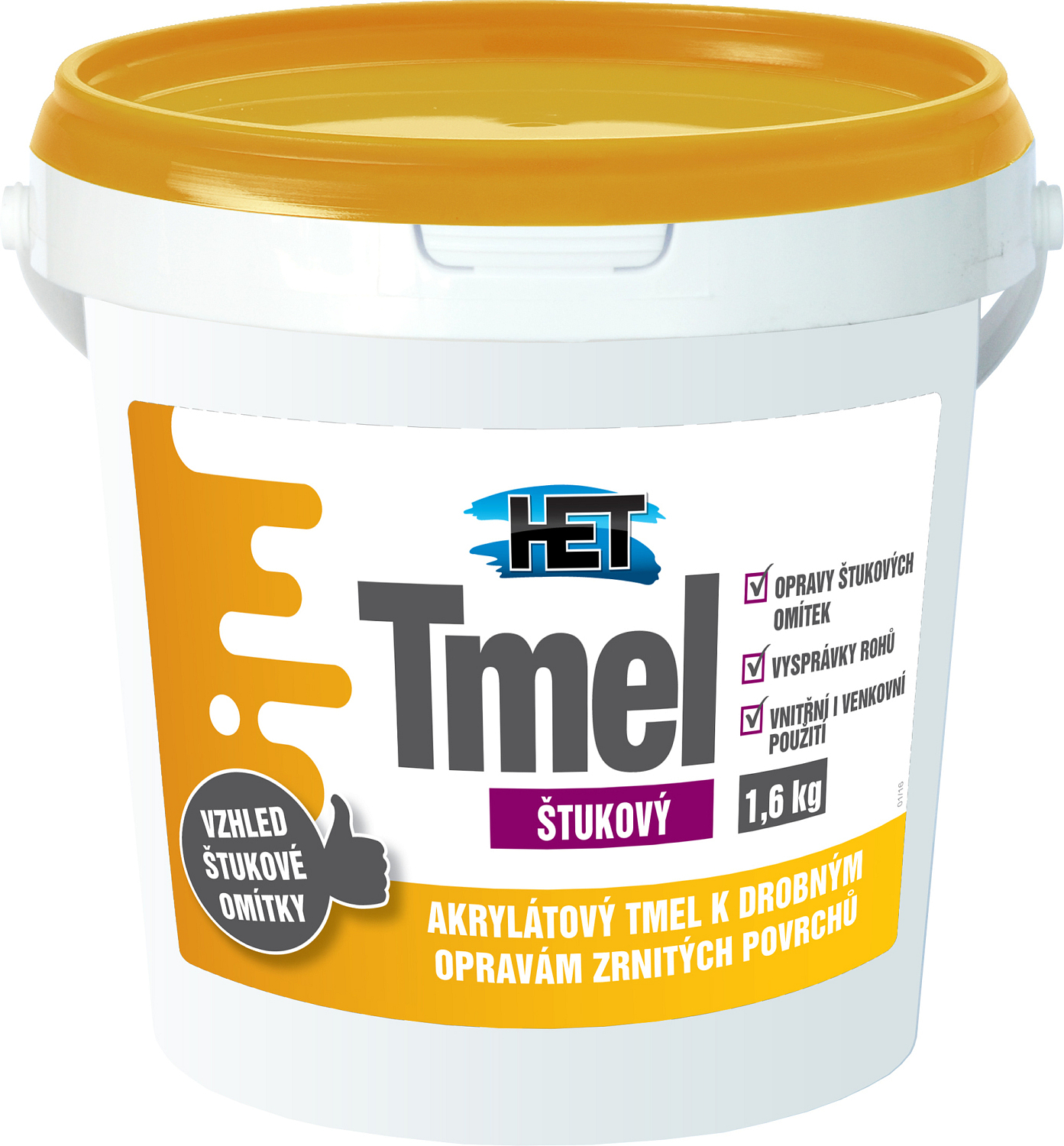
Het plaster filler for interior and exterior plaster, 1.6 kg
Code: 2504822In stock
Date and method of delivery
Producer:
Het, spol. s.r.o.

For interior and exterior use for minor repairs of grainy surfaces primarily of plaster finishes.Read more
Choose a discounted package
Quantity discounts

Query

Watch

Share
PARAMETERS
Description Het plaster filler for interior and exterior plaster, 1.6 kg
Acrylic filler for interior and exterior plaster is designed for interior and exterior local repairs of surfaces with a grainy texture, especially plasters. It is used to level unevenness, fill small non-dilating cracks on facade surfaces, repair plaster corners, or retouch grainy substrates. It can be applied immediately without the need for prior preparation.
Properties of Het plaster filler for interior and exterior plaster:
- Repairs of plaster finishes,
- corner repairs,
- creation of a grainy surface,
- for interior and exterior use,
- ready for immediate use.
Usage:
Single-component paintable special filler based on acrylic that creates a surface with a grainy texture mimicking plaster. Suitable for both interior and exterior use for minor repairs of grainy surfaces primarily of plaster finishes. For leveling unevenness, filling small non-dilating cracks on facades, repairing plaster corners, retouching repairs on grainy surfaces, etc. The filler is ready for immediate use. The product meets the requirements for surfaces that may come into indirect contact with food. It is not recommended for jointing and in areas with high mechanical stress. The filled areas must not be in constant contact with water and rising moisture.
Diluent:
drinking water
Application:
Applied using a trowel, spatula, or stainless steel float. The final surface finish can be done with a sponge, felt, or cleaning sponge.
Sanding:
Due to the presence of coarse fillers, sanding is not highly recommended, but if necessary, sandpaper or sanding mesh can be used.
Substrate:
must be dry, sufficiently matured (pH ≤8.5; verification can be done with a pH tester), firm, cohesive, free from grease, salts, dust, dirt, and non-cohesive parts, free of dynamic joints and cracks, and without signs of biological infestation (algae, mold). Original coatings with insufficient adhesion must be removed, for example, by scraping. Loose grains of sand must be swept or sanded off from the plasters. To enhance adhesion of the filler to the substrate, it is recommended to apply a penetrating primer A-GRUND, AT-GRUND, 100-GRUND, or UP-GRUND. Metal elements passing through the substrate must be treated with anti-corrosion protection (e.g., AQUADECOL PRIMER paint) before filling.
Application temperature:
during application and for the following 24 hours (ideally 48 hours), the temperature of the material, substrate, and environment must reach +5 to +30 °C (ideally +8 to +25 °C). Do not apply in immediate risk of rain or frost.
Example of application procedure:
- cover windows, heating bodies, door frames, and similar objects.
- before application, remove any dried filler from the packaging and thoroughly mix the remaining material in the entire container.
- non-cohesive layers of original coatings must be removed, for example, by scraping.
- apply a penetrating coating. For poorly absorbent substrates, the primer is applied with the penetrating preparation UP-GRUND, for more absorbent substrates (plaster, lime or lime-cement plaster, masonry, etc.) using A-GRUND, 100-GRUND, or AT-GRUND preparations according to the instructions for use.
- once the primer is completely dry, apply PLASTER FILLER using a steel spatula. A thickness of one layer up to 3 mm is recommended, with a maximum allowed thickness in one layer of 5 mm. To allow the filler to penetrate better into cracks, it is advisable to gently scratch them beforehand.
- to make the transition between the filler and plaster as less noticeable as possible, it is recommended to smooth the surface with a damp sponge, felt, or cleaning sponge once the filler starts to set.
- allow the filler to dry until completely dry (approximately 0.5 to 12 hours, possibly longer; drying time significantly depends on the absorbency of the substrate, thickness applied, temperature, and air humidity).
- if necessary, additional layers of filler can be applied after complete drying.
- clean tools and stained surfaces with water immediately after work.
- before applying paint, it is recommended to treat the repaired plaster with penetration, for example, with UP-GRUND, A-GRUND, AT-GRUND, or 100-GRUND preparation. This will standardize the absorbency of the filled area with the surrounding substrate.
- subsequently, dispersion paints can be applied to the surface. It is not appropriate to paint filled areas with lime paints or coatings that do not contain dispersion binders.
Product safety warnings (H-phrases)
- EUH208: Contains (see dangerous substances). May produce an allergic reaction.
Instructions for safe handling (P-phrases)
- P101: If medical advice is needed, have product container or label at hand.
- P102: Keep out of reach of children.
- P501: Dispose of contents/container in accordance with local regulations.
| Species: | ostatní |
Documents
Bezpečnostní list

Katalogový list
Related products

Code:
2507279
14.61 EUR
0.97EUR/1kg
In stock
 Favorite
 Compare
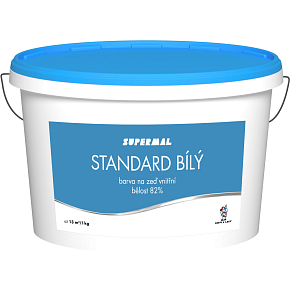
Supermal Standard is a water-dilutable interior paint suitable for white coatings of walls and ceilings.
 Free

Code:
2503830
55.23 EUR
11.05EUR/1kg
In stock
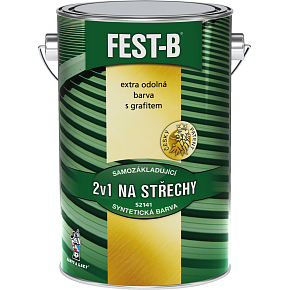
FavoriteCompareFor single-layer outdoor protective coatings for metal roofing, gutters, steel constructions, and other metallic objects exposed to permanent weather conditions and sunlight.

Code:
2505364
8.98 EUR
0.9EUR/1kg
In stock
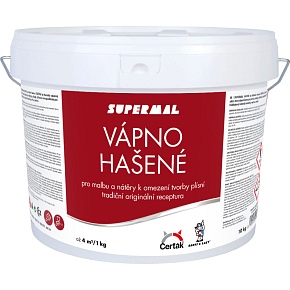
FavoriteCompareSlaked lime for construction, gardening, and traditional disinfection of farm buildings and structures.

Code:
2502697
35.87 EUR
3.99EUR/1kg
In stock
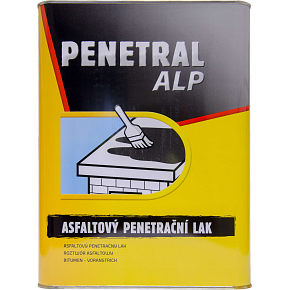
FavoriteCompareServes as a penetration under asphalt insulation coverings and insulations, when used alone it is not directly resistant to weather conditions and moisture, penetrates deeply into the substrate, ensuring a strong bond with other layers, can be used on concrete, metal, and masonry.

Code:
2504681
20.03 EUR
10.02EUR/1kg
In stock
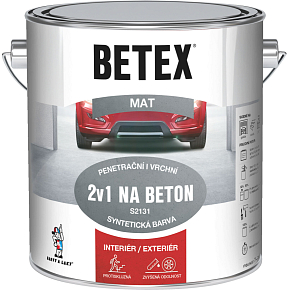
FavoriteCompareFor matte coatings for indoor and outdoor use, e.g. floors of cellars, garages, terraces, balconies, walls, posts, etc. The product has high weather resistance.
AKCE

Code:
2502746
22.14 EUR
8.86EUR/1l
In stock
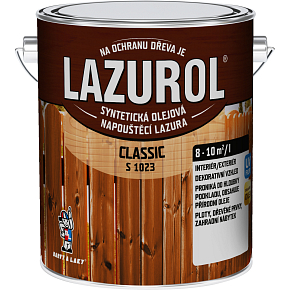
FavoriteCompareFor protective staining of soft and hard wood exposed to weather conditions and for indoor coatings. It protects wood from the effects of UV radiation. Contains natural oil.

Code:
2502718
42.56 EUR
12.16EUR/1kg
In stock
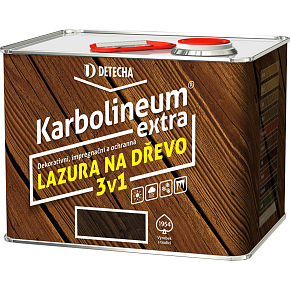
FavoriteCompareModern impregnation coating with decorative properties. It acts as an effective deep penetrating preservative and at the same time as a top protective coat in ten color shades.

Code:
2503798
9.47 EUR
15.78EUR/1l
In stock
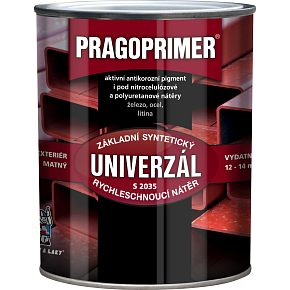
FavoriteCompareThe paint is intended for priming metal objects under synthetic, oil, and nitrocellulose coatings. It features quick drying. It has excellent anti-corrosion properties and wide application possibilities for both interior and exterior use.

Code:
2503678
8.27 EUR
16.54EUR/1l
In stock
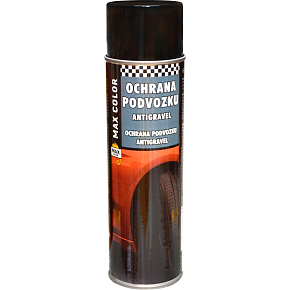
FavoriteCompareProtection of PVC underbodies for use in hard-to-reach areas, for sealing, conserving, and enhancing shine, ideal for quick applications such as wheel arches, spoilers, and front masks. Long-lasting effective protection for car underbodies against stones and salts.
Code:
2503801
48.76 EUR
12.19EUR/1l
In stock
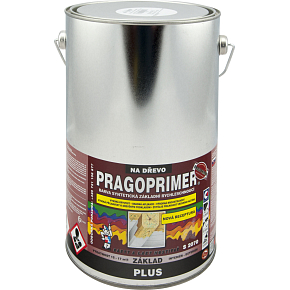
FavoriteCompareThe paint is intended for primer and undercoat applications for wood. It excels in very good opacity, good flow, and quick drying. It has excellent sandability and high adhesion to wooden substrates.

Code:
2503486
1.97 EUR
3.94EUR/1kg
In stock
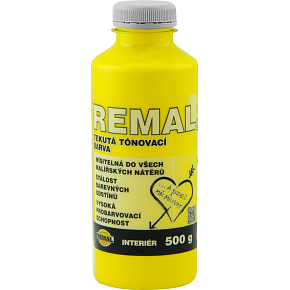
FavoriteCompareTinting color for coloring painting colors for interiors, selected shades also for coloring acrylic and silicone façade paints for exteriors.
AKCE

Code:
2503967
7.36 EUR
18.4EUR/1l
In stock
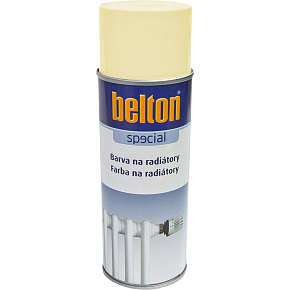
FavoriteCompareA spray based on nitro-combination resins. Intended for painting radiators that heat up to temperatures of 80 to 120 °C. This spray will make your work easier when painting radiators.
Variants of this product

Code:
2503710
11.09 EUR
2.77EUR/1kg
In stock
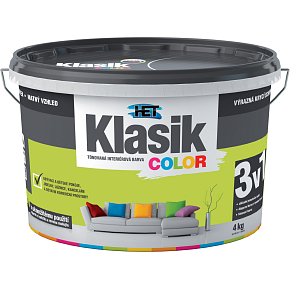
FavoriteCompareFor indoor coatings of walls and ceilings, high opacity and spreadability, matte appearance, dry abrasion resistance, excellent vapor permeability.
Code:
2502815
18.38 EUR
1.84EUR/1kg
In stock
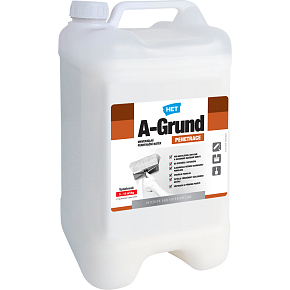
FavoriteCompareUniversal penetrating coating for acrylic, silicone, and siloxane paints and other materials.
Code:
2601010
18.38 EUR
2.3EUR/1kg
In stock
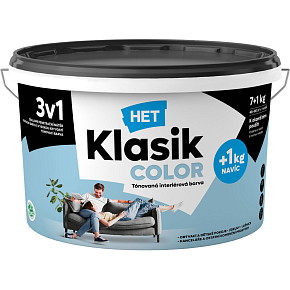
FavoriteCompareFor indoor wall and ceiling coatings, significant coverage capacity and spreadability, matte appearance, resistance to dry abrasion, excellent vapor permeability.

Code:
2504104
11.09 EUR
2.77EUR/1kg
In stock
FavoriteCompareFor interior coatings of walls and ceilings, significant covering ability and spreadability, matte appearance, resistance to dry abrasion, excellent vapor permeability.
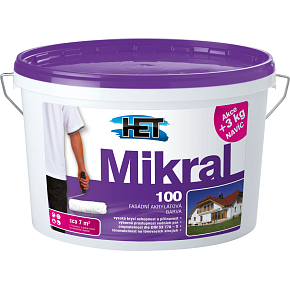
Code:
2502795
68.96 EUR
3.83EUR/1kg
In stock
FavoriteCompareFor outdoor coatings of lime, lime-cement, and brizolite plasters, plasters with acrylic binders, masonry, and decorative coatings of vertical concrete structures, etc.
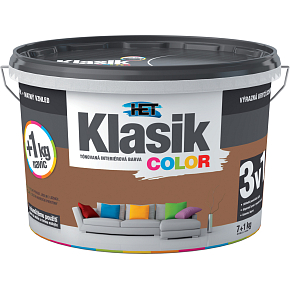
Code:
2504762
18.38 EUR
2.3EUR/1kg
In stock
FavoriteCompareFor interior wall and ceiling coatings, strong coverability and spreadability, matte appearance, resistance to abrasion in dry conditions, excellent vapor permeability.
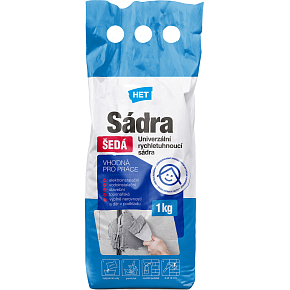
Code:
2503177
0.91 EUR
In stock
FavoriteComparePreparation for filling holes and uneven substrate - for plumbing, electrical installation, heating, modeling, and construction work.
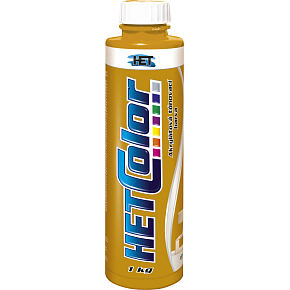
Code:
2502829
5.70 EUR
In stock
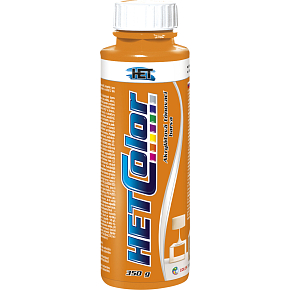
FavoriteCompareHetcolor, acrylic tinting paint - for tinting facade and interior dispersion and classic coatings or for direct application.
Code:
2503510
2.99 EUR
8.54EUR/1kg
In stock
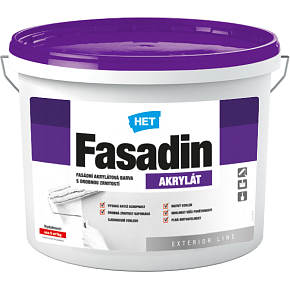
FavoriteCompareHetcolor, acrylic tinting paint - for tinting façade and interior dispersion and classic coatings or for direct application.
Code:
2502808
14.50 EUR
4.83EUR/1kg
In stock
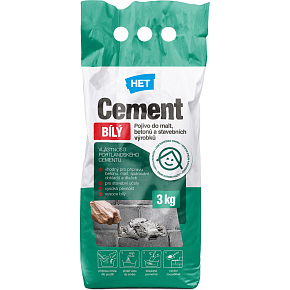
FavoriteCompareFacade paint for outdoor coatings of lime, lime-cement, and břízolit plasters, plasters with acrylic binders, masonry, for decorative coatings of vertical concrete structures, etc.
Code:
2501982
4.75 EUR
1.58EUR/1kg
In stock
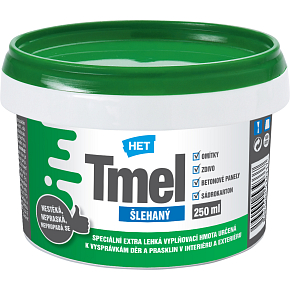
FavoriteCompareBinder for the preparation of mortars, concretes, and construction products - for construction purposes, including jointing of slabs and tiles, preparation of mortars and concretes.
Code:
2503961
3.94 EUR
15.76EUR/1l
In stock
FavoriteCompareSpecial extra lightweight filling material for sealing joints, cracks, and leveling substrates (mineral and gypsum plasters, concrete panels, masonry, drywall) in indoor and outdoor settings, local repairs of holes, filling, and leveling of straight and angled joints


