/search_thin.svg)

/currency.svg)
/heart.svg)
/user.svg)
/cart.svg)

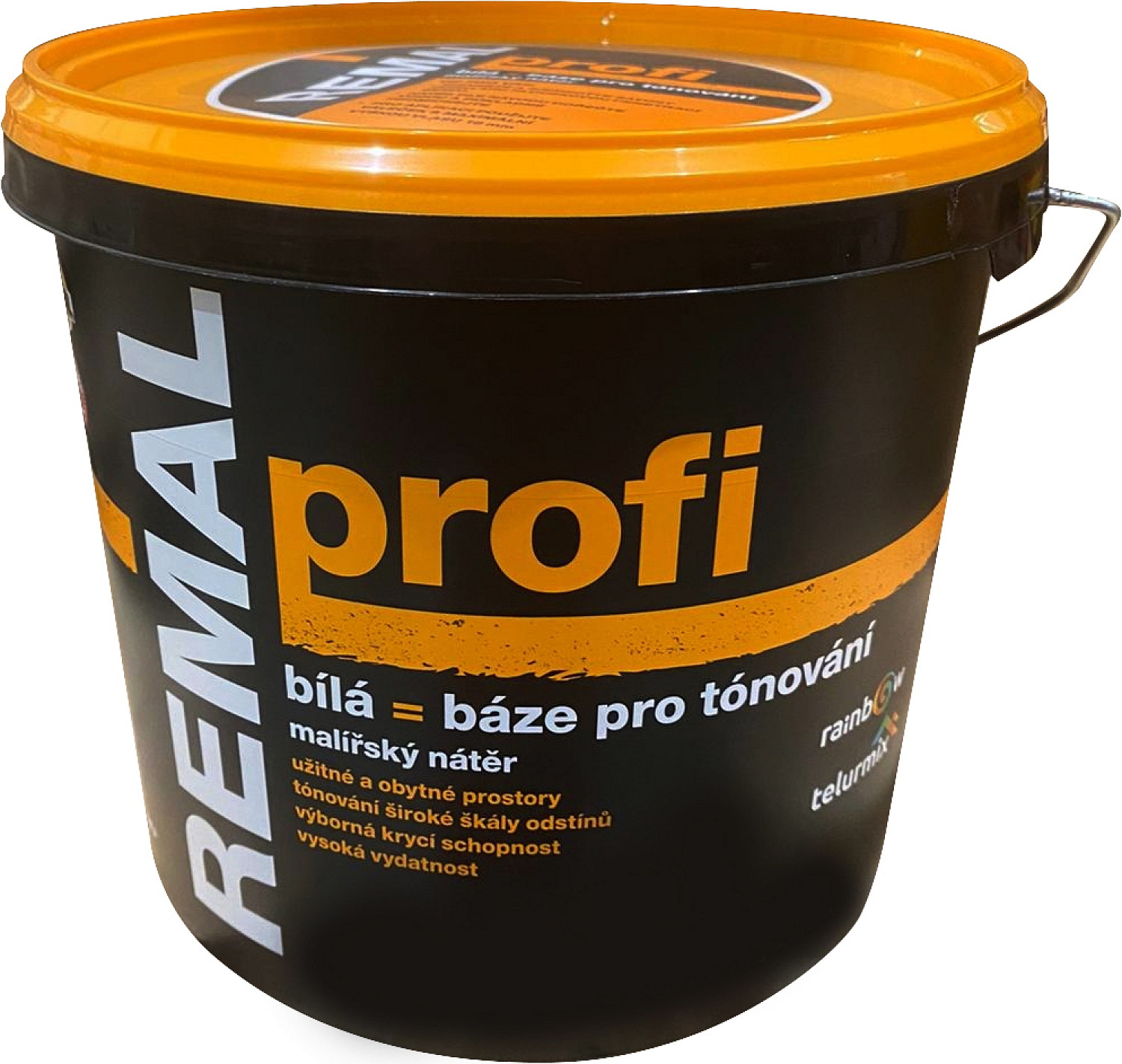
REMAL Profi painter's paint for drywall and renovation plasters, 10 kg
Code: 2503500
Covers excellently, is breathable, abrasion-resistant, and has a high whiteness of 91%. It is used for painting plasters, concrete, drywall, cement boards, particle boards, and renovation plasters in interiors. Suitable drywall paint.Read more
Choose a discounted package
Quantity discounts
/envelope.svg)
Query
/bell.svg)
Watch
/share.svg)
Share
PARAMETERS
Description REMAL Profi painter's paint for drywall and renovation plasters, 10 kg
REMAL Profi is a water-based paint suitable as a drywall paint. Due to its specific formulation, it features high opacity and abrasion resistance. It covers excellently, is breathable, abrasion-resistant, and has a high whiteness of 91%. It is used for painting plasters, concrete, drywall, cement boards, particle boards, and renovation plasters in interiors. The drywall paint shows wet abrasion resistance – measured according to ČSN EN ISO 11998 – class 5. (classification according to EN 13300).
REMAL Profi paint with enhanced resistance and natural whiteness is a suitable paint for drywall not only for offices. REMAL Profi drywall paint is also used as a base for tinting in the TELURMIX tinting system. It is recommended for interior coatings of walls and ceilings, drywall, renovation plasters, and other substrates in residential and office spaces. It is easy to process, health-safe, and environmentally friendly.
Properties of paint for drywall:
- drywall paint suitable for utility and residential spaces
- tinting available in stores to a wide range of shades
- also used as a base for tinting in the TELURMIX tinting system
- traditional Czech white wall paint REMAL
- abrasion-resistant coating
- high yield
- high covering ability
- highly breathable wall paint
- easy to work with
- slightly washable wall paint
- wet abrasion resistance class 5
- packaging of 10 kg drywall paint
Technical properties of drywall paint:
- coverage up to 13 m²/1 kg in one coat
- intended for tinting in the tinting system TELURMIX
- can also be tinted using REMAL tinting paint or REMAKOL
- interior paint for internal plasters, drywalls, concrete, cement boards, particle boards, and renovation plasters
- water-based drywall paint
- application with a brush, roller, or spraying
- viscosity 5000 - 7000 mPas (Brookfield HB DV 2+ 4/100)
- content of non-volatile substances 48 - 52%
- pH 8.5 - 11
It is produced in a non-standardized white shade. Intended for tinting in the TELURMIX tinting system. Red and orange shades may have limited color fastness under certain application conditions (immature substrate with high pH) or conditions in the building (UV radiation) due to the chemical composition of the red pigment.
Procedure for using REMAL paint:
Before painting, remove layers of old and non-adhering coatings. Treat areas affected by mold with REMAL Sanal renovation agent for masonry V1406 according to the instructions. Treat absorbent substrates with REMAL universal primer, non-adhering and crumbling substrates with REMAL deep primer. This will remove dust from the surface, strengthen it, unify absorption, and ensure adhesion of the coating. The drying time is 4 hours. For preventive anti-mold effect, you can use REMAL anti-mold deep primer. Smooth unevenness on the wall with REMAL filler. For problematic areas (water stains, etc.), it is advisable to use REMAL Spot-ceiling isolation coating.
Dilute the mold-resistant paint in a ratio of max. 0.4 l of water per 1 kg of paint. Then thoroughly mix the mold-resistant paint. Apply with a brush, roller, or spray in 2 coats, applying the next coat after the previous has dried, at least after 4 hours. The optimal temperature for applying mold-resistant paint is 15 to 25 °C. The substrate and environment temperature must not drop below 5 °C during application. For large areas, use products from one batch; mix different batches together before use.
Handling REMAL wall paint:
When working, observe basic hygiene rules. The product is not intended for coatings coming into direct contact with food, animal feeds, drinking water, nor for coatings on children's toys and children's furniture. Keep out of reach of children. If you feel unwell, seek medical assistance.
The product is treated with a biocide. It contains 1,3,5-tris(2-hydroxyethyl)hexahydro-1,3,5-triazine, 1,2-benzoisothiazol-3(2H)-one+, octhilinone (ISO), reaction mixture: 5-chloro-2-methylisothiazol-3(2H)-one [EC number 247-500-7] and 2-methylisothiazol-3(2H)-one [EC number 220-239-6] (3:1). It may cause an allergic reaction.
You might find useful
covering materials, such as masking tape or covering film, or sanding papers. Don't forget brushes, rollers, spatulas, and knives.
Washability of paint in practice is addressed by the standard WET ABRASION RESISTANCE ČSN EN ISO 11998
This international standard ISO EN 11998 describes an accelerated method for determining wet abrasion resistance and washability of paint. Regarding the cleanability of the coatings, it establishes only the test method itself but does not specify the contaminating substances. After drying and conditioning, the painted sample is weighed and subjected to cleaning cycles wet in the testing abrasion (cleaning) device. From the loss of weight, the average thickness loss of the coating is calculated. For determining cleanability, contaminating substances are applied to similarly prepared samples. Specified contaminating substances are allowed to remain in contact with the coating film for the prescribed time. The coated, contaminated samples are then subjected to cleaning cycles. It is evaluated whether the contaminating substance has been removed and whether the coating is resistant to wet abrasion.
For evaluation, 5 classes are used - class 1 is the best – class 5 is the worst. Graded like in school.
How often should you paint?
It is generally recommended to paint every 4 to 5 years. However, if you have small children or pets in the family, for hygienic and aesthetic reasons, it is advisable to repaint approximately every 2 years.
Product safety warnings (H-statements)
- EUH208: Contains (see hazardous substances). May cause an allergic reaction.
Documents
Bezpečnostní list
/document.svg)
Katalogový list
Related products

Code:
2503269
13.26 EUR
2.65EUR/1kg
In stock
/heart.svg) Favorite
Favorite/compare.svg) Compare
CompareFor interior and exterior coatings of building materials such as masonry, wood, chipboard, fiberboard, and paper. It is washable, has high whiteness, and provides good coverage.
AKCE
Code:
2505254
13.97 EUR
2.33EUR/1kg
In stock
FavoriteCompareWater-dilutable toned paint with a pleasant scent in attractive shades.
Code:
2503497
3.96 EUR
In stock
FavoriteCompareTinting color for coloring interior paints, selected shades, as well as for coloring acrylic and silicone facade paints for exteriors.
Code:
2501211
2.82 EUR
2.82EUR/1kg
In stock
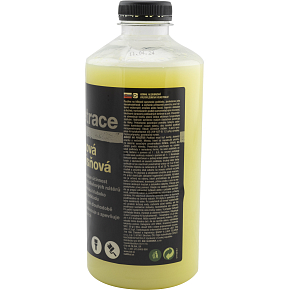
FavoriteCompareMold penetration prevents the formation of mold due to active fungicidal components. For deep strengthening of the substrate, unifying its absorbency and increasing the adhesion of the surface.
Code:
2504527
19.98 EUR
2EUR/1kg
In stock
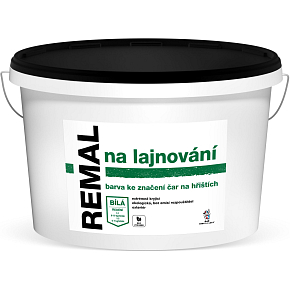
FavoriteCompareLine marking paint is designed for marking lines on outdoor courts and sports areas. For marking lines on sports surfaces in outdoor areas.
Code:
2504778
19.27 EUR
6.02EUR/1kg
In stock
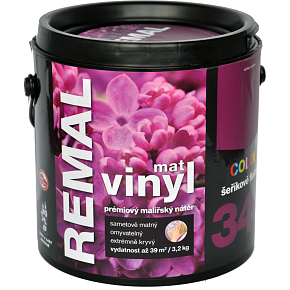
FavoriteCompareWashable wall paint with a velvet matte finish, excellent coverage, and abrasion resistance. Washable paint for painting walls and ceilings indoors on plaster, drywall, and other substrates.
Code:
2506077
7.14 EUR
17.85EUR/1kg
In stock
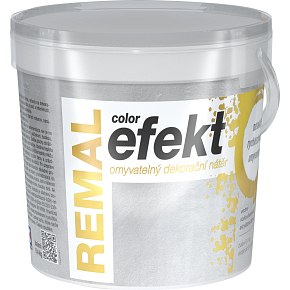
FavoriteCompareDecorative painting color with a metallic and pearlescent appearance for modern design decoration using various painting techniques such as brush or roller painting, spraying, stippling with a sponge, and using painting stencils.
Code:
2501849
28.60 EUR
1.59EUR/1kg
In stock
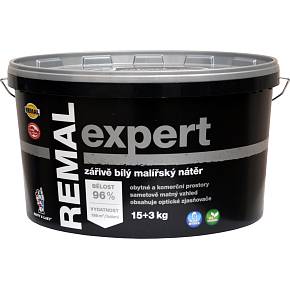
FavoriteComparePremium wall and ceiling paint, dispersible, tintable, vapor-permeable, velvety matte, whiteness 96 %. Brilliant white wall paint is recommended for coatings in residential and commercial spaces.
Code:
2505363
100%
5.97 EUR
In stock
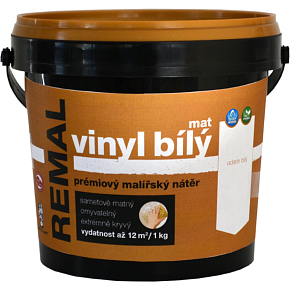
FavoriteComparePremium white paint with a velvety matte finish, excellent coverage, and abrasion resistance. The surface is gently washable. The paint is designed for painting walls and ceilings in interiors on plaster, drywall, and other substrates.
Code:
2504338
33.55 EUR
8.39EUR/1kg
In stock
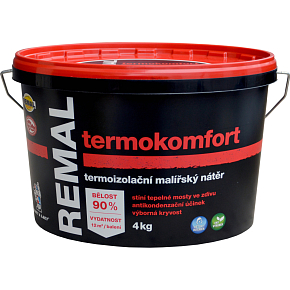
FavoriteCompareThermal insulation paint for walls with anti-condensation effect. Used for painting plasters, concrete, wood, chipboard, etc. in interiors.
Code:
2503271
12.20 EUR
2.44EUR/1kg
In stock
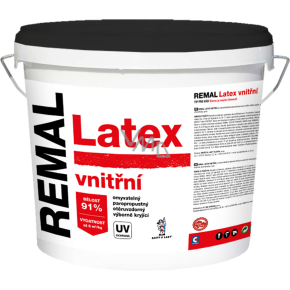
FavoriteCompareIt is intended for indoor coatings of wood, paper, plaster, chipboard, etc. It is washable, with high whiteness and good coverage. Not suitable for buildings with a permanently humid environment.
AKCE
Code:
2502067
9.37 EUR
1.87EUR/1kg
In stock
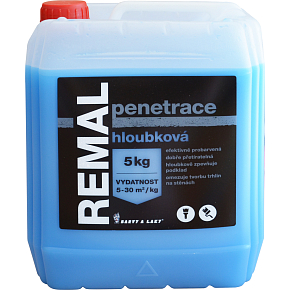
FavoriteCompareDeep penetration for unifying the substrate and its absorbency before coatings of internal plasters or facades, gluing tiles and pavings, leveling floors with self-leveling compounds, local repairs of substrate concrete, etc.
Variants of this product
Code:
2503645
15.82 EUR
3.16EUR/1kg
In stock
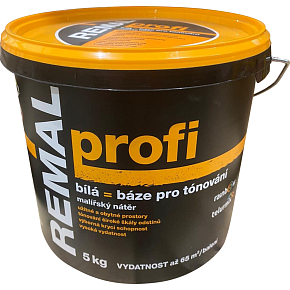
FavoriteCompareCovers excellently, is breathable, abrasion-resistant, and has a high whiteness of 91%. It is used for painting plasters, concrete, gypsum boards, cetris boards, particleboard, and renovation plasters in interiors. Suitable paint for gypsum board.
Code:
2504396
9.76 EUR
3.25EUR/1kg
In stock
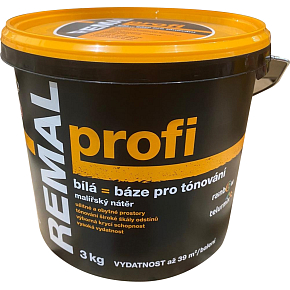
FavoriteCompareCovers excellently, is breathable, abrasion-resistant, and has a high whiteness of 91%. It is used for painting plasters, concrete, drywall, cement boards, chipboard, and renovation plasters in interiors. Suitable paint for drywall.
Recently visited products