/search_thin.svg)

/currency.svg)
/heart.svg)
/user.svg)
/cart.svg)


Den Braven DenBit BR-ALP asphalt penetration paint, 9 kg
Code: 2504203VYPRODÁNO
Date and method of delivery
Producer:
Den Braven Netherlands
:
Den Braven (web)

It is an elastic bitumen mass slightly modified with synthetic rubber, containing chemical additives that enable deep penetration and use on slightly damp substrates.Read more
Choose a discounted package
Quantity discounts
/envelope.svg)
Query
/bell.svg)
Watch
/share.svg)
Share
PARAMETERS
Producer:
Code:
2504203
ean:
8595100133205
Status:
AKCE
Species:
ostatní
Manufacturer:
Den Braven Netherlands
Description Den Braven DenBit BR-ALP asphalt penetration paint, 9 kg
This is a flexible asphalt material slightly modified with synthetic rubber, which, thanks to chemical additives, penetrates deeply and allows for use even on slightly damp substrates. This penetration layer can level out microcracks in the substrate. The resulting coating reliably withstands water, weak acids, and alkalis.
Type of substrate:
Concrete surfaces, plaster, masonry, eternit, elements made of steel and sheet metal (roof coverings, flashings, ducts and penetrations), cardboard and similar bituminous materials, wooden surfaces and substrates made of wood (fiber-cement and cement-bonded boards, OSB boards, and others).
Usage:
As a solution intended for the penetration of foundation strips, foundations, underground parts of the structure, etc. The material is especially suitable as a substrate for thermally weldable membranes of all types. It is used under waterproof coatings made from DenBit DK-ATN and other paint products based on organic asphalts. Among other things, it can also be used as a stand-alone lightweight moisture barrier. Excellent deep penetration ability. It is capable of leveling microcracks in the substrate. Resistant to weak acids and alkalis. Suitable for both dry and damp substrates.
Type of substrate:
Concrete along with other mineral substrates, eternit, components made of steel and sheet metal (roof coverings, flashings, ducts and penetrations), cardboard, and related bituminous-based materials, substrates made of wood and wood-based materials (fiber-cement and gypsum fiber boards, OSB boards, and others).
Preparation of the substrate:
The substrate surface must be cohesive, free of all impurities (dust, rust), without sharp edges or standing water. It must not be frozen or covered with frost, but light moisture is not a problem. For new plasters and concretes, curing is necessary. Weathered, brittle, and flaking layers with inadequate adhesion must be removed. Cut bubbles in the asphalt felt crosswise and reinforce using the Roof Bitumen Adhesive (Tixoplast) or DenBit BOND. Fill small depressions in asphalt substrates with DenBit U repair compound. In case of damage to the load-bearing substrate, fill the depressed areas with special mortars, such as the Repair Filling Compound for Concrete by Den Braven or the Final Repair Compound for Concrete by Den Braven, and subsequently complete the missing waterproofing.
Tools:
Brush, applicator, tar brush, spraying equipment – exclusively for penetrating dry substrates.
Procedure:
Apply by rubbing the material into the substrate using a roofing brush or a brush. In the case of a slightly damp substrate, it is necessary to rub intensively; do not use spraying equipment on damp substrates. For lightweight waterproofing, apply all subsequent layers with a brush or roofing brush after the previous layer has properly dried.
Product safety warnings (H-statements)
- EUH204: Contains isocyanates. May cause an allergic reaction.
- H222: Extremely flammable aerosol.
- H226: Flammable liquid and vapors.
- H229: Container is under pressure: may burst if heated.
- H302: Harmful if swallowed.
- H315: Causes skin irritation.
- H317: May cause an allergic skin reaction.
- H319: Causes serious eye irritation.
- H332: Harmful if inhaled.
- H334: May cause allergy or asthma symptoms or breathing difficulties if inhaled.
- H335: May cause respiratory irritation.
- H336: May cause drowsiness or dizziness.
- H351: Suspected of causing cancer.
- H373: May cause damage to organs through prolonged or repeated exposure.
- H412: Harmful to aquatic life with long-lasting effects.
Safe handling instructions (P-statements)
- P101: If medical advice is needed, have product container or label at hand.
- P102: Keep out of reach of children.
- P210: Keep away from heat, hot surfaces, sparks, open flames and other ignition sources. No smoking.
- P211: Do not spray on an open flame or other ignition sources.
- P251: Do not pierce or burn, even after use.
- P261: Avoid breathing dust/fume/gas/mist/vapors/aerosols.
- P271: Use only outdoors or in a well-ventilated area.
- P280: Wear protective gloves/protective clothing/eye protection/face protection.
- P301+P310: IF SWALLOWED: Immediately call a TOXICOLOGY INFORMATION CENTER/doctor.
- P302: IF ON SKIN:
- P302+P352: IF ON SKIN: Wash with plenty of water and soap.
- P304: IF INHALED:
- P304+P340: IF INHALED: Remove person to fresh air and keep comfortable for breathing.
- P305: IF IN EYES:
- P308: IF exposed or concerned:
- P313: Get medical advice/attention.
- P331: DO NOT induce vomiting.
- P338: Remove contact lenses, if present and easy to do. Continue rinsing.
- P340: Remove person to fresh air and keep comfortable for breathing.
- P351: Rinse cautiously with water for several minutes.
- P352: Wash with plenty of water/...
- P403+P233: Store in a well-ventilated place. Keep container tightly closed.
- P405: Store locked up.
- P410: Protect from sunlight.
- P412: Do not expose to temperatures exceeding 50 °C/122 °F.
- P501: Dispose of contents/container according to product instructions.
| Species: | ostatní |
Documents
Bezpečnostní list
/document.svg)
Prohlášení o shodě
Katalogový list
Related products
AKCE

Code:
2503405
14.54 EUR
In stock
/heart.svg) Favorite
Favorite/compare.svg) Compare
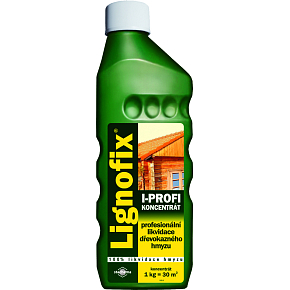
CompareFor treating wood infested by wood-destroying insects (woodworm, longhorn beetle, etc.) and for the preventive treatment of wood against wood-destroying insects in interiors (roof structures, paneling, stairs, floors, etc.) and in outdoor areas without direct and permanent contact...
AKCE
Code:
2503303
35.40 EUR
7.08EUR/1kg
In stock
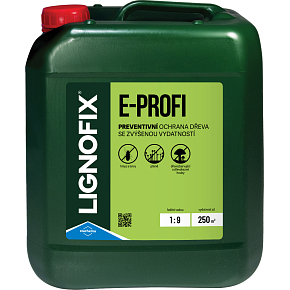
FavoriteCompareHighly effective preparation designed for the preventive surface protection of wood indoors and outdoors against wood-destroying fungi, molds, and wood-destroying insects.

Code:
2502939
30.74 EUR
12.3EUR/1l
In stock
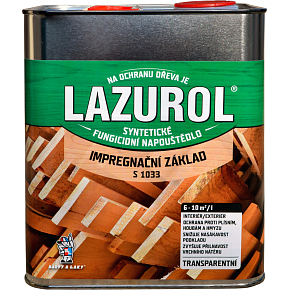
FavoriteCompareFor preventive chemical surface protection of wood and materials based on it against attacks by fungi, wood-staining and wood-destroying fungi, and wood-destroying insects.

Code:
2505937
11.74 EUR
3.91EUR/1kg
In stock
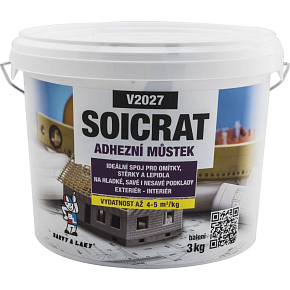
FavoriteCompareUniversal primer based on water-based acrylic resins containing siliceous fillers and other special additives.
Code:
2503276
3.43 EUR
In stock
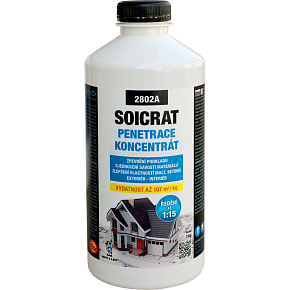
FavoriteCompareUniversal penetrating coating for absorbent substrates (plaster, concrete, wood, etc.) to reduce absorbency and at the same time improve adhesion of the top coat with dispersion paint (Latex, Bakrylex enamel, Barlet acrylic, Bakrylex lacquer).

Code:
2502696
11.14 EUR
In stock
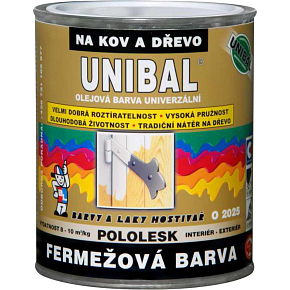
FavoriteCompareFor indoor use as both a primer and top coating for wood and metal. For outdoor use as a primer color. Not intended for coatings that come into direct contact with drinking water, food, feed, or for coatings of children's furniture and toys.
AKCE

Code:
2501211
2.65 EUR
2.65EUR/1kg
In stock
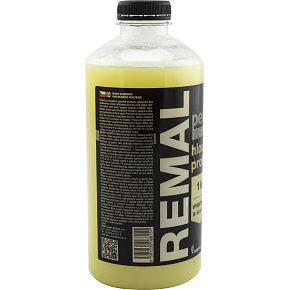
FavoriteCompareMold penetration prevents the formation of mold thanks to active fungicidal ingredients. For deep strengthening of the substrate, unifying its absorbency, and increasing surface adhesion.

Code:
2504435
4.77 EUR
9.54EUR/1l
In stock
FavoriteCompareBiocidal product for effective elimination of molds and algae of various origins, prevention of infestation, chlorine-free, no bleaching effects, suitable for indoor and outdoor use, ready for immediate use.


Code:
2503016
80%
11.74 EUR
2.35EUR/1l
In stock
FavoriteCompareA chemical agent for the preventive impregnation of wood against wood-destroying insects (woodworm, longhorn beetle) and for the remediation of affected wood.
AKCE
Code:
2505131
10.58 EUR
2.12EUR/1kg
In stock
FavoriteCompareAnti-mold penetration prevents mold formation thanks to active fungicidal components. For deep strengthening of the substrate, unifying its absorbency, and increasing surface adhesion.
AKCE
Code:
2507688
35.33 EUR
2.36EUR/1kg
In stock
FavoriteCompareIt is a water-soluble white interior paint that combines the parameters of primer and base paint. It significantly reduces the consumption of final coating, unifies the absorbency of the substrate, and increases its strength.
Code:
2502861
10.22 EUR
13.63EUR/1l
In stock
FavoriteCompareFor preventive chemical surface protection of wood and materials based on it against mold, wood-coloring and wood-destroying fungi, and wood-destroying insects.
Variants of this product

Code:
2507115
10.22 EUR
35.24EUR/1l
In stock
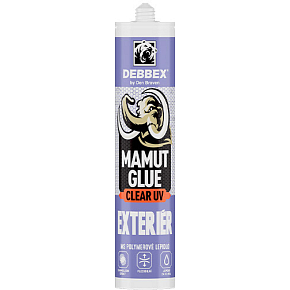
FavoriteCompareTransparent adhesive based on MS polymers. It is made for outdoor use. 100 % UV resistance and frost resistance allow you to use it both indoors and especially outdoors. Flexibility, strength, and chameleon effect are its main advantages. It is the ideal...
AKCE
Code:
2505397
5.16 EUR
6.88EUR/1l
In stock
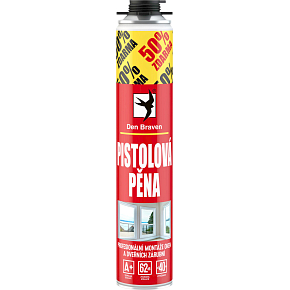
FavoriteCompareFor the installation of door frames and window frames, filling cavities, installation spaces between panels, masonry partitions, ceiling and floor, passages of electrical wiring.
AKCE
Code:
2507497
5.16 EUR
6.88EUR/1l
In stock
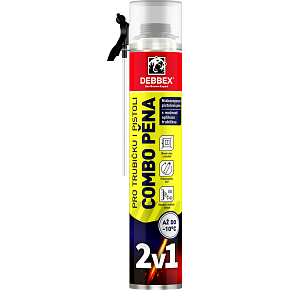
FavoriteCompareProfessional single-component mounting and construction polyurethane foam.
Code:
2503373
2.05 EUR
7.32EUR/1l
In stock
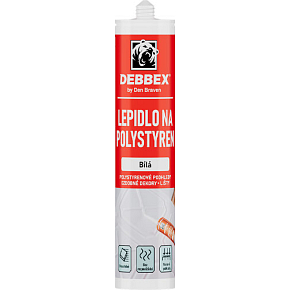
FavoriteCompareFor gluing polystyrene decorative ceiling tiles to absorbent substrates, gluing polystyrene corner and finishing strips, including decorative elements, sealing irregularities
Code:
2503053
6.44 EUR
64.4EUR/1l
In stock
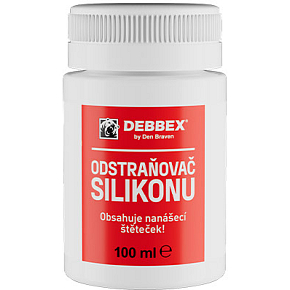
FavoriteCompareFor removing cured silicone from brick, wood, ceramics, stone, concrete, glass, metals, plastics, etc. Simple
AKCE
Code:
2508901
2.79 EUR
111.6EUR/1l
In stock
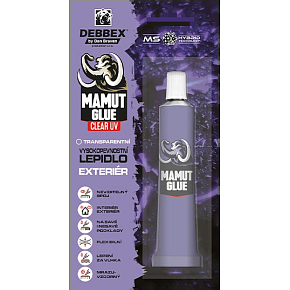
FavoriteCompareTransparent adhesive based on MS polymers. It is perfect for outdoor use. 100% UV resistance and frost resistance allow you to use it both indoors and primarily outdoors. Flexibility, strength, and chameleon effect are its main advantages.
Code:
2505186
9.73 EUR
24.33EUR/1l
In stock
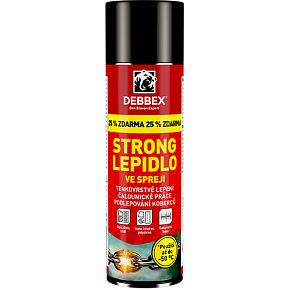
FavoriteCompareButyl-based spray adhesive.
AKCE
Code:
2504806
2.44 EUR
97.6EUR/1l
In stock
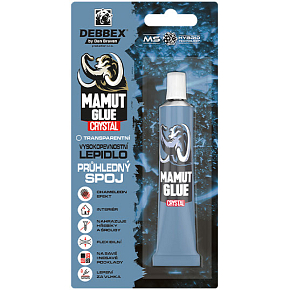
FavoriteCompareThe universal adhesive is suitable for bonding many building materials, such as stainless steel, steel, aluminum, anodized aluminum, zinc, various alloys, PU, PVC, PC, EPS, XPS, PUR, glass, mirror, concrete, natural stone, plaster, enamel, ceramics, etc.
Code:
2504464
2.58 EUR
5.73EUR/1kg
In stock
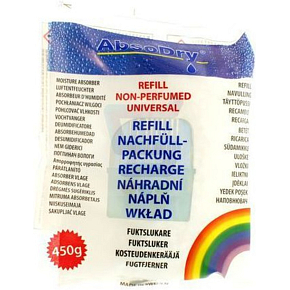
FavoriteCompareSimple solution for reducing humidity in your home - apartments, houses, cottages, garages, caravans, kitchens, living rooms, bedrooms, bathrooms, basements, gyms.
AKCE
Code:
2504451
2.30 EUR
92EUR/1l
In stock
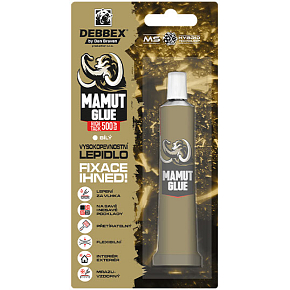
FavoriteCompareModern single-component adhesive based on MS polymer with immediate fixation and exceptionally high initial adhesion of up to 500 kg/m2.
Code:
2504463
5.62 EUR
12.49EUR/1kg
In stock
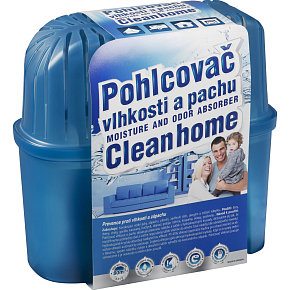
FavoriteCompareSimple solution to reduce humidity in your home - apartments, houses, cottages, garages, caravans, kitchens, living rooms, bedrooms, bathrooms, basements, gyms.
Code:
2507161
0.42 EUR
140EUR/1kg
In stock
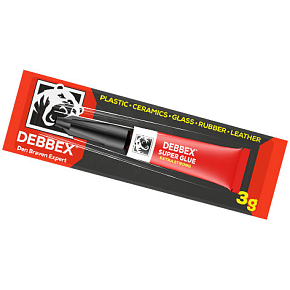
FavoriteCompareBonding various materials with a very quick curing effect; Bonding hard PVC, rubber, glass, metals, APTK-EPDM profiles for glazing; Bonding the mentioned materials including their mutual combinations;
Recently visited products