/search_thin.svg)

/currency.svg)
/heart.svg)
/user.svg)
/cart.svg)

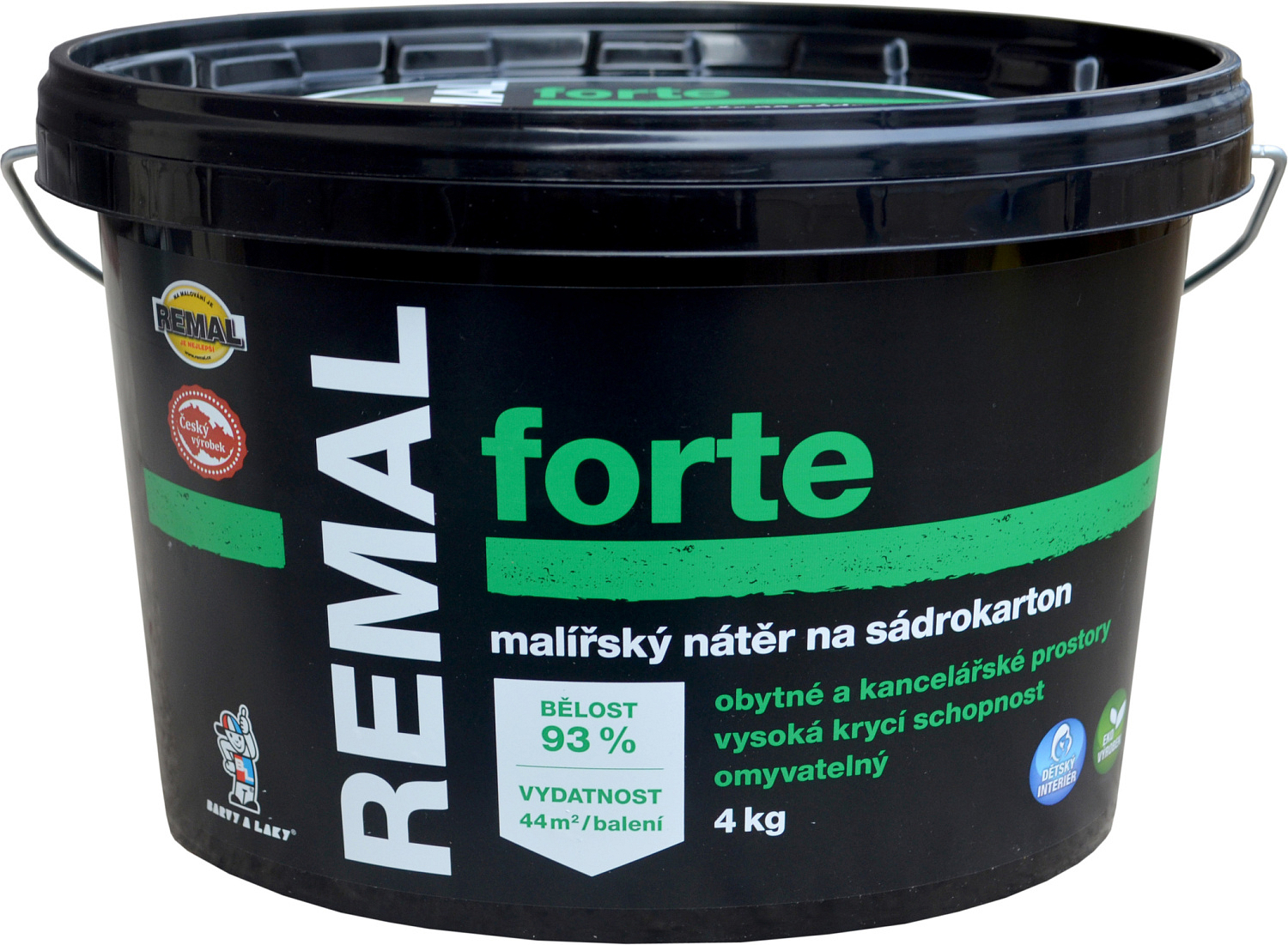
REMAL Forte washable paint for drywall, 4 kg
Code: 2504605
Special washable dispersion paint for coating drywall panels, which can also be used for coating plaster, concrete, cetris boards, particle board, etc., in interiors. Provides excellent coverage, is breathable, washable, and has a high whiteness of 93%.Read more
Choose a discounted package
Quantity discounts
/envelope.svg)
Query
/bell.svg)
Watch
/share.svg)
Share
PARAMETERS
Description REMAL Forte washable paint for drywall, 4 kg
REMAL FORTE is a special washable paint for drywall for coating drywall panels, which can also be used for coating plaster, concrete, cetris boards, particle board, etc., in interiors. Paint for drywall provides excellent coverage, is breathable, washable, and has a high whiteness of 93%. Washable wall paint exhibits wet abrasion resistance – measured according to ČSN EN ISO 11998 – class 3. (classification according to EN 13300).
Properties of washable paint for drywall:
- washable interior wall paint with high whiteness of 93%
- paint for drywall suitable for utility, office, and residential spaces
- color matching available in stores to a wide range of shades
- traditional Czech white paint for drywall
- wear-resistant coating
- high coverage
- high hiding power
- highly breathable wall paint
- easy to process
- medium washable wall paint
- wet abrasion resistance class 3
- coverage up to 11 m²/1 kg in one layer
- can also be tinted with REMAL tinting paint or REMAKOL
Example of application procedure for paint for drywall:
Prepare the drywall with REMAL universal primer or diluted paint for drywall in a ratio of 1 part paint to 1-2 parts water. This will remove dust, unify absorbency, and ensure adhesion. Drying time is 4 hours.
To fill holes, cracks, and uneven surfaces, use REMAL Filler. For larger cracks, remove any loose material, and for filling them, you can use UNIFLEX acrylic sealant for drywall; after it dries, use REMAL Filler for leveling. Once dried and sanded, the surface is easier to paint over with wall paint.
Dilute the paint for drywall REMAL Forte in a ratio of max. 0.1 l of water per 1 kg of paint. Then mix thoroughly. Apply with a brush, roller, or spraying in 1-2 layers, applying an additional layer after the previous one has dried, at least after 4 hours. The optimal temperature for painting is 15 to 25 °C. The temperature of the substrate and environment must not drop below 5 °C during application. For uniform areas, use product from the same batch; mix different batches together before use.
You might find useful
covering materials, such as paper adhesive tape or covering film, or sanding papers. Don't forget brushes, rollers, paint pads, and spatulas.
How often to paint?
It is generally recommended to paint approximately once every 4 to 5 years. However, if you have small children or pets in the family, for hygienic and aesthetic reasons, it is advisable to repaint approximately every 2 years.
Product safety warnings (H-statements)
- EUH208: Contains (see hazardous substances). May cause an allergic reaction.
Documents
Bezpečnostní list
/document.svg)
Certifikát výrobku
Prohlášení o shodě
Related products

Code:
2503215
25.52 EUR
2.55EUR/1kg
In stock
/heart.svg) Favorite
Favorite/compare.svg) Compare
CompareFor indoor and outdoor painting of building materials such as masonry, wood, chipboard, and fiberboard, and paper. It is washable, has high whiteness, and provides good coverage.
Code:
2503492
5.17 EUR
In stock
FavoriteCompareTinting color for coloring paints for interiors, selected shades, and for coloring acrylic and silicone façade paints for exteriors.
AKCE
Code:
2504782
17.56 EUR
5.49EUR/1kg
In stock
FavoriteCompareWashable wall paint with a velvet matte finish, excellent coverage, and abrasion resistance. Washable paint for painting walls and ceilings in interiors on plaster, drywall, and other substrates.
Code:
2500210
100%
6.76 EUR
1.69EUR/1kg
In stock
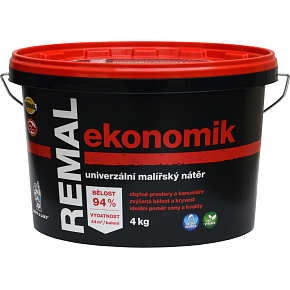
FavoriteCompareDispersion, velvet matte, whiteness 94%. Paint with optically improved whiteness, coverage, and high vapor permeability. Used for painting plasters, concrete, drywall, cement-bonded chipboard, particleboard, and renovation plasters indoors.
Code:
2503482
3.38 EUR
6.76EUR/1kg
In stock
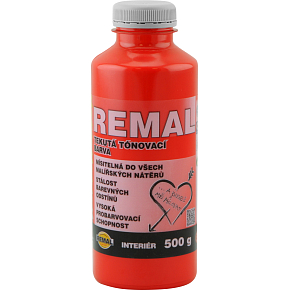
FavoriteCompareTinting paste for coloring interior paints, selected shades, and for coloring acrylic and silicone facade paints for exteriors.
Code:
2505254
14.89 EUR
2.48EUR/1kg
In stock
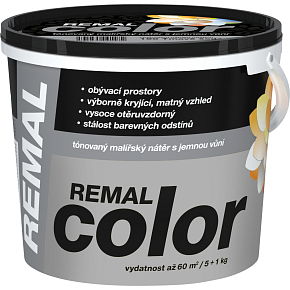
FavoriteCompareWater-dilutable toned paint with a pleasant scent in attractive shades.
Code:
2507410
14.89 EUR
2.48EUR/1kg
In stock
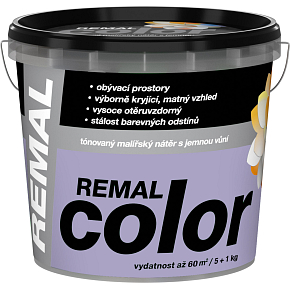
FavoriteCompareWater-dilutable tinted wall paint with a pleasant scent in attractive shades.
AKCE
Code:
2503726
100%
2.25 EUR
1.5EUR/1kg
In stock
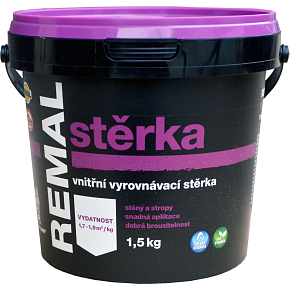
FavoriteCompareSanding white. Smoothing and decorative filler for indoor use. It is used for overall leveling of small unevenness on walls (plaster, masonry, drywall, etc.) in interiors.
Code:
2504609
7.22 EUR
1.81EUR/1kg
In stock
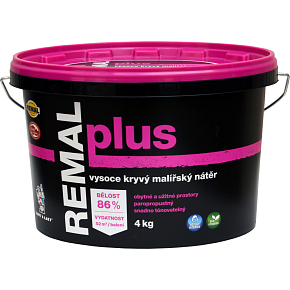
FavoriteCompareTintable paint, dispersion, abrasion-resistant, vapor-permeable, whiteness 86%, white. Highly covering paint recommended for coatings of residential and utility spaces.
Code:
2500215
1.40 EUR
5.6EUR/1kg
In stock
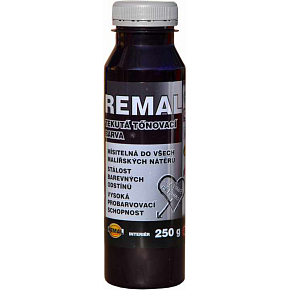
FavoriteCompareTinting color for coloring paints for interiors, selected shades, and for coloring acrylic and silicone facade paints for exteriors.
Code:
2504305
2.81 EUR
5.62EUR/1kg
In stock
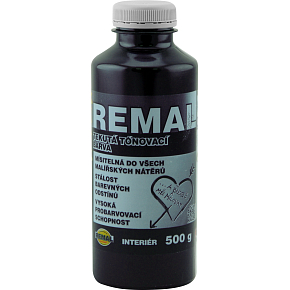
FavoriteCompareTinting color for tinting interior paints, selected shades, and for tinting acrylic and silicone facade paints for exteriors.
Code:
2502456
38.33 EUR
1.53EUR/1kg
In stock
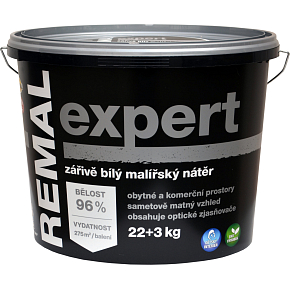
FavoriteComparePremium wall and ceiling paint, dispersible, tintable, vapor-permeable, velvety matte, whiteness 96%. The brilliantly white wall paint is recommended for coatings of residential and commercial spaces.
Variants of this product
Code:
2503723
46.99 EUR
3.13EUR/1kg
In stock
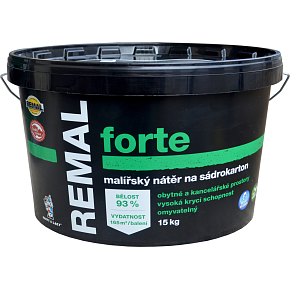
FavoriteCompareSpecial washable dispersive paint for coating plasterboard sheets, which can also be used for coating plasters, concrete, cement boards, chipboard, etc. in interiors. Provides excellent coverage, is breathable, washable, and has a high whiteness of 93%.
Code:
2503722
24.60 EUR
3.28EUR/1kg
In stock
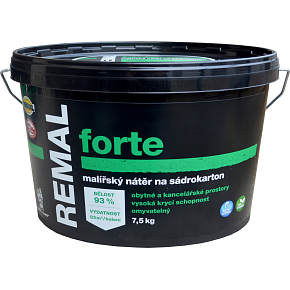
FavoriteCompareSpecial washable dispersion paint for painting drywall boards, which can also be used for painting plasters, concrete, cetris boards, chipboard, etc. in interiors. It has excellent coverage, is breathable, washable, and has a high whiteness of 93%.
Recently visited products