/search_thin.svg)

/currency.svg)
/heart.svg)
/user.svg)
/cart.svg)

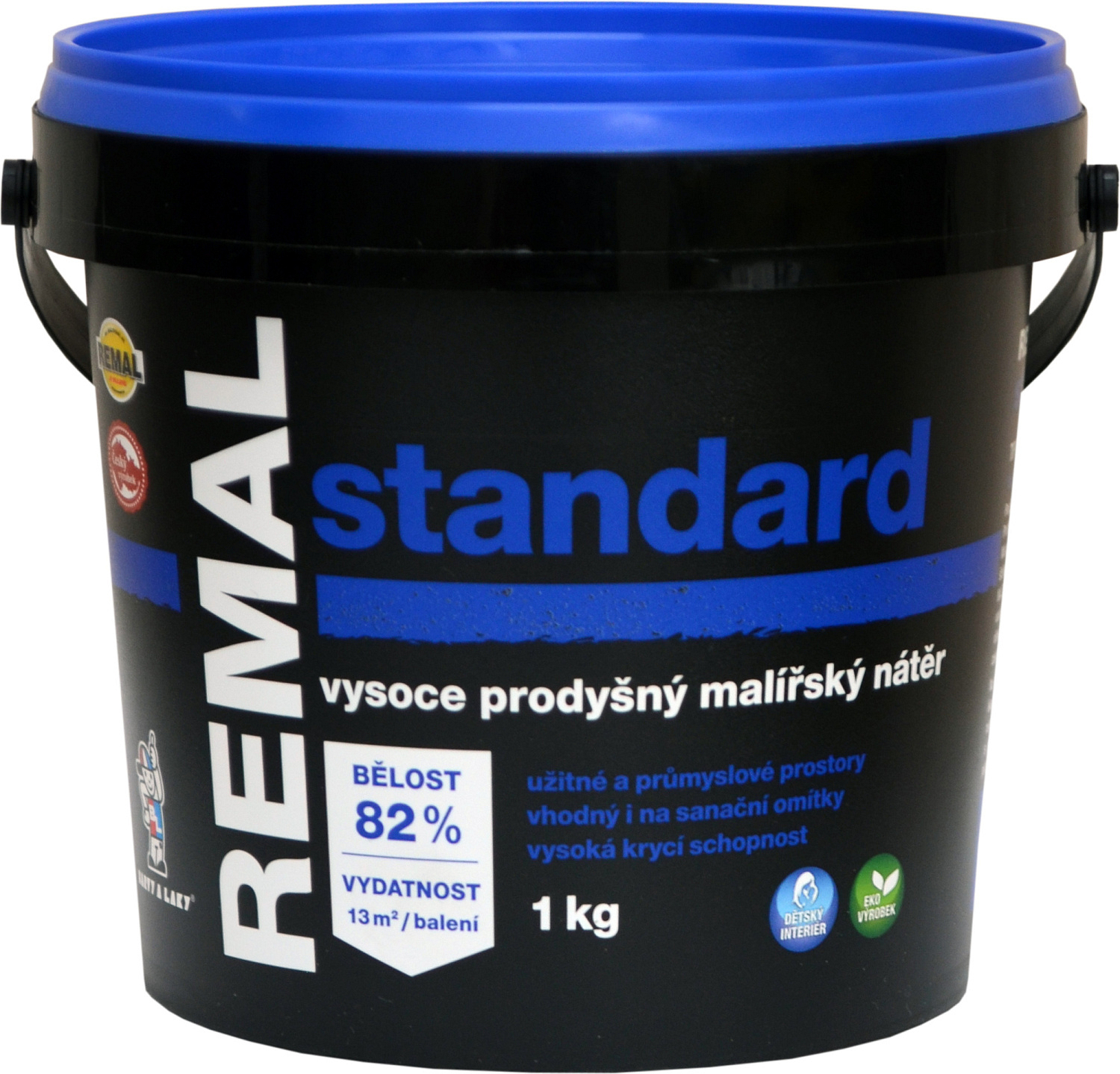
REMAL Standard highly breathable wall paint, 1 kg
Code: 2500212In stock
Date and method of delivery
Producer:
Colors and Varnishes Hostivař a.s.

Remal Standard, highly breathable paint. It is recommended for coatings in utility and industrial spaces. Used for painting walls and ceilings indoors on plasters, drywall, and other substrates.Read more
Choose a discounted package
Quantity discounts
/envelope.svg)
Query
/bell.svg)
Watch
/share.svg)
Share
PARAMETERS
Producer:
Code:
2500212
ean:
8591235028270
Status:
Packaging:
6
Species:
ostatní
Manufacturer:
Colors and Varnishes Hostivař a.s.
Description REMAL Standard highly breathable wall paint, 1 kg
REMAL Standard is a traditional natural kaolin wall paint that is water-soluble. It excels in high coverage, vapor permeability, abrasion resistance, and achieves a standard whiteness of 82%. This REMAL interior paint is designed for coating plasters, concrete, drywall and cement boards, particle board, and renovation plasters. It is recommended for the finishing of commercial and industrial interiors. The coating is characterized by resistance to wet abrasion – tested according to ČSN EN ISO 11998 – class 5. (classification according to EN 13300).
Properties of REMAL white wall paint:
- traditional Czech white wall paint REMAL
- for utility and industrial spaces
- also suitable for renovation plasters
- high covering capability
- highly breathable wall paint
- easy to process
- suitable for children's rooms
- yield 13 m²/1 kg in one coat
- liquid tinting paint REMAL or REMAKOL can be used for tinting
- whiteness 82%
- resistance to wet abrasion after 28 days – class 5. (measured according to ČSN EN ISO 11998, classification according to EN 13300)
Application procedure for REMAL paint:
Before painting, remove layers of old and non-adhering coatings. Treat absorbent substrates with REMAL universal primer, treat non-cohesive and crumbling substrates with REMAL deep penetration primer. This will remove dust from the surface, strengthen it, unify absorbency, and ensure adhesion of the coating. Drying time is 4 hours. Level out unevenness on the wall with REMAL Filler. Dilute the coating at a maximum ratio of 0.4 l of water to 1 kg of paint. Then mix thoroughly.
Apply with a brush, roller, or spraying in 2 layers, applying the next layer after the previous one has dried, at least after 4 h. The optimal temperature for painting is 15 to 25 °C. The temperature of the substrate and environment must not drop below 5 °C during application. For cohesive areas, use a product from the same batch, mix different batches together before use.
You might need
covering material, such as paper adhesive tape or covering film, or sanding papers. Don't forget brushes, rollers, paint pads, and spatulas.
Product safety warnings (H-statements)
- EUH208: Contains (see hazardous substances). May cause an allergic reaction.
- H412: Harmful to aquatic organisms, with long-lasting effects.
Instructions for safe handling (P-statements)
- P273: Avoid release to the environment.
- P280: Wear protective gloves/protective clothing/eye protection/face shield.
- P501: Dispose of contents/container in accordance with product instructions.
| Species: | ostatní |
Documents
Bezpečnostní list
/document.svg)
Certifikát výrobku
Prohlášení o shodě
Katalogový list
Related products
AKCE

Code:
2504783
17.64 EUR
5.51EUR/1kg
In stock
/heart.svg) Favorite
Favorite/compare.svg) Compare
CompareWashable wall paint with a velvety matte appearance, excellent coverage, and abrasion resistance. Washable paint for painting walls and ceilings in interiors on plaster, drywall, and other substrates.
Code:
2503602
26.34 EUR
3.51EUR/1kg
In stock
FavoriteCompareIt is washable, breathable, provides excellent coverage, and is resistant to weather influences. It is used for painting lime-cement plasters, masonry, concrete panels, lightweight panels, brizolite, chipboard, etc.
Code:
2503645
15.82 EUR
3.16EUR/1kg
In stock
FavoriteCompareExcellent coverage, breathable, washable, and has a high whiteness of 91%. It is used for painting plasters, concrete, drywall, cement boards, particle boards, and renovation plasters in interiors. Suitable paint for drywall.
AKCE
Code:
2504800
62.19 EUR
4.15EUR/1kg
In stock
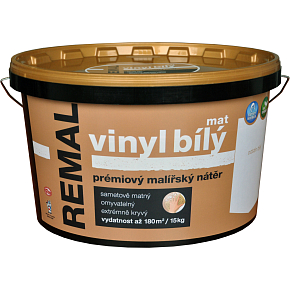
FavoriteComparePremium white paint with a velvety matte appearance, excellent coverage, and abrasion resistance. The surface is gently washable. The coating is designed for painting walls and ceilings indoors on plaster, drywall, and other substrates.
AKCE
Code:
2504798
17.29 EUR
4.32EUR/1kg
In stock
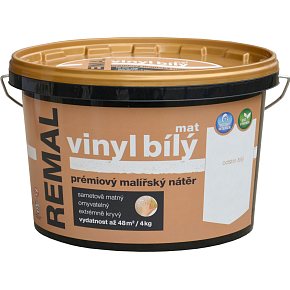
FavoriteComparePremium white paint with a velvety matte finish, excellent coverage, and abrasion resistance. The surface is gently washable. The coating is intended for painting walls and ceilings indoors on plaster, drywall, and other substrates.
Code:
2505045
14.96 EUR
2.49EUR/1kg
In stock
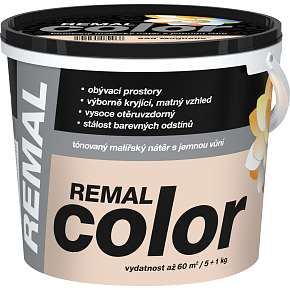
FavoriteCompareWater-based toned painter’s paint with a pleasant scent in attractive shades.
Code:
2503707
26.69 EUR
1.78EUR/1kg
In stock
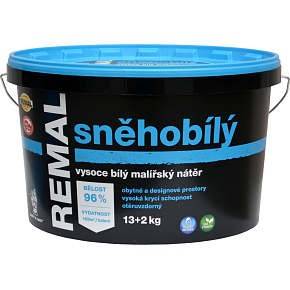
FavoriteCompareFor painting residential and design spaces. Used for painting walls and ceilings indoors on plasters, drywall, and other substrates. It is easy to process, health-safe, and environmentally friendly.
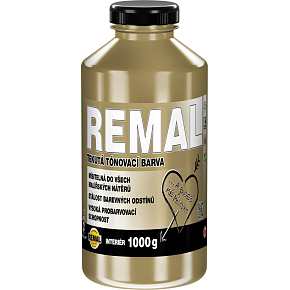
Code:
2503499
4.03 EUR
In stock
FavoriteCompareTinting color for coloring painting colors for interiors, selected shades also for coloring acrylic and silicone facade paints for exteriors.
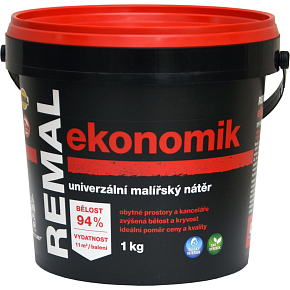
Code:
2500310
2.19 EUR
2.19EUR/1kg
In stock
FavoriteCompareDispersion, velvet matte, whiteness 94 %. Paint with optically improved whiteness, opacity, and high vapor permeability. Used for painting plaster, concrete, drywall, cetris boards, chipboard, and renovation plasters in interiors. Made from natural ingredients.
AKCE
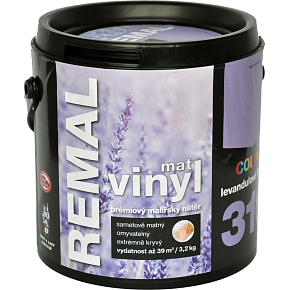
Code:
2504777
17.64 EUR
5.51EUR/1kg
In stock
FavoriteCompareWashable wall paint with a velvet matte appearance, excellent coverage and abrasion resistance. Washable paint for painting walls and ceilings indoors on plaster, gypsum board, and other surfaces.
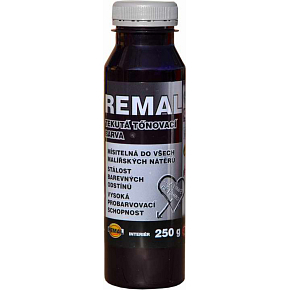
Code:
2500215
1.41 EUR
5.64EUR/1kg
In stock
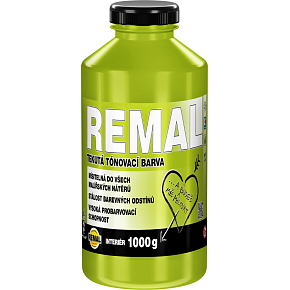
FavoriteCompareToning color for coloring interior paints, selected shades also for coloring acrylic and silicone facade paints for exteriors.
Code:
2503496
3.75 EUR
In stock
FavoriteCompareTinting color for coloring interior paints, selected shades also for coloring acrylic and silicone facade paints for exteriors.
Variants of this product
Code:
2500883
9.51 EUR
1.27EUR/1kg
In stock
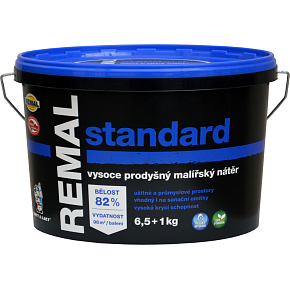
FavoriteCompareRemal Standard, highly breathable painting coating. It is recommended for coatings of utility and industrial areas. It is used for painting walls and ceilings indoors on plaster, drywall, and other substrates.
Code:
2500213
5.83 EUR
1.46EUR/1kg
In stock
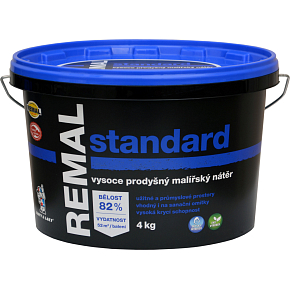
FavoriteCompareRemal Standard, highly breathable paint. It is recommended for coatings in utility and industrial spaces. It is used for painting walls and ceilings indoors on plaster, drywall, and other substrates.
Code:
2503719
26.83 EUR
1.07EUR/1kg
In stock
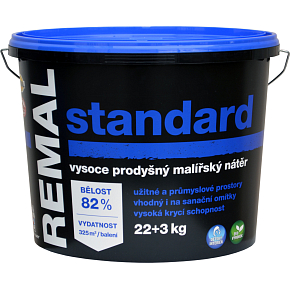
FavoriteCompareRemal Standard, highly breathable paint. It is recommended for coatings in utility and industrial spaces. It is used for painting walls and ceilings indoors on plasters, drywall, and other substrates.
AKCE
Code:
2503717
39.92 EUR
1EUR/1kg
In stock
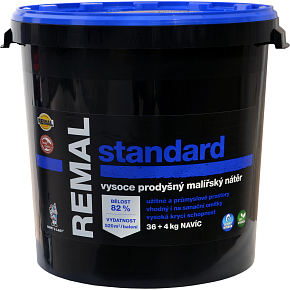
FavoriteCompareRemal Standard, highly breathable paint. It is recommended for coatings in utility and industrial spaces. It is used for painting walls and ceilings in interiors on plaster, drywall, and other substrates.
Code:
2500214
19.27 EUR
1.07EUR/1kg
In stock
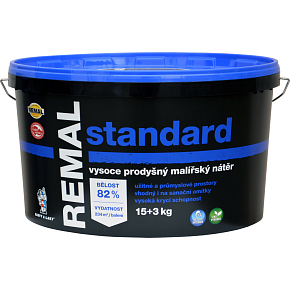
FavoriteCompareRemal Standard, highly breathable paint. It is recommended for coatings in utility and industrial spaces. It is used for painting walls and ceilings indoors on plaster, drywall, and other substrates.
Code:
2503705
16.79 EUR
1.12EUR/1kg
In stock
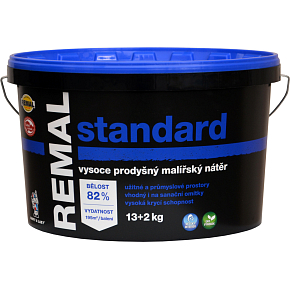
FavoriteCompareRemal Standard, highly breathable painting finish. It is recommended for coatings in utility and industrial spaces. It is used for painting walls and ceilings indoors on plasters, drywall, and other surfaces.
Recently visited products