/search_thin.svg)

/currency.svg)
/heart.svg)
/user.svg)
/cart.svg)

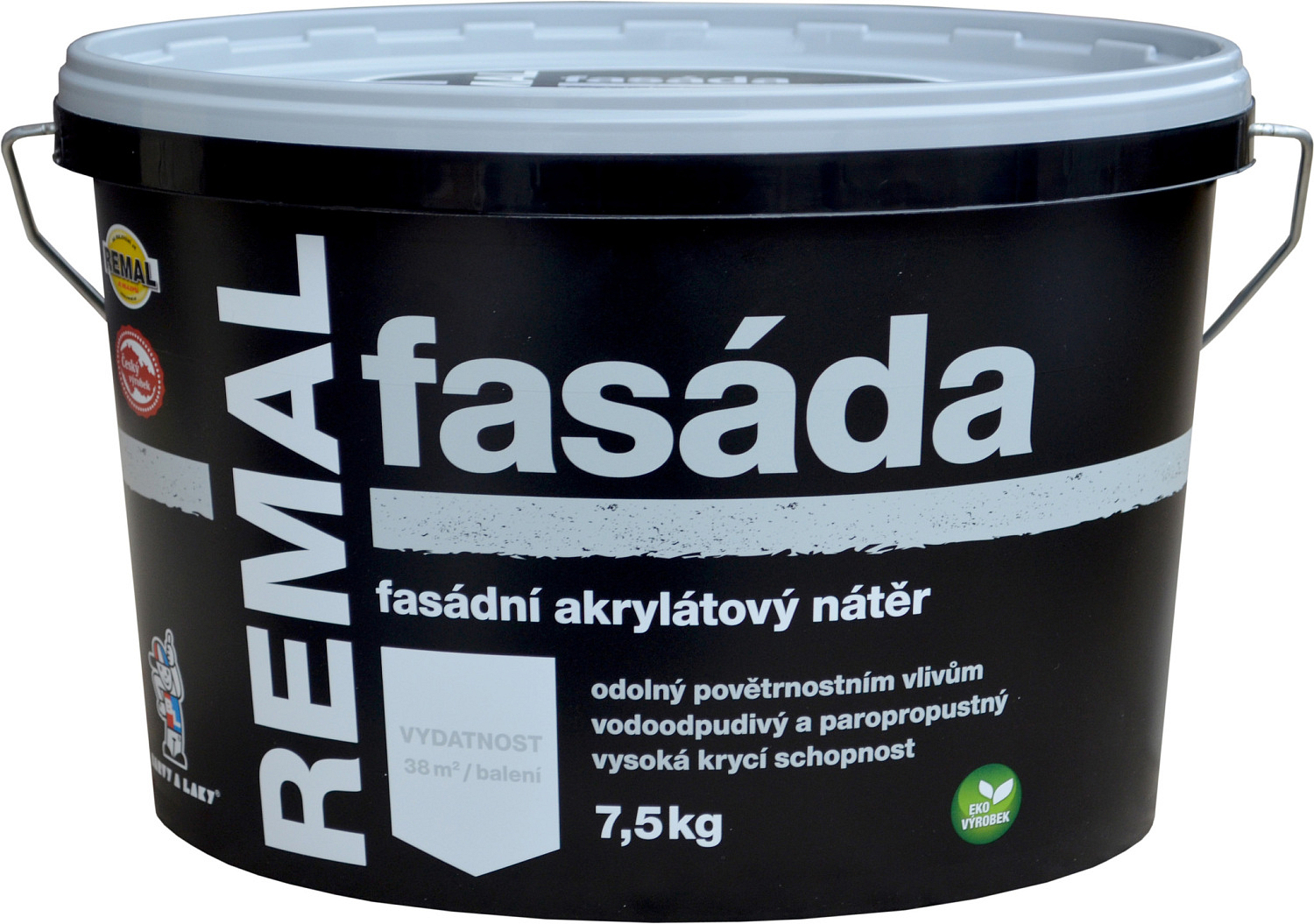
REMAL Facade Acrylic Facade Paint White 7.5 kg
Code: 2503602In stock
Date and method of delivery
Producer:
Colors and Varnishes Hostivař a.s.

It is washable, breathable, has excellent coverage, and is weather resistant. It is used for painting lime-cement plasters, masonry, concrete panels, panels made of lightweight materials, brizolite, particle board, etc.Read more
Choose a discounted package
Quantity discounts
/envelope.svg)
Query
/bell.svg)
Watch
/share.svg)
Share
PARAMETERS
Producer:
Code:
2503602
ean:
8591235036329
Status:
Species:
ostatní
Manufacturer:
Colors and Varnishes Hostivař a.s.
Description REMAL Facade Acrylic Facade Paint White 7.5 kg
Facade paint REMAL FASÁDA is a modern acrylic facade paint that is easy to wash, breathable, has excellent coverage, and is weather resistant. It is used for painting lime-cement plasters, masonry, concrete panels, panels made of lightweight materials, brizolite, particle board, etc.
Properties of facade paint:
- ideal paint for facades
- weather resistant
- water-repellent and vapor-permeable
- high coverage ability
- easily workable facade paint
- washable
Technical properties of facade paint:
- coverage of up to 5 m²/1 kg in one layer
- can be tinted with REMAL tinting paint, BARLET tinting paint, or REMAKOL EX-S tinting pastes
- for outdoor plasters, concretes, and other substrates
Example of application procedure for facade paint:
General conditions that must be met before painting with facade paint:
- repairs with plaster in outdoor environments are not suitable
- old non-adhering coatings must be removed with a scraper or high-pressure water
- older substrates must be assessed, non-compliant ones removed and repaired with a new lime-cement plaster
- new lime-cement plasters must be allowed to cure for at least one month
- the application of facade paint is a thin layer - it copies the substrate, therefore we recommend brushing or rubbing off sand particles from the surface after the new plasters have dried to prevent shadowing on unevenly smoothed painted plaster
- the temperature of the substrate and the environment during work is recommended to be between 15° C and 25° C, painting cannot be carried out in rain, strong wind, and during intense sunlight
- windows, metal parts, and gutters must be covered, dried paint residues are difficult to remove
- substrates must be dry and cured before starting painting, we recommend checking the moisture of the plaster with a suitable moisture meter before starting the painting
- for painting larger areas, it is recommended to use products from the same batch, or mix individual batches together, especially concerning color shades
- combination of different application techniques (roller + brush) must be tested in advance, especially for intense shades - risk of different coloring due to differing surfaces of the paint
Too absorbent, crumbling, or non-adhering substrates must be beforehand treated with a suitable primer, such as REMAL, BARLET, or SOICRAT. In the case of local repairs, where it is not possible to wait 4 weeks for the plaster to cure, after drying the new plaster, it can be treated with REMAL TELSAL neutralizing salt and, after drying, continue with the above-mentioned primer.
Dilute the paint at a ratio of max. 0.05 l of water to 1 kg of paint. Then mix thoroughly. Apply in 2 layers, applying the next layer after the previous one has dried for at least 4 hours. For uniform areas, use a product from one batch; mix different batches together before use.
You may find it useful to have covering material, such as paper masking tape or covering foil. Don’t forget brushes and rollers.
Product safety warning (H-statements)
- EUH208: Contains (see hazardous substances). May cause an allergic reaction.
| Species: | ostatní |
Documents
Certifikát výrobku
/document.svg)
Prohlášení o shodě
Related products
AKCE

Code:
2500219
1.34 EUR
5.36EUR/1kg
In stock
/heart.svg) Favorite
Favorite/compare.svg) Compare
CompareTinting paint for coloring interior paints, selected shades, and for coloring acrylic and silicone facade paints for exteriors.
Code:
2503492
5.17 EUR
In stock
FavoriteCompareTinting color for coloring paints for interiors, selected shades, and for coloring acrylic and silicone façade paints for exteriors.
Code:
2503477
2.11 EUR
4.22EUR/1kg
In stock
FavoriteCompareToning color for coloring interior paints, selected shades, and for coloring acrylic and silicone facade paints for exteriors.
Code:
2502856
7.71 EUR
2.57EUR/1kg
In stock
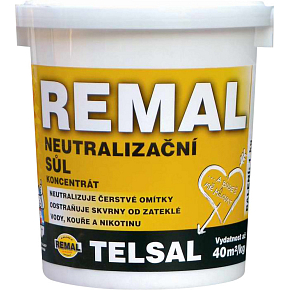
FavoriteCompareNeutralizing salt for wall stains. The agent is intended for the neutralization of fresh dried plaster against the efflorescence of water-soluble salts and lime from plasters and for the remediation of color stains from smoke, nicotine, and leaking water.
Code:
2503269
13.20 EUR
2.64EUR/1kg
In stock
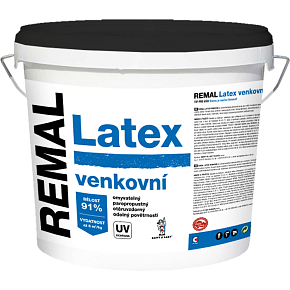
FavoriteCompareFor indoor and outdoor coatings of building materials such as masonry, wood, particleboard, and fiberboard, and paper. It is washable, with high whiteness and good coverage.
AKCE
Code:
2504775
17.56 EUR
5.49EUR/1kg
In stock
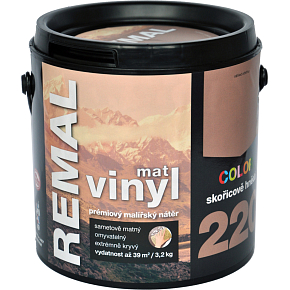
FavoriteCompareWashable wall paint with a velvety matte appearance, excellent coverage, and scrub resistance. Washable paint for painting walls and ceilings in interiors on plaster, gypsum board, and other substrates.
AKCE
Code:
2504798
17.21 EUR
4.3EUR/1kg
In stock
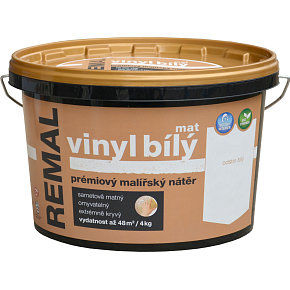
FavoriteComparePremium white paint with a velvet matte finish, excellent coverage, and scrub resistance. The surface is gently washable. The paint is intended for painting walls and ceilings indoors on plaster, drywall, and other substrates.
AKCE
Code:
2500220
1.27 EUR
5.08EUR/1kg
In stock
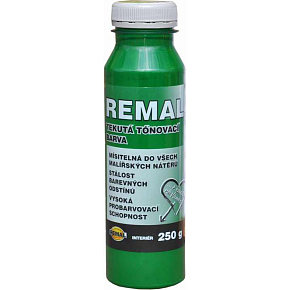
FavoriteCompareTinting color for coloring painting colors for interiors, selected shades and for coloring acrylic and silicone facade paints for exteriors.
Code:
2500316
7.57 EUR
1.89EUR/1kg
In stock
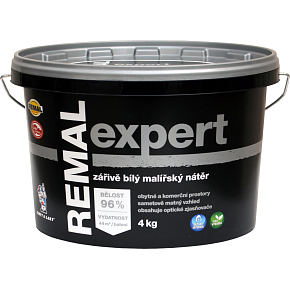
FavoriteComparePremium wall and ceiling paint, dispersion, tintable, vapor-permeable, velvety matte, whiteness 96%. Bright white wall paint is recommended for coatings in residential and commercial spaces.
Code:
2503705
16.72 EUR
1.11EUR/1kg
In stock
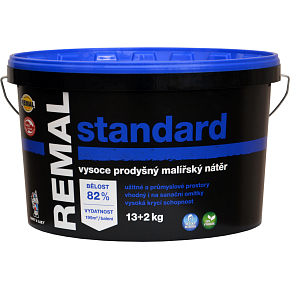
FavoriteCompareRemal Standard, highly breathable painting finish. It is recommended for coatings in utility and industrial spaces. It is used for painting walls and ceilings indoors on plasters, drywall, and other surfaces.
AKCE
Code:
2504783
17.56 EUR
5.49EUR/1kg
In stock
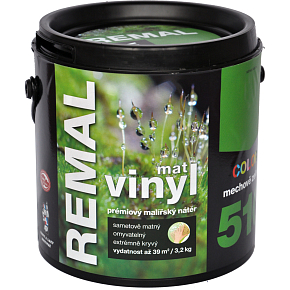
FavoriteCompareWashable wall paint with a velvet matte finish, excellent opacity, and abrasion resistance. Washable paint for painting walls and ceilings indoors on plaster, drywall, and other substrates.
Code:
2504336
17.07 EUR
2.28EUR/1kg
In stock
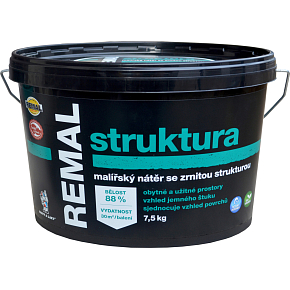
FavoriteCompareWater-dilutable painter's paint with a rough grain texture up to 0.5 mm. It is primarily used for imitating the appearance of plaster, for painting plasters, concrete, drywall, cement boards, particleboard, etc. in interiors.
Variants of this product
AKCE
Code:
2504604
14.04 EUR
3.51EUR/1kg
In stock
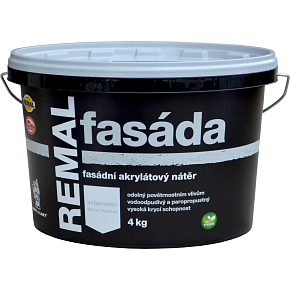
FavoriteCompareIt is washable, breathable, has excellent covering properties, and withstands weather conditions. It is used for coatings of lime-cement plasters, masonry, concrete panels, lightweight material panels, brizolite, particle board, etc.
Code:
2503603
4.65 EUR
In stock
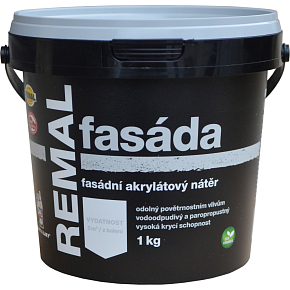
FavoriteCompareIt is washable, breathable, excellently covering, and resistant to weather conditions. It is used for coating lime-cement plasters, brickwork, concrete panels, lightweight panels, břízolit, chipboard, etc.
AKCE
Code:
2501346
43.96 EUR
2.93EUR/1kg
In stock
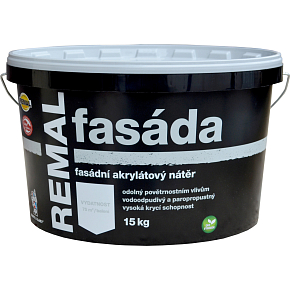
FavoriteCompareIt is washable, breathable, excellently covering, and resistant to weather conditions. It is used for painting lime-cement plasters, masonry, concrete panels, panels made of lightweight materials, brizolite, particle board, etc.
Code:
2504662
2.67 EUR
In stock
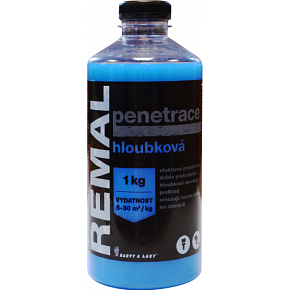
FavoriteCompareDeep penetration for unifying the substrate and its absorbency before coatings for interior plasters or facades, tiling and paving, leveling floors with self-leveling compounds, local repairs of underlying concretes, etc.
Code:
2502067
9.93 EUR
1.99EUR/1kg
In stock
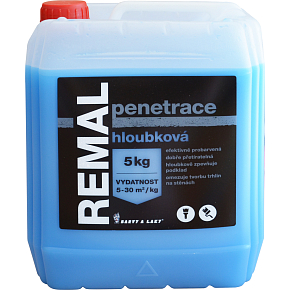
FavoriteCompareDeep penetration for unifying the substrate and its absorbency before coatings of internal plasters or facades, gluing tiles and pavings, leveling floors with self-leveling compounds, local repairs of substrate concrete, etc.
Code:
2505131
11.40 EUR
2.28EUR/1kg
In stock
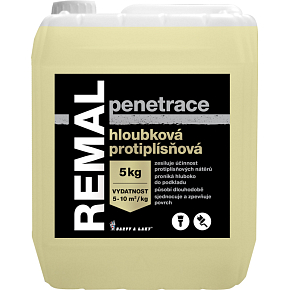
FavoriteCompareFungicidal penetration proactively limits mold formation thanks to active fungicidal components. For deep reinforcement of the substrate, unifying its absorbency, and increasing surface adhesion.
Code:
2501211
2.81 EUR
2.81EUR/1kg
In stock
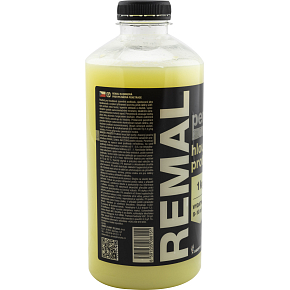
FavoriteCompareMold penetration proactively limits the formation of mold thanks to active fungicidal components. For deep reinforcement of the substrate, unifying its absorbency, and increasing the surface adhesion.