/search_thin.svg)

/currency.svg)
/heart.svg)
/user.svg)
/cart.svg)

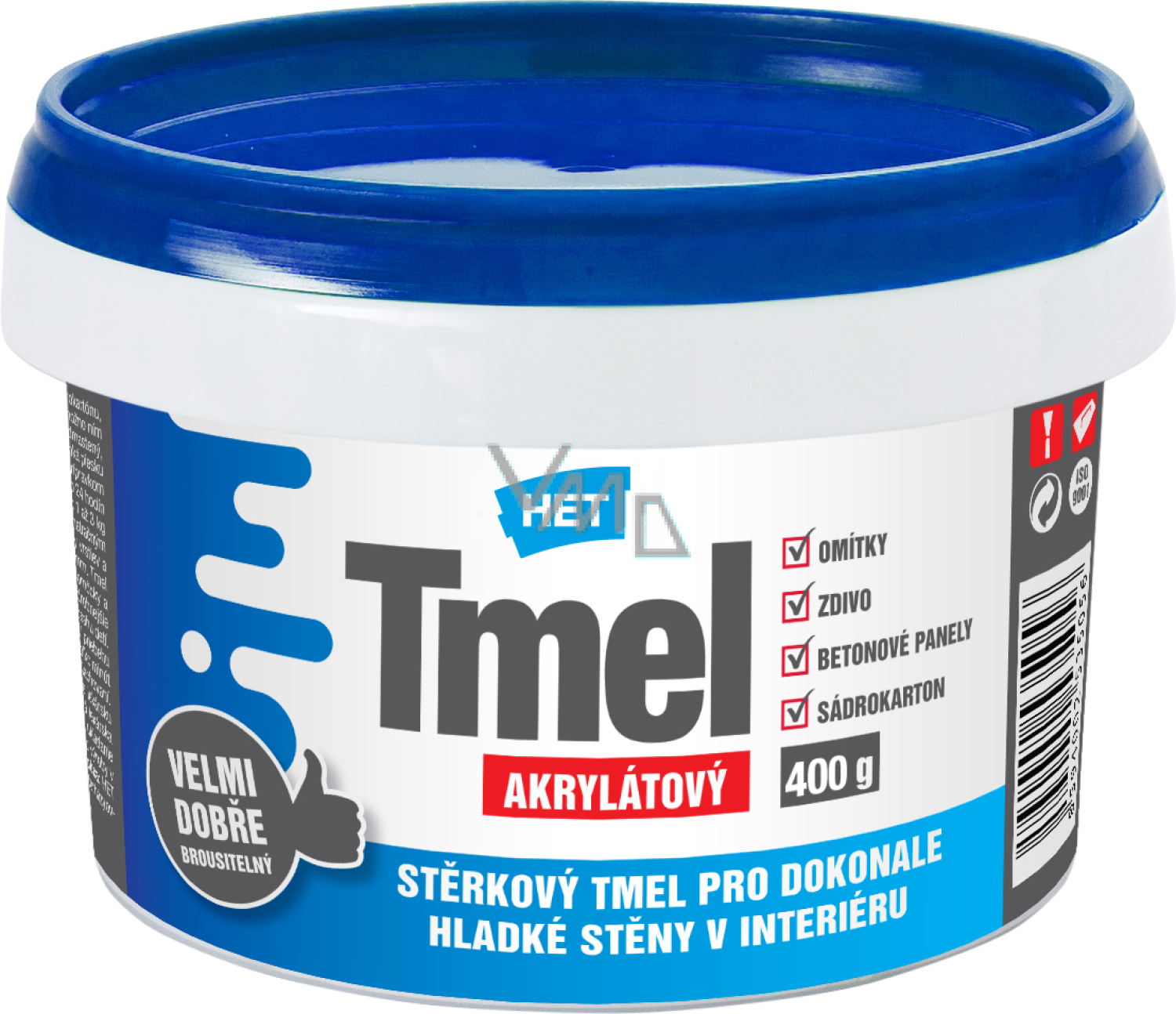
Het Acrylic Sealant for Gypsum Board, Masonry and Plasters, 400 g
Code: 2503217In stock
Date and method of delivery
Producer:
Het, spol. s.r.o.

For leveling surfaces of walls (plasters, masonry, panels, gypsum board, etc.) in interiors. The sealant is not recommended for jointing.Read more
Choose a discounted package
Quantity discounts
/envelope.svg)
Query
/bell.svg)
Watch
/share.svg)
Share
PARAMETERS
Description Het Acrylic Sealant for Gypsum Board, Masonry and Plasters, 400 g
Het Acrylic Sealant for level surface finishing of walls (plasters, masonry, panels, gypsum board, etc.) in interiors. Interior finishing leveling sealant for manual application on construction materials, especially mineral walls. It is used to level small imperfections in walls (plasters, masonry, panels, gypsum board, etc.) or for minor repairs. The sealant is ready for immediate use, has thixotropic properties, is vapor-permeable, very easy to sand, and can achieve very smooth surfaces. The product meets the requirements for surfaces that may come into indirect contact with food. It is not recommended for jointing and in areas with high mechanical or thermal stress. It is not suitable as a substrate for mineral or polymer plasters. Sealed areas must not be in contact with water and rising moisture.
Properties of Het Acrylic Sealant for Gypsum Board, Masonry and Plasters:
- Ready for immediate use,
- thixotropic properties,
- very good sandability,
- vapor-permeable.
Shade:
non-standard white.
Coverage:
Approximately 0.3 to 1 m²/1 kg of sealant in one layer. The coverage may vary depending on the thickness of the applied layer, substrate structure, application technique, and other factors. The exact coverage for a specific substrate must be determined on a test area. Consumption: 1 - 3 kg/m² in one layer (depending on the type of substrate).
Drying time:
min. 4 - 24 hours at 20 °C and 60% relative air humidity.
Storage:
24 months from the date of manufacture in the original unopened container, at a temperature of +3 to +30 °C, must not freeze, protect from direct sunlight.
Substrate:
dry, mature (pH ≤8.5; check can be done with a pH tester), cohesive, not salt-laden, solid, degreased, free of dust, dirt, and non-cohesive layers, without dynamic cracks and joints, free from biological infestation (mold, algae). Layers of old coatings with insufficient adhesion must be removed, e.g., by scraping. For plasters, remove loose sand grains (by sanding and/or sweeping). To improve the adhesion of the sealant to the substrate, it is
recommended to apply a primer. Metal elements that penetrate the surface being treated must be coated with an anti-corrosive paint before sealing.
Application temperature:
the temperature of the material, the environment, and the substrate must be between +5 and +30 °C (better +8 to +25 °C) during application and for 24 hours (preferably 48 hours) after application.
Example of application procedure:
- cover windows, radiators, door frames, etc.
- before applying the sealant, any dried material from the sealant packaging must be removed.
- layers of old coatings with insufficient adhesion must be removed, e.g., by scraping.
- apply a primer. For less absorbent and/or extremely smooth substrates (gypsum board, gypsum plaster, cement-polymer plaster, etc.), the primer is applied with the primer UP-GRUND, for more absorbent substrates (lime or lime-cement plaster, masonry, etc.) use the products A-GRUND, 100-GRUND, or AT-GRUND according to the instructions for use.
- after the primer has completely dried, apply the ACRYLIC SEALANT with a stainless steel trowel (small areas with a steel spatula). The recommended thickness of one layer is 1 mm, the maximum permitted thickness of one layer is 2 mm.
- allow the sealant to dry until fully cured (approximately 4 to 24 hours or longer, drying time highly depends on the thickness of the layers, absorbency of the substrate, temperature, and humidity).
- it is advisable to sand the sealed areas after drying with sanding mesh or fine sandpaper on a firm backing.
- if necessary, additional layers of sealant can be applied and each time after drying, sand again. The total thickness of the layers should not exceed 4 mm to avoid the risk of cracking.
- after sanding, dust must be removed from the sanded areas.
- tools and contaminated areas should be washed immediately with water.
- before painting, it is recommended to re-prime the sealed areas with, for example, UP-GRUND, AGRUND, AT-GRUND, or 100-GRUND.
- then it is possible to apply dispersion paints to the surfaces, such as products from the KLASIK, HETLINE, or BRILLANT range. It is not advisable to use lime paints or paints without sufficient content of dispersion binder on sealed surfaces.
| Species: | ostatní |
Documents
Bezpečnostní list
/document.svg)
Katalogový list
Related products

Code:
2503177
0.91 EUR
In stock
/heart.svg) Favorite
Favorite/compare.svg) Compare
CompareProduct for filling holes and irregularities in the substrate - for plumbing, electrical, heating, modeling, and construction work.
AKCE
Code:
2503166
58.67 EUR
3.26EUR/1kg
In stock
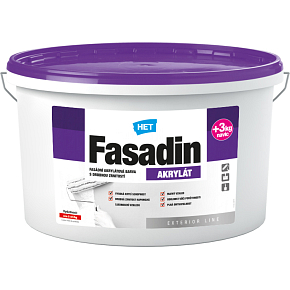
FavoriteCompareFacade paint for outdoor coatings of lime, lime-cement, and břízolit plasters, plasters with acrylic binder, masonry, for decorative coatings of vertical concrete structures, etc.
Code:
2502822
2.99 EUR
8.54EUR/1kg
In stock
FavoriteCompareHetcolor, acrylic tinting paint - for tinting facade and interior dispersion and classic coatings or for direct application.
Code:
2601010
18.37 EUR
2.3EUR/1kg
In stock
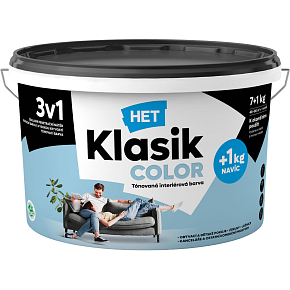
FavoriteCompareFor interior wall and ceiling coatings, strong covering power and spreadability, matte appearance, resistance to dry abrasion, excellent vapor permeability.
Code:
2502834
5.70 EUR
In stock
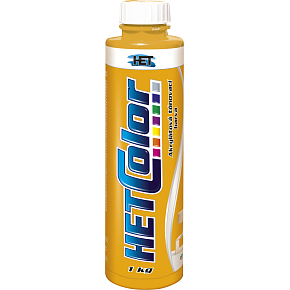
FavoriteCompareHetcolor, acrylic tinting color - for tinting facade and interior dispersion as well as classic coatings or for direct application.
Code:
2601003
11.09 EUR
2.77EUR/1kg
In stock
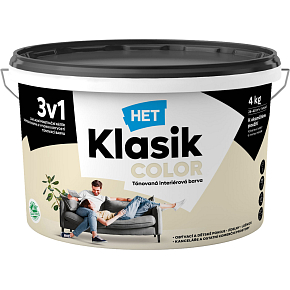
FavoriteCompareFor interior wall and ceiling coatings, high coverage and spreadability, matte appearance, resistance to dry abrasion, excellent vapor permeability.
Code:
2502824
2.99 EUR
8.54EUR/1kg
In stock
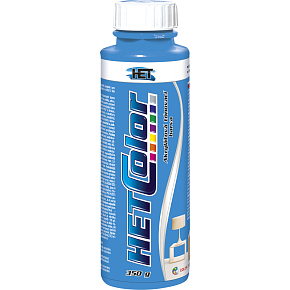
FavoriteCompareHetcolor, acrylic tinting paint - for tinting facade and interior dispersion and traditional coatings or for direct application.
AKCE
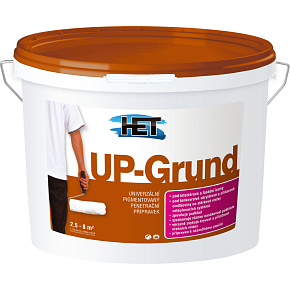
Code:
2503968
11.44 EUR
2.29EUR/1kg
In stock
FavoriteCompareFor acrylic, vinyl, and silicone interior and facade paints. For thin-layer acrylic and silicone plasters on leveling layers of insulation systems.

Code:
2504104
11.09 EUR
2.77EUR/1kg
In stock
FavoriteCompareFor interior coatings of walls and ceilings, significant coverage and spreadability, matte appearance, resistance to dry abrasion, excellent vapor permeability.
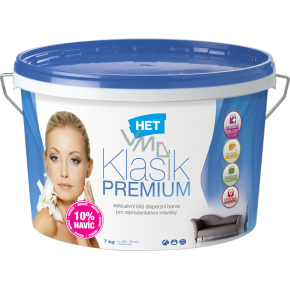
Code:
2506911
16.96 EUR
2.12EUR/1kg
In stock
FavoriteCompareHigh white interior paint intended for coating walls and ceilings, lime, lime-cement, plaster-lime and plaster coatings, plasterboard, cement-bonded and wood-fiber boards and more.
AKCE
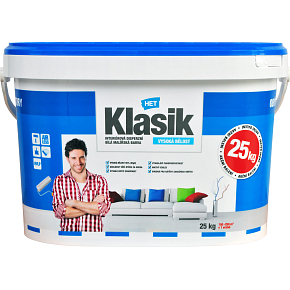
Code:
2504993
37.31 EUR
1.49EUR/1kg
In stock
FavoriteCompareRecommended for living and commercial spaces, children's rooms, hallways, offices, retail spaces. High whiteness min. 95% MgO, significant covering ability, matte appearance, resistance to dry abrasion, excellent vapor permeability, suitable for painting renovation plasters.
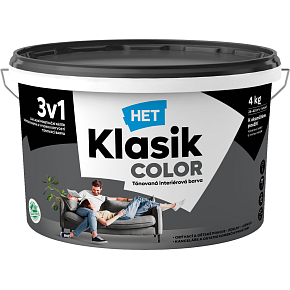
Code:
2601005
11.09 EUR
2.77EUR/1kg
In stock
FavoriteCompareFor interior painting of walls and ceilings, high coverage ability and spreadability, matte appearance, resistance to abrasion when dry, excellent vapor permeability.
Variants of this product
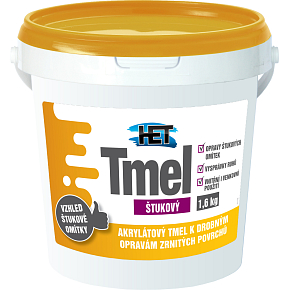
Code:
2504822
7.43 EUR
4.64EUR/1kg
In stock
FavoriteCompareFor internal and external use for minor repairs of grainy surfaces, primarily plastered coatings.
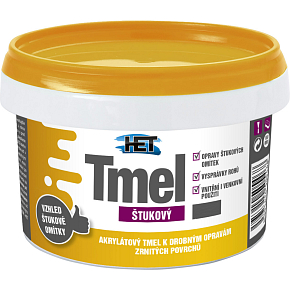
Code:
2504820
2.53 EUR
6.33EUR/1kg
In stock
FavoriteCompareFor indoor and outdoor use for minor repairs of grainy surfaces, especially plaster coatings.
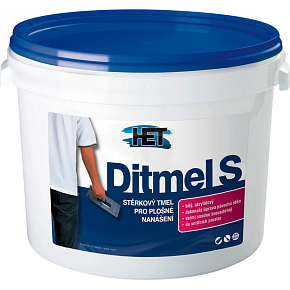
Code:
2503334
10.73 EUR
1.53EUR/1kg
In stock
FavoriteCompareLeveling compound for large area application in interiors to level walls (plasters, masonry, panels, plasterboard, etc.) indoors.
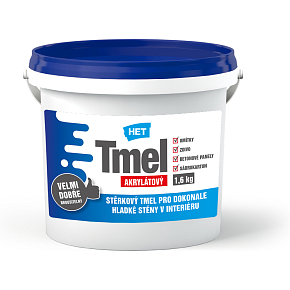
Code:
2503219
7.43 EUR
4.64EUR/1kg
In stock
FavoriteCompareFor leveling walls (plasters, masonry, panels, plasterboard, etc.) in interiors. The filler is not recommended for joints.
Code:
2503961
3.94 EUR
15.76EUR/1l
In stock
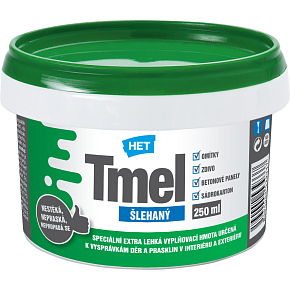
FavoriteCompareA special extra lightweight filling material for sealing joints, cracks, and leveling substrates (mineral and gypsum plasters, concrete panels, masonry, drywall) in both interior and exterior applications, local repairs of holes, filling and leveling of straight and angled joints.
Code:
2503417
3.23 EUR
2.15EUR/1kg
In stock
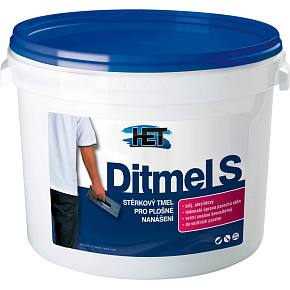
FavoriteCompareFinishing compound for large-scale application in interiors for leveling walls (plaster, masonry, panels, drywall, etc.) indoors.
Code:
2503218
4.54 EUR
5.68EUR/1kg
In stock
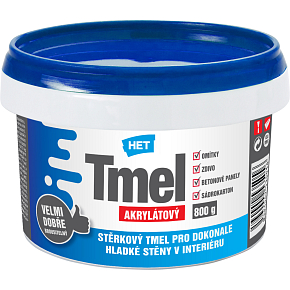
FavoriteCompareFor leveling walls (plasters, masonry, panels, drywall, etc.) in interiors. The filler is not recommended for joints.
Code:
2503962
6.51 EUR
13.02EUR/1l
In stock
FavoriteCompareSpecial extra lightweight filling compound for sealing joints, cracks, and leveling substrates (mineral and gypsum plasters, concrete panels, masonry, drywall) in both interior and exterior, local repairs of holes, filling and aligning straight and angled joints.
Code:
2504821
4.40 EUR
5.5EUR/1kg
In stock
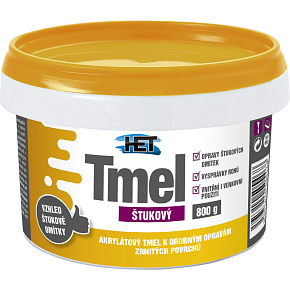
FavoriteCompareFor indoor and outdoor use for minor repairs of granular surfaces, particularly plaster finishes.
Code:
2503963
11.23 EUR
In stock
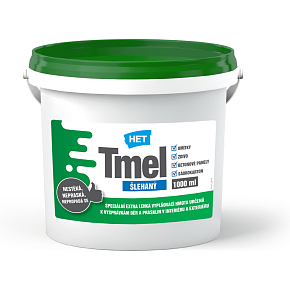
FavoriteCompareSpecial extra lightweight filling material for sealing joints, cracks, and leveling substrates (mineral and gypsum plasters, concrete panels, masonry, drywall) in interiors and exteriors, local repairs of holes, filling and aligning straight and angled joints
Code:
2503264
2.28 EUR
In stock
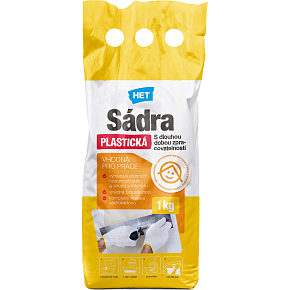
FavoriteComparePlaster with a long working time for leveling minor irregularities in mineral substrates (plaster, masonry, panels, etc.).
AKCE
Code:
2503968
11.44 EUR
2.29EUR/1kg
In stock
FavoriteCompareFor acrylic, vinyl, and silicone interior and facade paints. For thin-layer acrylic and silicone plasters on leveling layers of insulation systems.