/search_thin.svg)

/currency.svg)
/heart.svg)
/user.svg)
/cart.svg)

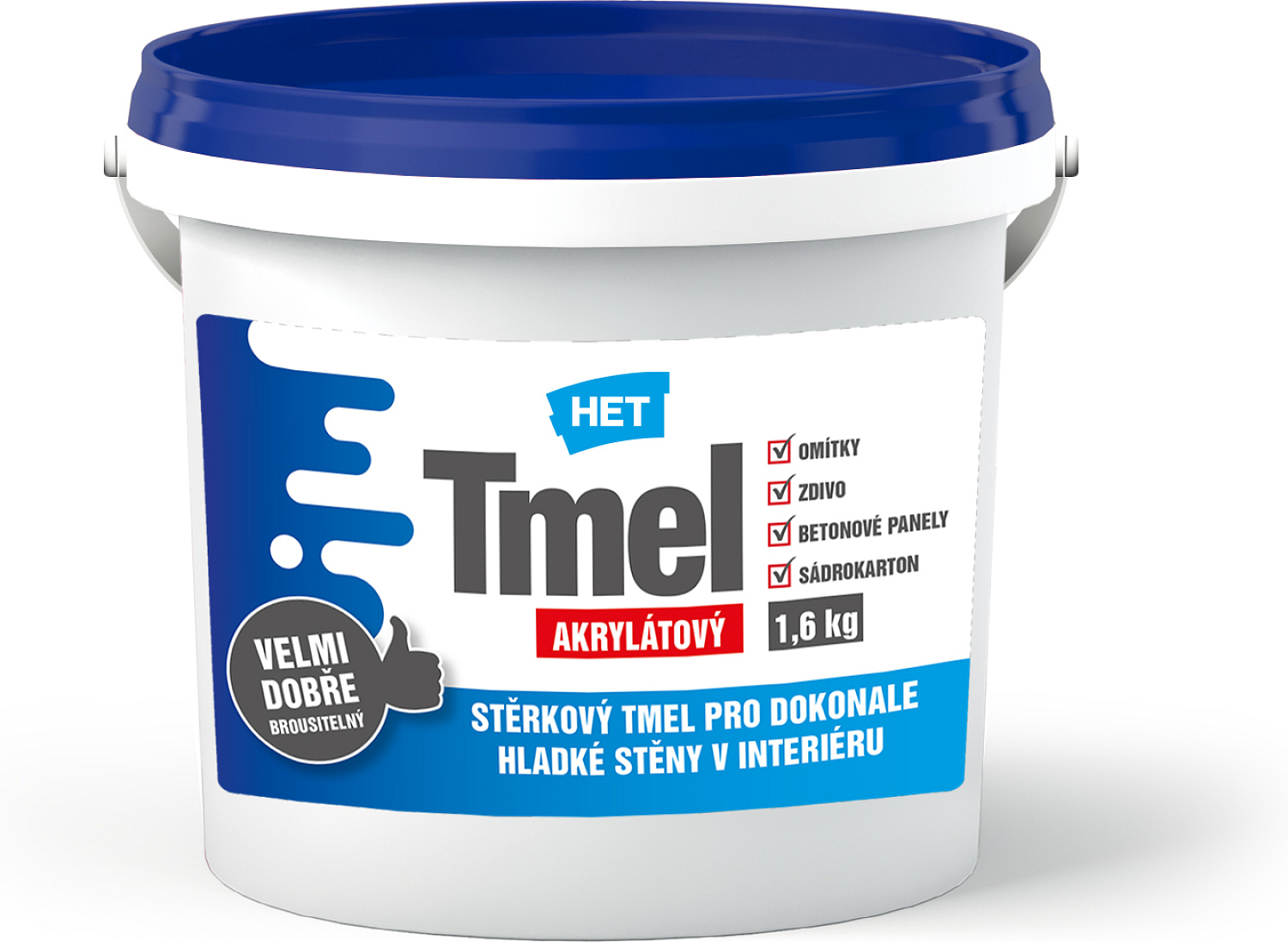
Het Acrylic Filler for Plasterboard, Masonry and Plasters, 1.6 kg
Code: 2503219In stock
Date and method of delivery
Producer:
Het, spol. s.r.o.

For leveling walls (plasters, masonry, panels, plasterboard, etc.) in interiors. The filler is not recommended for joints.Read more
Choose a discounted package
Quantity discounts
/envelope.svg)
Query
/bell.svg)
Watch
/share.svg)
Share
PARAMETERS
Description Het Acrylic Filler for Plasterboard, Masonry and Plasters, 1.6 kg
Het acrylic filler for leveling walls (plasters, masonry, panels, plasterboard, etc.) in interiors. Interior finishing leveling filler for flat manual application on building materials, primarily mineral walls. It is used for leveling small unevenness of walls (plasters, masonry, panels, plasterboard, etc.) or for minor repairs. The filler is ready for immediate use, has a thixotropic nature, is vapor-permeable, very sandable, and can achieve very smooth surfaces. The product meets the requirements for surfaces that may come into indirect contact with food. It is not recommended for joints and in areas with high mechanical or thermal stress. It is not suitable as a substrate for mineral or polymer plasters. The filled areas must not be in contact with water and rising moisture.
Properties of Het Acrylic Filler for Plasterboard, Masonry and Plasters:
- Ready for immediate use,
- Thixotropic nature,
- Very good sandability,
- Vapor-permeable.
Shade:
non-standard white.
Coverage:
Approx. 0.3 to 1 m²/1 kg of filler in one layer. Coverage may vary depending on the thickness of the applied layer, substrate structure, application technique, and other factors. The exact coverage for a specific substrate needs to be determined on a test area. Consumption: 1 - 3 kg/m² in one layer (depending on the type of substrate).
Drying time:
min. 4 - 24 hours at 20 °C and 60% relative humidity.
Storage:
24 months from the date of manufacture in the original unopened packaging, at a temperature of +3 to +30 °C, must not freeze, protect from direct sunlight.
Substrate:
dry, matured (pH ≤8.5; testing can be performed with a pH tester), cohesive, non-salted, solid, degreased, free from dust, dirt, and non-cohesive layers, without dynamic cracks and joints, without biological attack (mold, algae). Layers of old coatings with inadequate adhesion must be removed, for example, by scraping. For plasters, remove loose grains of sand (by sanding and/or sweeping). To improve the adhesion of the filler to the substrate, it is
advisable to apply a primer. Metal elements penetrating the treated surface must be coated with an anti-corrosion paint before filling.
Application temperature:
The temperature of the material, environment, and substrate must be between +5 and +30 °C (preferably +8 to +25 °C) during application and for 24 hours (better 48 hours) after application.
Example of the application procedure:
- Cover windows, radiators, door frames, etc.
- Before applying the filler, any dried material must be removed from the filler package.
- Layers of old coatings with inadequate adhesion must be removed, for example, by scraping.
- Apply a primer. For poorly absorbent and/or extremely smooth substrates (plasterboard, gypsum plasters, cement-polymer plasters, etc.), the priming coat is applied with the UP-GRUND primer; for more absorbent substrates (lime or lime-cement plaster, masonry, etc.), use A-GRUND, 100-GRUND or AT-GRUND products according to the instructions for use.
- After the primer has completely dried, apply the ACRYLIC FILLER using a stainless steel trowel (for small areas, use a steel spatula). The recommended thickness for one layer is 1 mm, the maximum allowed thickness for one layer is 2 mm.
- Leave the filler to dry until completely dry (approximately 4 to 24 hours, possibly longer; drying time strongly depends on layer thickness, substrate absorbency, temperature, and humidity).
- It is advisable to sand the filled areas after they have dried using a sanding mesh or fine sandpaper on a firm backing.
- If necessary, additional layers of filler can be applied and always sanded after drying. The total thickness of the layers should not exceed 4 mm to avoid the risk of cracking.
- After sanding, remove any residual dust from the sanded surfaces.
- Clean working tools and contaminated areas immediately with water.
- Before painting, it is recommended to re-prime the filled areas, for example, with UP-GRUND, A-GRUND, AT-GRUND, or 100-GRUND.
- After that, it is possible to apply dispersion paints to the surfaces, for example, products from the KLASIK, HETLINE, or BRILLANT ranges. Lime paints or paints without sufficient content of dispersion binders are not suitable for use on filled surfaces.
| Species: | ostatní |
Documents
Bezpečnostní list
/document.svg)
Katalogový list
Related products

Code:
2504857
3.16 EUR
10.53EUR/1kg
In stock
/heart.svg) Favorite
Favorite/compare.svg) Compare
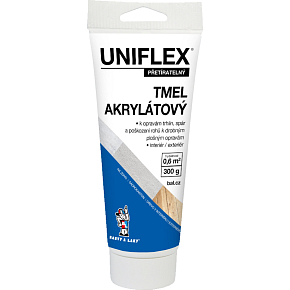
CompareFor minor repairs of masonry, drywall, and wood in interiors and exteriors. Filling medium and larger irregularities.
Code:
2504547
4.89 EUR
24.45EUR/1kg
In stock
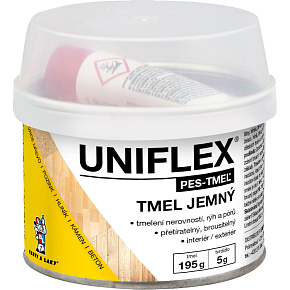
FavoriteCompareUNIFLEX, filler or adhesive intended for filling medium and larger unevennesses, excellent adhesion to most surfaces, especially to metal, steel, stone, concrete, wood, etc., paintable, for indoor and outdoor use.
Code:
2500048
1.65 EUR
3.3EUR/1kg
In stock
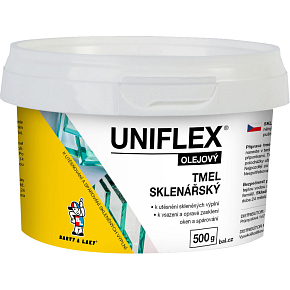
FavoriteCompareGlazing putty for repairing small unevenness, dries within 24 hours, and is paintable after 14 days. For sealing and securing glass panes into wooden and metal frames.
AKCE

Code:
2508732
6.62 EUR
8.83EUR/1l
In stock
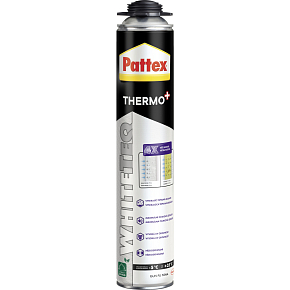
FavoriteComparePATTEX WHITETEQ is PU foam with a characteristic ice white color, excellent structure, and up to 10 times higher UV resistance.
AKCE
Code:
2602671
4.05 EUR
14.46EUR/1l
In stock
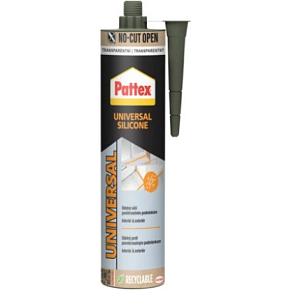
FavoriteComparePattex universal transparent silicone is a flexible silicone sealant for universal use indoors and outdoors.
Code:
2506488
1.47 EUR
0.29EUR/1ks
In stock
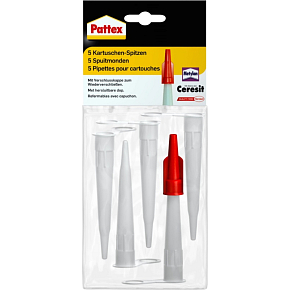
FavoriteCompareThe set of replacement application tips is a practical addition for anyone who regularly works with sealing or adhesive materials in cartridges.
Code:
2504502
3.73 EUR
4.66EUR/1kg
In stock
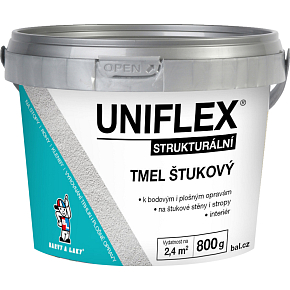
FavoriteCompareFor most surfaces such as metal, steel, stone, concrete, wood, etc., paintable, for indoor and outdoor use.

Code:
2505019
3.84 EUR
In stock
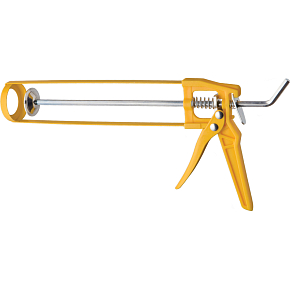
FavoriteCompareFor the application of dispensing sealants or adhesives from cartridges. Immediate usability, easy operation.

Code:
2507671
4.54 EUR
9.08EUR/1l
In stock
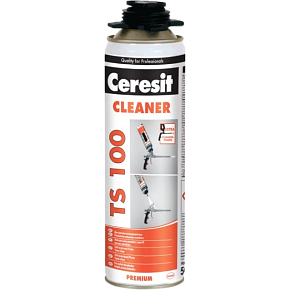
FavoriteCompareCERESIT TS 100 – Reliable cleaner for fresh PU foam and application guns.
Code:
2504569
6.65 EUR
8.87EUR/1l
In stock
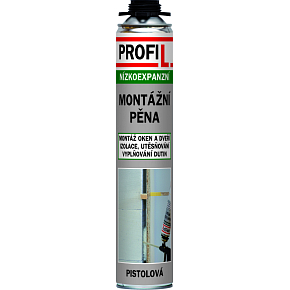
FavoriteCompareSuitable for installing and sealing window and door frames, installing and insulating bathtubs and shower trays, filling and sealing joints and penetrations in walls, filling joints between thermal insulation boards or roofing elements.

Code:
2502888
10.38 EUR
20.76EUR/1kg
In stock
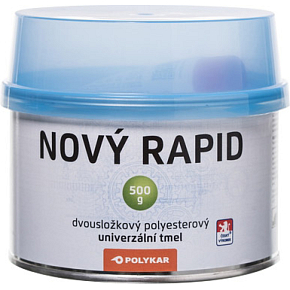
FavoriteCompareFor filling medium and larger unevenness. Intended for common substrates including cast iron, aluminum, zinc, and fiberglass. Well applicable and easily sandable, pore-free, usable for leveling unevenness in wood (harder types), laminate, concrete, etc.

Code:
2505397
5.88 EUR
7.84EUR/1l
In stock
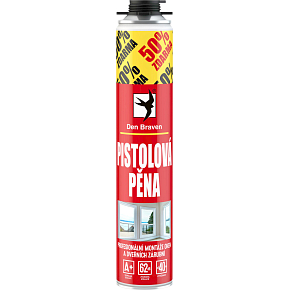
FavoriteCompareFor the installation of door frames and window frames, filling cavities, installation spaces between panels, masonry partitions, ceiling and floor, passages of electrical wiring.
Variants of this product

Code:
2503508
2.99 EUR
8.54EUR/1kg
In stock
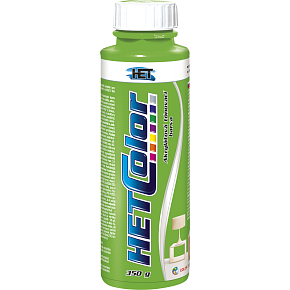
FavoriteCompareHetcolor, acrylic tinting paint - for tinting facade and interior dispersion as well as classic coatings or for direct application.
Code:
2504821
4.40 EUR
5.5EUR/1kg
In stock
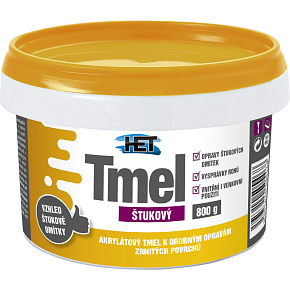
FavoriteCompareFor indoor and outdoor use for minor repairs of granular surfaces, particularly plaster finishes.
AKCE
Code:
2504693
7.78 EUR
1.95EUR/1kg
In stock
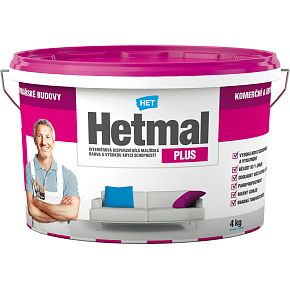
FavoriteCompareInterior dispersion white covering paint with high covering power - recommended for commercial and living spaces, offices, schools, corridors, industrial applications.
Code:
2504766
11.09 EUR
2.77EUR/1kg
In stock
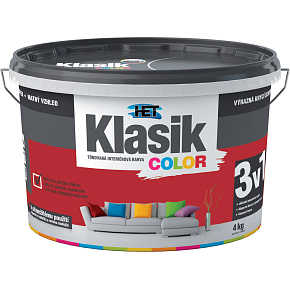
FavoriteCompareFor interior wall and ceiling coatings, strong coverage and spreadability, matte appearance, resistance to abrasion when dry, excellent vapor permeability.
Code:
2503518
11.09 EUR
2.77EUR/1kg
In stock
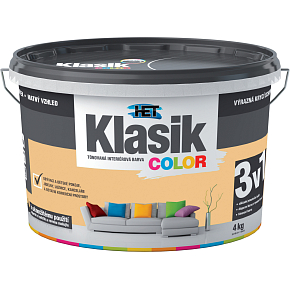
FavoriteCompareFor indoor coatings of walls and ceilings, significant coverage ability and spreadability, matte appearance, dry abrasion resistance, excellent vapor permeability.
Code:
2502834
5.70 EUR
In stock
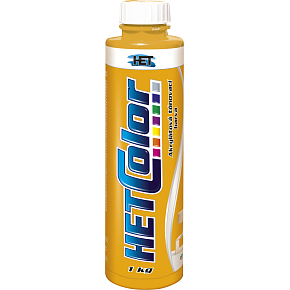
FavoriteCompareHetcolor, acrylic tinting color - for tinting facade and interior dispersion as well as classic coatings or for direct application.
Code:
2502816
2.99 EUR
8.54EUR/1kg
In stock
FavoriteCompareHetcolor, acrylic tinting paint - for tinting facade and interior dispersion and classic coatings or for direct application.
AKCE
Code:
2504993
37.31 EUR
1.49EUR/1kg
In stock
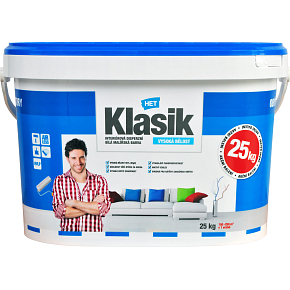
FavoriteCompareRecommended for living and commercial spaces, children's rooms, hallways, offices, retail spaces. High whiteness min. 95% MgO, significant covering ability, matte appearance, resistance to dry abrasion, excellent vapor permeability, suitable for painting renovation plasters.
Code:
2502838
5.70 EUR
In stock
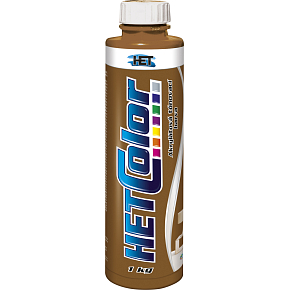
FavoriteCompareHetcolor, acrylic tinting color - for tinting facade and internal dispersion as well as classic paints or for direct application.
Code:
2506156
11.09 EUR
2.77EUR/1kg
In stock
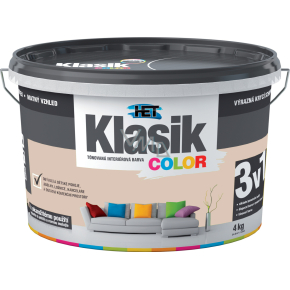
FavoriteCompareFor indoor coatings of walls and ceilings, high covering ability and spreadability, matte appearance, resistance to wear in dry conditions, excellent vapor permeability.
AKCE
Code:
2506473
36.04 EUR
0.9EUR/1kg
In stock
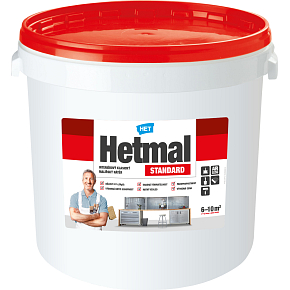
FavoriteCompareClassic liquid paint, white wall color for interior wall and ceiling coatings (lime, lime-cement plasters, masonry, concrete panels, etc.).
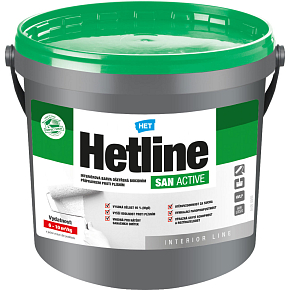
Code:
2504309
5.39 EUR
3.59EUR/1kg
In stock
FavoriteCompareInterior paint treated with a biocidal agent against mold is recommended for rooms with higher humidity and poor ventilation, such as bathrooms, basements, etc., where there is a higher risk of mold formation.
Recently visited products