/search_thin.svg)

/currency.svg)
/heart.svg)
/user.svg)
/cart.svg)

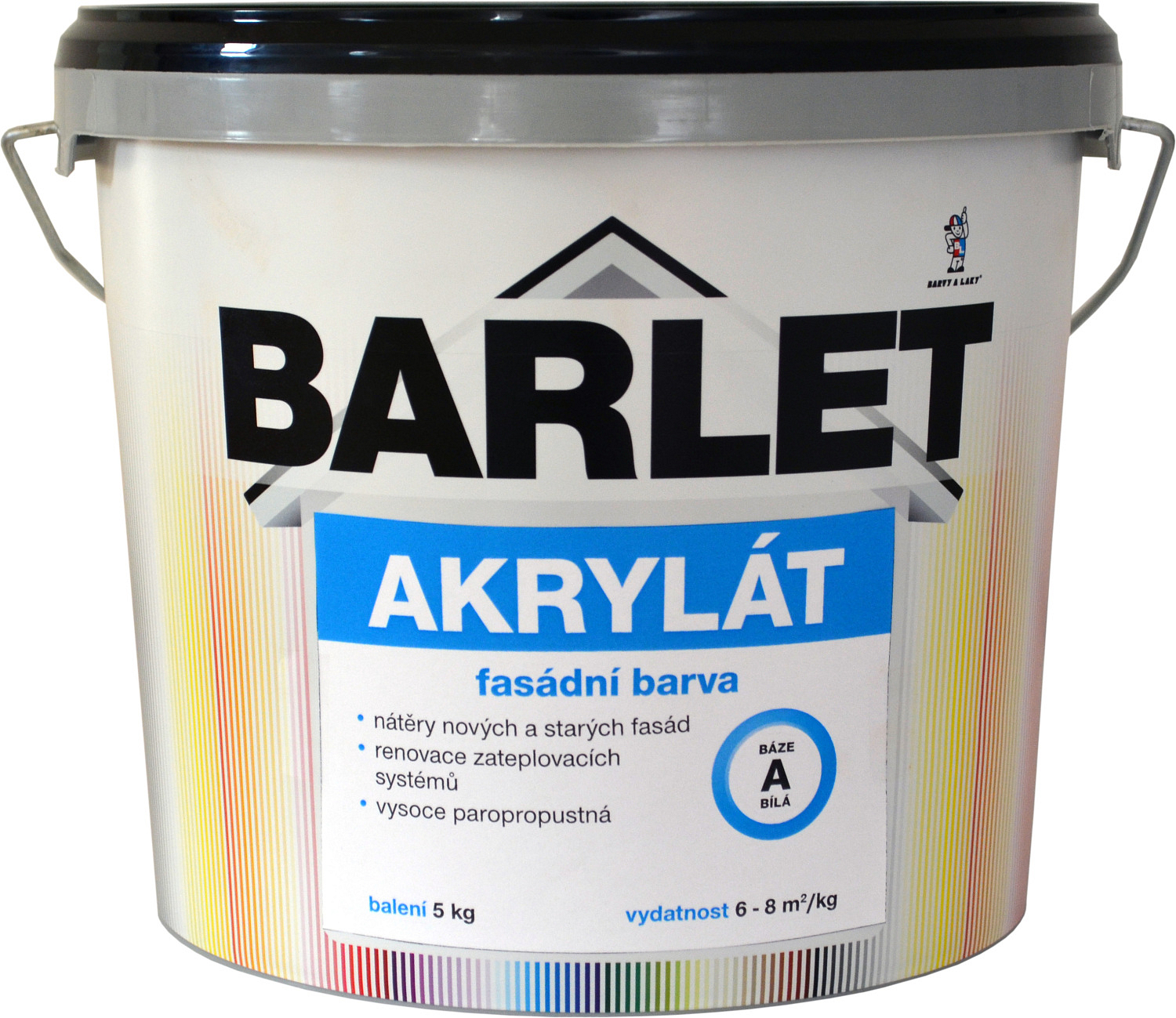
BARLET base acrylic plus BP A, white, 5 kg
Code: 2504153In stock
Date and method of delivery
Producer:
Colors and Varnishes Hostivař a.s.

Highly effective, water-repellent, washable acrylic facade paint. Covers cracks, suitable for the renovation of thermal insulation systems, and intended for tinting.Read more
Choose a discounted package
Quantity discounts
/envelope.svg)
Query
/bell.svg)
Watch
/share.svg)
Share
PARAMETERS
Producer:
Code:
2504153
ean:
8591235039795
Status:
Species:
ostatní
Manufacturer:
Colors and Varnishes Hostivař a.s.
Health hazard:
Health hazard
Description BARLET base acrylic plus BP A, white, 5 kg
BARLET acrylic Plus base A is a modern acrylic facade paint designed for tinting in our stores, with the white base A also serving directly as a white facade paint. It covers excellently with low consumption, conceals micro-cracks, and is very suitable for the renovation of thermal insulation systems. It is used for painting lime-cement and renovation plasters, concrete, aerated concrete or particleboard in interiors and exteriors.
It is applicable for coatings of insulated facades, lime-cement plasters, concrete and aerated concrete substrates, particleboard, and similar surfaces. The coating is resistant to selected disinfectants (it can be used for painting interiors in hospitals subjected to repeated disinfection). Resistance to the action of liquids complies with the standard ČSN EN ISO 2812-1:2013, Method 1. It shows resistance to wet abrasion according to ČSN EN ISO 11998 class 2 (classification according to EN 13300).
Properties of BARLET facade paint:
- acrylic facade paint
- for coating new and old facades
- renovation of thermal insulation systems
- highly vapor-permeable
- resistant to disinfectants and liquids
- weather-resistant
- suitable for painting interiors in hospitals exposed to repeated disinfection
- easy to process
- achieves resistance to wet abrasion according to ČSN EN ISO 11998 class 2 (classification according to EN 13300)
- coverage depending on substrate absorbency 6 to 8 m²/1 kg
- for tinting in TELURMIX systems
Method of applying facade paint:
Brush, roller, airless spraying e.g., STORCH AIRLESS ST 550, STORCH AIRLESS ST 700 or STORCH AIRLESS ST 800 recommended pressure from 100 – 130 bar, nozzle size 517 or possibly 519, filter for the gun 50 mesh. When spraying, it is recommended to always conduct tests on the specific equipment in advance
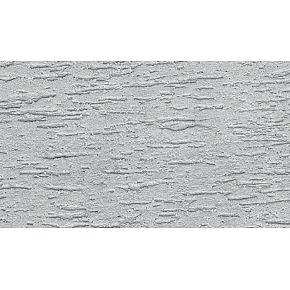
Example of the application of acrylic facade paint
The substrate must be dry and mature. Treat overly absorbent, blowing or non-cohesive substrates with a suitable acrylic primer REMAL, BARLET or SOICRAT. Dilute the paint with max. 5 - 10 % water and mix thoroughly. Apply the paint after the primer has dried in two layers using a brush or roller. Paint can also be applied by pressure spraying. Apply additional layers only after complete drying. The optimal temperature for painting is 15 to 25 °C. For uniform surfaces, use product from one batch; mix products from different batches before use.
Product safety warnings (H-statements)
- H317: May cause an allergic skin reaction.
- H411: Toxic to aquatic life with long-lasting effects.
- H412: Harmful to aquatic life with long-lasting effects.
Safe handling instructions (P-statements)
- P101: If medical advice is needed, have product container or label at hand.
- P102: Keep out of reach of children.
- P261: Avoid breathing dust/fume/gas/mist/vapors/aerosols.
- P280: Wear protective gloves/protective clothing/eye protection/face protection.
- P302+P352: IF ON SKIN: Wash with plenty of water and soap
- P333+P313: If skin irritation or rash occurs: Get medical advice/attention.
- P362+P364: Take off contaminated clothing and wash it before reuse.
- P501: Dispose of contents/container in accordance with local regulations.
| Species: | ostatní |
| Health hazard: | Health hazard |

Nebezpečnost pro zdraví - dráždivé látky
Nebezpečí
Může způsobit podráždění dýchacích cest. Může způsobit ospalost nebo závratě. Může vyvolat alergickou kožní reakci. Způsobuje vážné podráždění očí. Dráždí kůži. Zdraví škodlivý při požití. Zdraví škodlivý při styku s kůží. Zdraví škodlivý při vdechování. Rozkladem ozonu v horních vrstvách atmosféry poškozuje veřejné zdraví a životní prostředí.
Varování. Pokyny pro bezpečné zacházení
Zamezte vdechování prachu/dýmu/plynu/mlhy/par/aerosolů. Používejte pouze venku nebo v dobře větraných prostorách. Při vdechnutí: přeneste postiženého na čerstvý vzduch a ponechte jej v klidu v poloze usnadňující dýchání. Při požití: necítíte-li se dobře, volejte TOXIKOLOGICKÉ INFORMAČNÍ STŘEDISKO nebo lékaře. Používejte ochranné rukavice / ochranný oděv / ochranné brýle / obličejový štít. Při styku s kůží: omyjte velkým množstvím vody a mýdla. Při zasažení očí: několik minut opatrně vyplachujte vodou. Vyjměte kontaktní čočky, jsou-li nasazeny, a pokud je lze vyjmout snadno. Pokračujte ve vyplachování. Při používání tohoto výrobku nejezte, nepijte ani nekuřte. Uchovávejte mimo dosah dětí.
Documents
Bezpečnostní list
/document.svg)
Certifikát výrobku
Prohlášení o shodě
Katalogový list
Related products

Code:
59774
1.06 EUR
In stock
/heart.svg) Favorite
Favorite/compare.svg) Compare
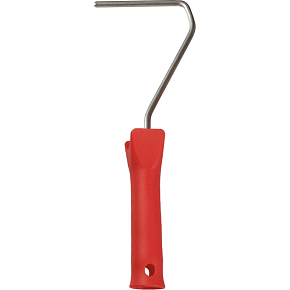
CompareSpokar roller holder for rollers wide 100 to 150 mm, diameter 6 mm. Suitable for rollers with a diameter for the holder of 6 mm. All handles can be attached to the cone of telescopic poles.

Code:
2503414
9.02 EUR
12.89EUR/1kg
In stock
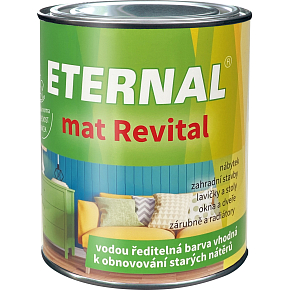
FavoriteComparePaint suitable for renewing old coatings of furniture, windows, doors, door frames, radiators, colored interior accessories, garden structures, benches, children's playground equipment, chalkboards.

Code:
2506092
5.73 EUR
119.38EUR/1kg
In stock
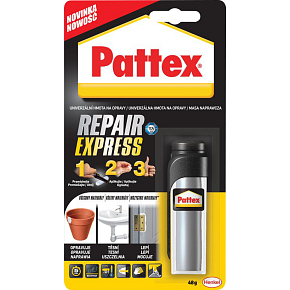
FavoriteCompareUniversal epoxy repair compound for bonding bathroom and kitchen accessories.
Code:
2503539
0.81 EUR
0.08EUR/1ks
In stock
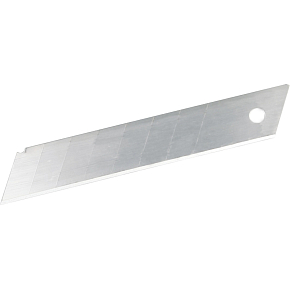
FavoriteCompareSpokar replacement breaking blades, width 18 mm, thickness 0.5 mm, set of 10 pcs
AKCE

Code:
2508450
40.85 EUR
10.21EUR/1l
In stock
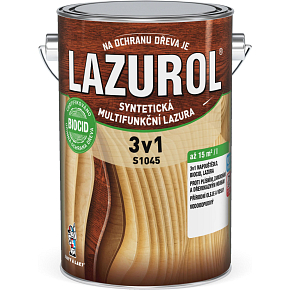
FavoriteCompareThe thin-layer stain LAZUROL 3v1 is designed for long-term preventive chemical surface protection of wood.
Code:
2503323
2.26 EUR
In stock
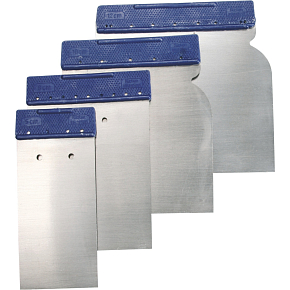
FavoriteCompareSpokar set of steel spatulas with dimensions of 5, 8, 10, 12 cm.

Code:
2504179
0.88 EUR
In stock
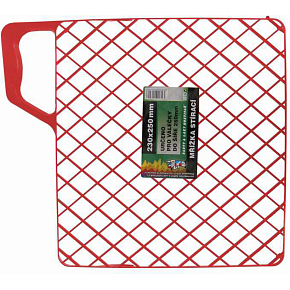
FavoriteCompareScraping grid for rollers up to 250 mm. Plastic grid for even application of paint on the roller and removal of excess paint.
AKCE

Code:
2503472
4.42 EUR
11.05EUR/1l
In stock
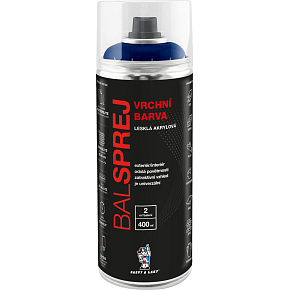
FavoriteCompareUniversal top paint is used for coating wood, metal, bodywork, and some plastics. It features high coverage, quick drying, and does not run after spraying. It is resistant to weather effects and corrosion.
AKCE

Code:
2503254
8.56 EUR
12.23EUR/1kg
In stock
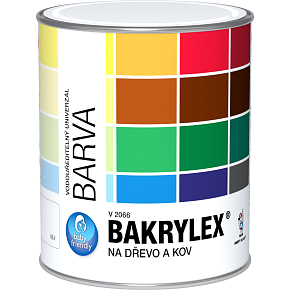
FavoriteCompareWater-dilutable, universal opaque enamel for interior and exterior coatings of wood, chipboard, masonry, paper, metal, etc. It covers excellently and withstands weather conditions.
Code:
2502951
2.05 EUR
In stock
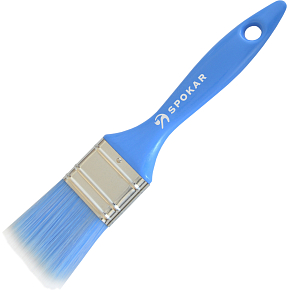
FavoriteCompareThe Spokar Acrylic brush series is intended for painting with water-based paints. The fibers are a mixture of split synthetic fibers (PES) and bristles. Plastic handle.

Code:
2503391
0.92 EUR
In stock
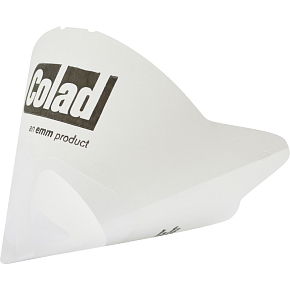
FavoriteCompareMako Color painting mesh ideal for all types of paint, paper with a nylon mesh, thickness 190 µ.

Code:
2502676
7.96 EUR
15.92EUR/1l
In stock
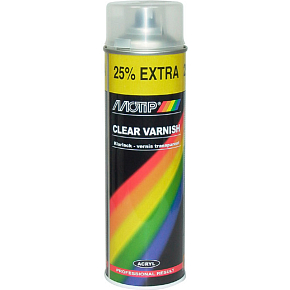
FavoriteCompareFast-drying lacquer to ensure brilliant shine and durability. This clear lacquer is weather-resistant, providing perfect protection against UV radiation and paint fading.
Variants of this product

Code:
2505195
8.75 EUR
In stock
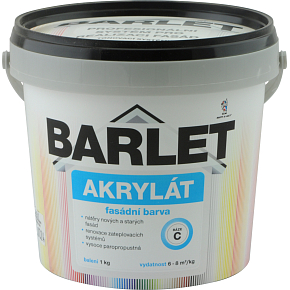
FavoriteCompareHighly efficient, water-repellent, washable acrylic facade paint. Covers cracks, is suitable for the renovation of insulation systems, and is intended for tinting.
Code:
2503529
75.65 EUR
3.03EUR/1kg
In stock
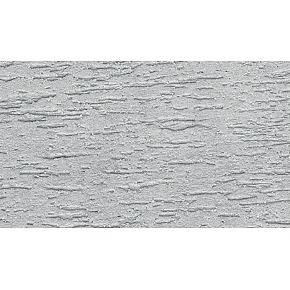
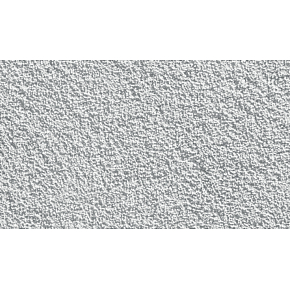
FavoriteCompareUsed for final exterior and interior decorative surface finishes of buildings. Grain size 2 mm.
Code:
2505083
141.42 EUR
7.07EUR/1kg
In stock
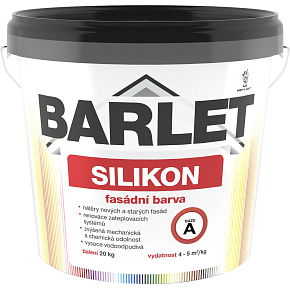
FavoriteCompareUsed for painting facades, lime-cement renders, concretes, aerated concrete, particle board, and similar surfaces.
Code:
2503530
75.71 EUR
3.03EUR/1kg
In stock
FavoriteCompareUsed for final external and internal decorative surface finishes of objects. Grain size 1.5 mm.
Code:
2505825
156.90 EUR
7.85EUR/1kg
In stock
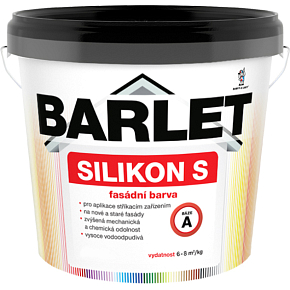
FavoriteCompareBarlet silicone S is a facade silicone paint. It is used for painting facades, lime-cement plasters, concrete, aerated concrete, chipboard, and similar surfaces. The paint is primarily recommended for application by spraying.
Code:
2503383
72.02 EUR
7.2EUR/1kg
In stock
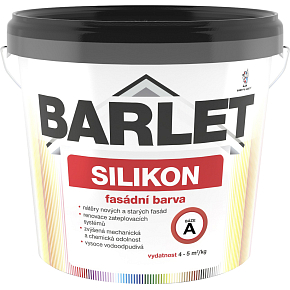
FavoriteCompareUsed for painting facades, lime-cement plasters, concretes, aerated concretes, particle boards, and similar surfaces.
Code:
2503284
8.91 EUR
1.78EUR/1kg
In stock
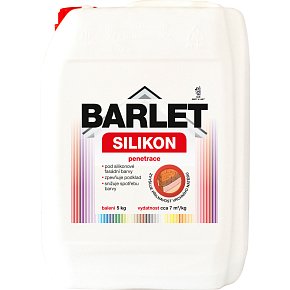
FavoriteComparePriming coat for silicone façade paint. Priming coat for absorbent plasters to strengthen and improve adhesion of BARLET silicone paint.
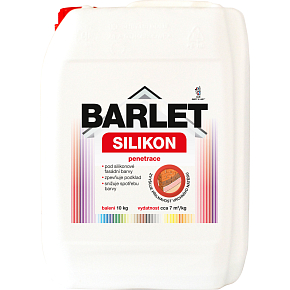
Code:
2503285
18 EUR
1.8EUR/1kg
In stock
FavoriteComparePrimer for silicone facade paint. Primer for absorbent plasters to strengthen and improve the adhesion of BARLET silicone paint.
Code:
2503526
54.16 EUR
2.17EUR/1kg
In stock
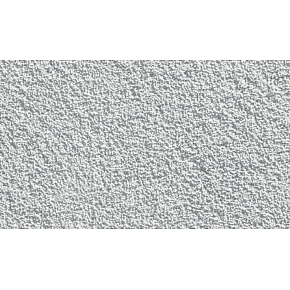
FavoriteCompareThey are used for final external and internal decorative surface finishes of objects. They are supplied in a 1.5 mm version.
Code:
2503531
75.71 EUR
3.03EUR/1kg
In stock
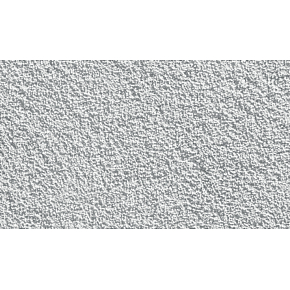
FavoriteCompareUsed for final external and internal decorative surface finishes of objects. Grain size 2 mm.
Code:
2503382
36.65 EUR
7.33EUR/1kg
In stock
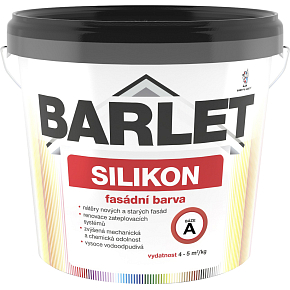
FavoriteCompareUsed for painting facades, lime-cement plasters, concrete, aerated concrete, chipboards, and similar surfaces.
Code:
2503525
54.16 EUR
2.17EUR/1kg
In stock
FavoriteCompareThey are used for final external and internal decorative surface finishes of buildings. They are supplied in a 2 mm version.