/search_thin.svg)

/currency.svg)
/heart.svg)
/user.svg)
/cart.svg)

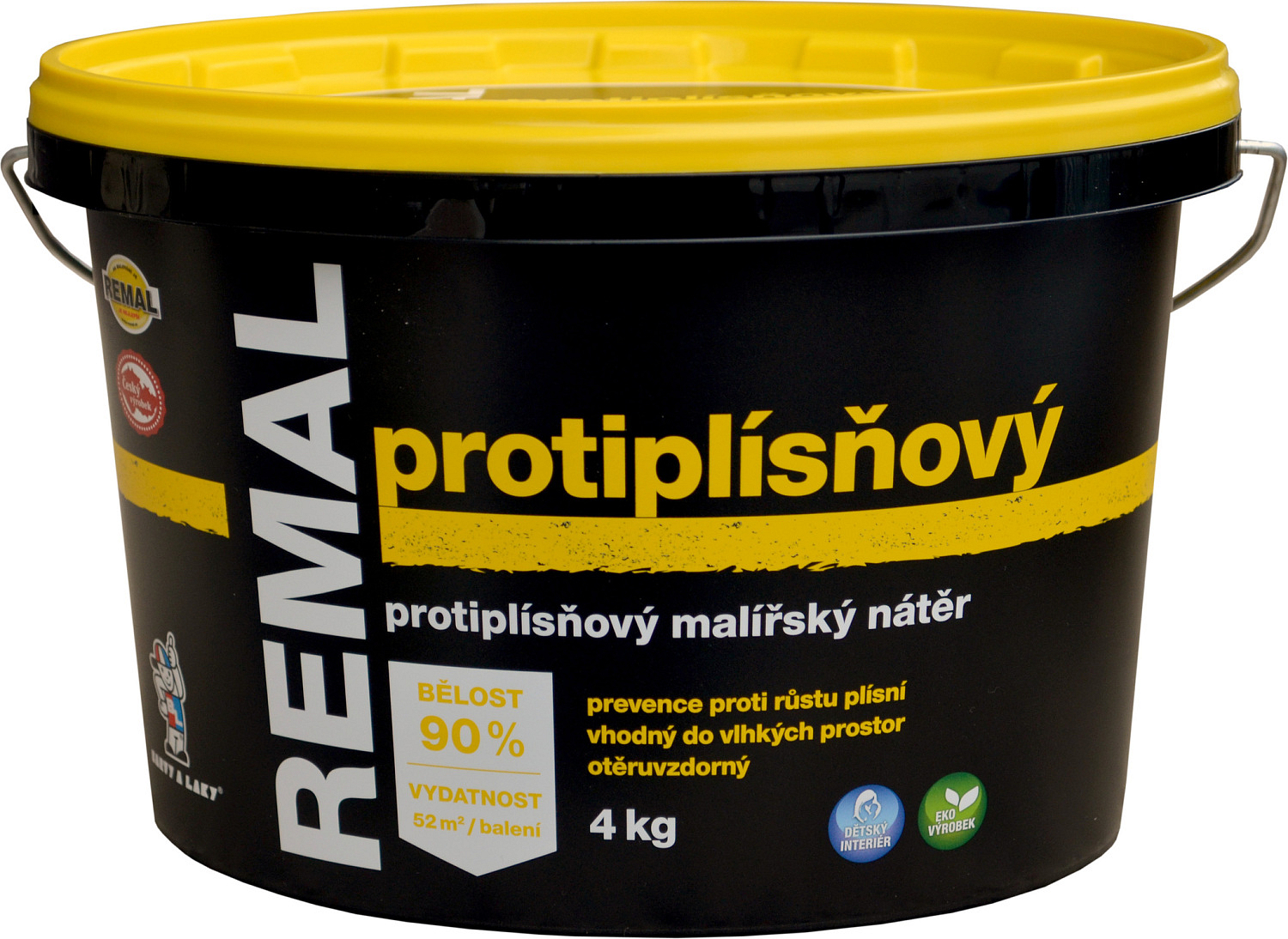
REMAL Fungicidal paint against mold, 4 kg
Code: 2500849
Fungicidal breathable paint for interiors with an effect against the growth of molds such as Penicillium glaucum, Chaetomium globosum, Aspergillus niger, Alternaria tenuis, Aureobasidium pullulans, Scletophoma pityophila.Read more
Choose a discounted package
Quantity discounts
/envelope.svg)
Query
/bell.svg)
Watch
/share.svg)
Share
PARAMETERS
Producer:
Code:
2500849
ean:
8591235066128
Status:
Packaging:
1
Species:
ostatní
Manufacturer:
Colors and Varnishes Hostivař a.s.
Description REMAL Fungicidal paint against mold, 4 kg
How to solve mold on the wall? The paint REMAL FUNGICIDAL is a water-dilutable fungicidal wall paint with a preventive effect against the growth of molds such as Penicillium glaucum, Chaetomium globosum, Aspergillus niger, Alternaria tenuis, Aureobasidium pullulans, Scletophoma pityophila. The maximum preventive effectiveness of the fungicidal paint is also achieved against fungi, yeasts, algae, and bacteria.
Fungicidal wall paint REMAL excellently covers, is breathable, wear-resistant, and has a high whiteness of 90 %. The paint is used for fungicidal treatments of plaster, concrete, drywall, and cement boards indoors. The mold-resistant paint demonstrates wet abrasion resistance – measured according to ČSN EN ISO 11998 – class 5. (classification according to EN 13300). Use fungicidal paint safely.
Mold paint warning:
Use biocidal products safely. Always read the label and product information before use.
Characteristics of fungicidal wall paint:
- solves mold on the wall
- fungicidal paint against molds, fungi, yeasts, algae, and bacteria
- traditional Czech white wall paint REMAL
- prevention against mold growth
- suitable for humid areas
- highly breathable wall paint
- easy to work with
- wet abrasion resistance class 5
- coverage up to 13 m²/1 kg in one coat
- tinting REMAL liquid tinting paint or REMAKOL
- whiteness 90 %
- content of active substances in mold-resistant paint IPBC (ES 259-627-5) 3.3 g/kg of the product
Procedure for REMAL paint:
Before painting, remove layers of old and non-adherent coatings. Treat areas infected with mold with the remedy REMAL Sanal for masonry V1406 according to the instructions. Treat absorbent substrates with REMAL universal primer, non-cohesive and crumbling substrates with REMAL deep primer. This will free the surface of dust, strengthen it, unify absorbency, and ensure adhesion of the coating. Drying time is 4 hours. For preventive fungicidal effect, it is possible to use REMAL fungicidal deep primer. Even out wall irregularities with REMAL Putty. For problematic spots (leaky stains, etc.), it is advisable to use REMAL Isolation paint.
Dilute mold-resistant paint at a ratio of max. 0.4 l of water to 1 kg of paint. Then mix the mold-resistant paint thoroughly. Apply with a brush, roller or spraying in 2 coats, apply the next coat of mold-resistant paint after previous has dried, at least after 4 hours. The optimal temperature for painting mold-resistant paint is 15 to 25 °C. The temperature of the substrate and environment must not drop below 5 °C during application. For continuous areas, use the product from one batch, mix different batches together before use.
You might find useful
covering material, such as paper adhesive tape or covering foil, or perhaps sanding papers. Don’t forget brushes, rollers, spatulas, and scrapers.
How often to paint?
It is generally recommended to paint approximately every 4 to 5 years. However, if you have small children or pets in the household, for hygiene and aesthetic reasons it is advisable to repaint approximately every 2 years.
Product safety warning (H-phrases)
- EUH208: Contains (see hazardous substances). May cause an allergic reaction.
- H412: Harmful to aquatic life with long-lasting effects.
Safe handling instructions (P-phrases)
- P273: Avoid release to the environment.
- P501: Dispose of contents/container in accordance with product instructions.
| Species: | ostatní |
Documents
Certifikát výrobku
/document.svg)
Prohlášení o shodě
review REMAL Fungicidal paint against mold, 4 kg
100%
1 review
1
Not rated
Not rated
Not rated
Not rated
Věnka P.
S tímto nátěrem se velmi dobře pracuje.
Review verified by Heureka
Related products
AKCE


Code:
2503303
35.31 EUR
7.06EUR/1kg
In stock
/heart.svg) Favorite
Favorite/compare.svg) Compare
CompareHighly effective preparation designed for the preventive surface protection of wood indoors and outdoors against wood-destroying fungi, molds, and wood-destroying insects.

Code:
2503215
25.57 EUR
2.56EUR/1kg
In stock
FavoriteCompareFor indoor and outdoor painting of building materials such as masonry, wood, chipboard, and fiberboard, and paper. It is washable, has high whiteness, and provides good coverage.
Code:
2503271
12.17 EUR
2.43EUR/1kg
In stock
FavoriteCompareIt is intended for indoor coatings of wood, paper, plaster, chipboard, etc. It is washable, with high whiteness and good coverage. Not suitable for buildings with a permanently humid environment.

Code:
2206299
2.68 EUR
3.57EUR/1l
In stock
FavoriteComparefor eliminating mold in households, especially in bathrooms on bathtubs and sinks, tiles, grout between tiles, pavement, and in healthcare and food processing facilities.

Code:
2503092
9.35 EUR
4.68EUR/1l
In stock
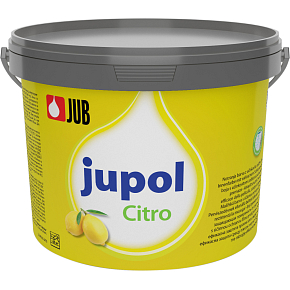
FavoriteCompareInterior water-dilutable paint preventing mold growth, suitable for painting in kitchens, bathrooms, and other sanitary areas.

Code:
2202940
13.62 EUR
In stock
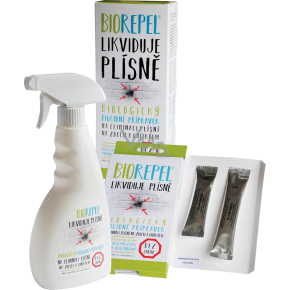
FavoriteCompareBIOREPEL je ojedinělý biologický přípravek, představující nové možnosti proti nežádoucím plísním na zdech v objektech.

Code:
101014
100%
3.17 EUR
4.23EUR/1l
In stock
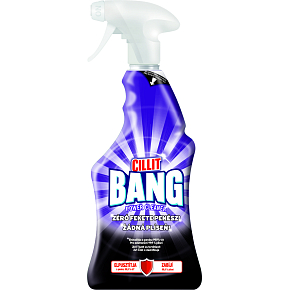
FavoriteCompareCillit Bang black mold remover cleaning and disinfecting spray. No strong scrubbing required. Ideal for use in damp areas and places with frequent mold presence.
Code:
2503094
33.09 EUR
3.31EUR/1l
In stock
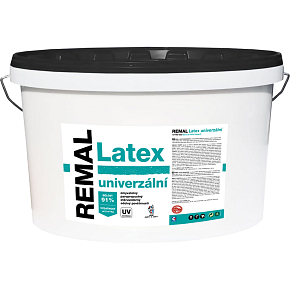
FavoriteCompareIt has a pleasant lemon scent, high whiteness, high opacity, high vapor permeability, applies easily, and is abrasion-resistant. The paint has an exceptionally low content of volatile organic compounds (VOC < 1 g/l) – it is safe for human health and the environment.

Code:
2503275
35.24 EUR
2.35EUR/1kg
In stock
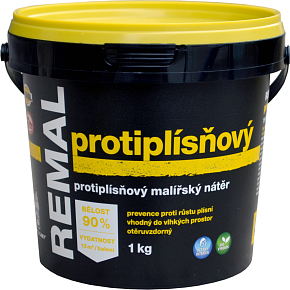
FavoriteCompareA latex coating for outdoor and indoor use. For indoor and outdoor coatings of wood, chipboard and fiberboard, masonry, plasters, cement boards. An environmentally friendly product.
Code:
2500848
3.81 EUR
3.81EUR/1kg
In stock
FavoriteCompareAnti-mold paint breathable for interiors with an effect against the growth of molds such as Penicillium glaucum, Chaetomium globosum, Aspergilus niger, Alternaria tenuis, Aureobasidium pullutans, Scletophona pityophila.
Stachema Fungisan Chlorine-Free Additive for Paint Coatings Against Molds, 1 L
Code:
2503501
9.70 EUR
In stock
FavoriteCompareFungicidal, antibacterial, and algicidal liquid additive for the protection of masonry in water-dilutable paint coatings and other mineral construction materials.
AKCE
Lignofix I-profi application for the elimination of wood-destroying insects, 500 ml
Code:
2503306
4.20 EUR
8.4EUR/1kg
In stock
FavoriteCompareFor the treatment of wood infested by wood-destroying insects (woodworm, beetles, etc.) and for the preventive treatment of wood against wood-destroying insects in interiors (roof structures, cladding, stairs, floors, etc.) and in exteriors without direct and permanent contact...
Variants of this product
Code:
2503273
13.23 EUR
2.65EUR/1kg
In stock
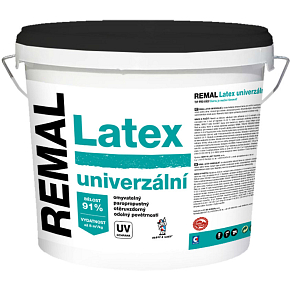
FavoriteCompareLatex coating for outdoor and indoor use. For indoor and outdoor coatings of wood, chipboards, fiberboards, masonry, plasters, cetris boards. Eco-friendly product.
Code:
2500212
1.76 EUR
1.76EUR/1kg
In stock
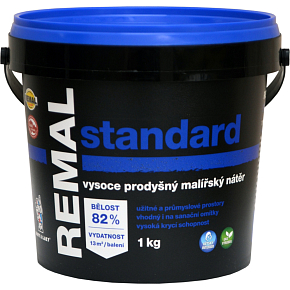
FavoriteCompareRemal Standard, highly breathable paint. It is recommended for coatings in utility and industrial spaces. It is used for painting walls and ceilings indoors on plaster, drywall, and other substrates.
Code:
2503479
2.11 EUR
4.22EUR/1kg
In stock
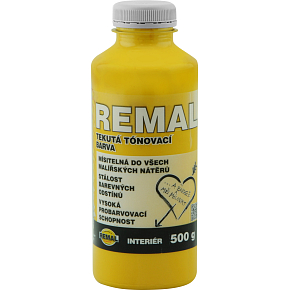
FavoriteCompareTinting color for coloring interior painting colors, selected shades, and for coloring acrylic and silicone façade paints for exteriors.
Code:
2504606
10.41 EUR
2.6EUR/1kg
In stock
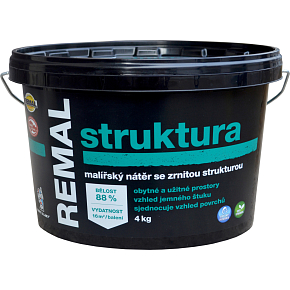
FavoriteCompareWater-soluble painter's paint with coarse grain texture up to 0.5 mm. It is mainly used to imitate the appearance of plaster layers, for painting plasters, concrete, drywall, cement boards, particleboard, etc. in interiors.
Code:
2502067
9.95 EUR
1.99EUR/1kg
In stock
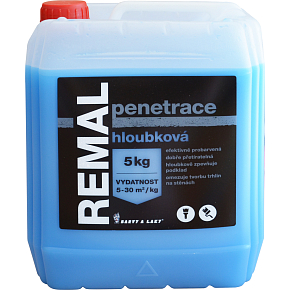
FavoriteCompareDeep penetration for unifying the substrate and its absorbency before coatings of internal plasters or facades, gluing tiles and pavings, leveling floors with self-leveling compounds, local repairs of substrate concrete, etc.
Code:
2505262
7.48 EUR
18.7EUR/1kg
In stock
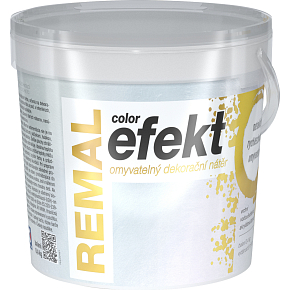
FavoriteCompareDecorative painting color with a metallic and pearlescent appearance for decorating modern designs using various painting techniques such as painting with a brush or roller, spraying, sponging, and using painting stencils.
Code:
2505097
46.02 EUR
3.07EUR/1kg
In stock
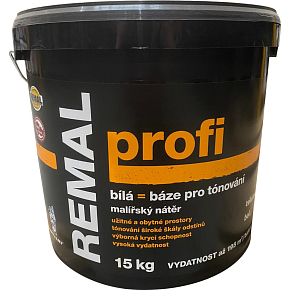
FavoriteCompareIt excellently covers, is breathable, abrasion-resistant, and has a high whiteness of 91%. It is used for painting plasters, concrete, gypsum board, cetris boards, particle board, and renovation plasters indoors. Suitable paint for gypsum board.
Code:
2503716
56.97 EUR
1.42EUR/1kg
In stock
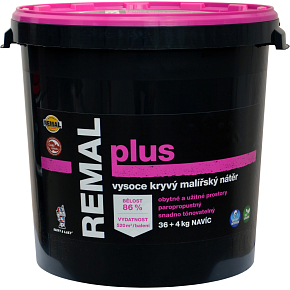
FavoriteCompareTintable paint, dispersion, abrasion-resistant, vapor-permeable, whiteness 86%, white. Highly covering paint recommended for coatings of living and utility spaces.
Code:
2503729
30.87 EUR
1.03EUR/1kg
In stock
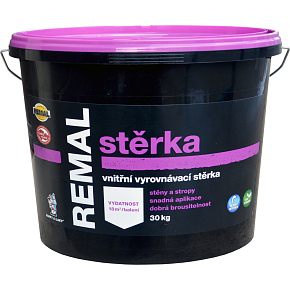
FavoriteCompareSanding white. Leveling and decorative compound for indoor use. It is used for overall leveling of minor irregularities in walls (plaster, masonry, drywall, etc.) in interiors.
Code:
2503478
2.08 EUR
4.16EUR/1kg
In stock
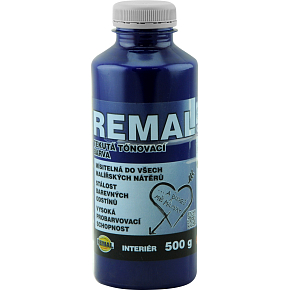
FavoriteCompareTinting color for tinting interior paints, selected shades, and for tinting acrylic and silicone facade paints for exteriors.
AKCE
Code:
2504791
17.60 EUR
5.5EUR/1kg
In stock
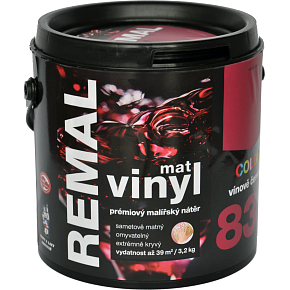
FavoriteCompareWashable wall paint with a velvety matte appearance, excellent coverage, and abrasion resistance. Washable paint for painting walls and ceilings indoors on plaster, drywall, and other substrates.
Code:
2503459
36.51 EUR
2.43EUR/1kg
In stock
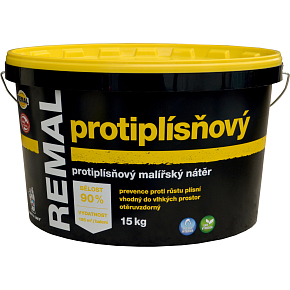
FavoriteCompareAntifungal, vapor-permeable interior paint effective against the growth of molds such as Penicillium glaucum, Chaetomium globosum, Aspergilus niger, Alternaria tenuis, Aureobasidium pullutans, Scletophona pityophila.
Recently visited products