/search_thin.svg)

/currency.svg)
/heart.svg)
/user.svg)
/cart.svg)

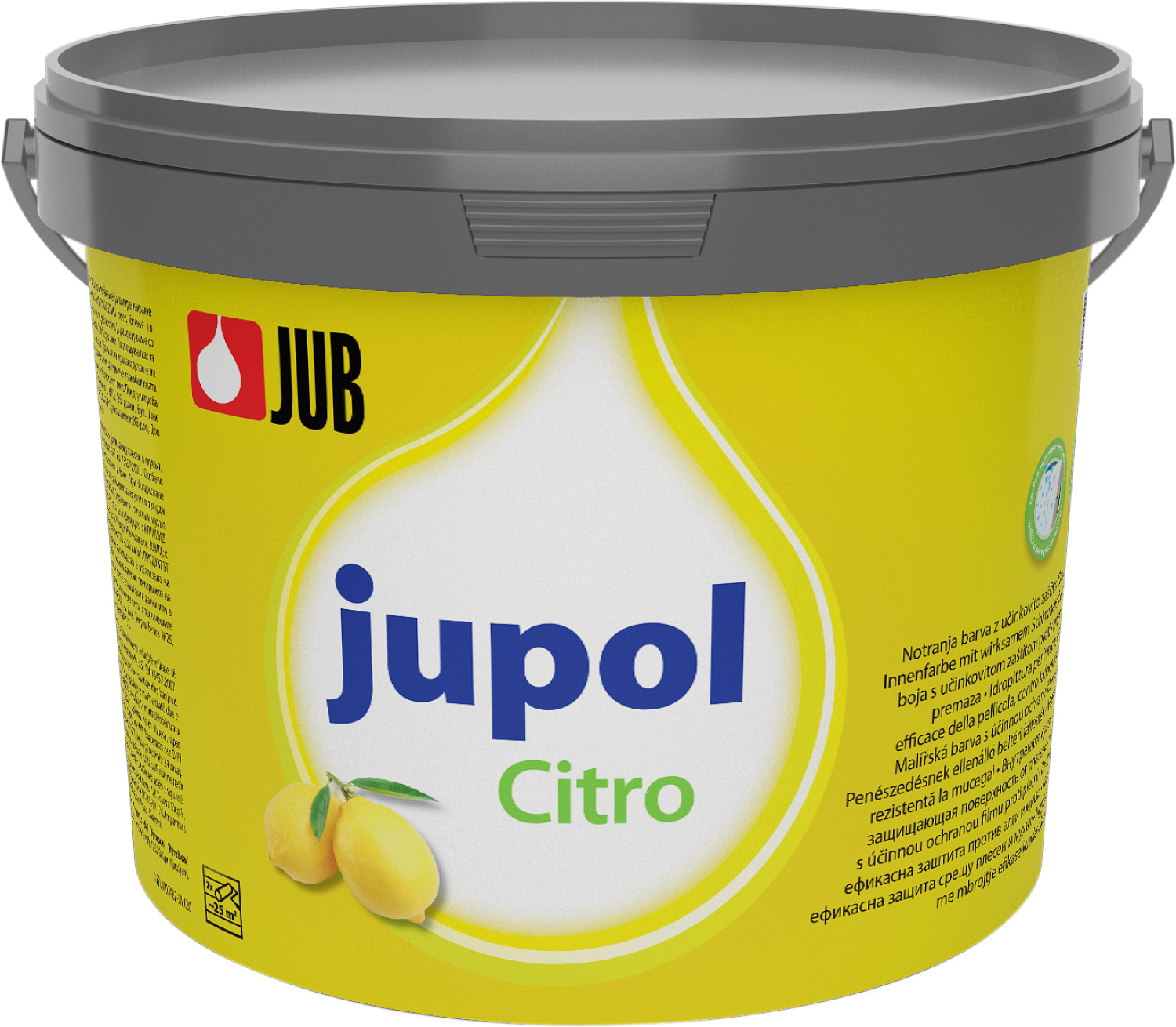
Jub Jupol Citro antifungal paint, 2 l
Code: 2503092
Indoor water-dilutable paint preventing the growth of mold, suitable for coatings in kitchens, bathrooms, and other sanitary spaces.Read more
Choose a discounted package
Quantity discounts
/envelope.svg)
Query
/bell.svg)
Watch
/share.svg)
Share
PARAMETERS
Description Jub Jupol Citro antifungal paint, 2 l
The interior paint JUPOL Citro is made on the basis of water-dispersed polymer binders. It is primarily used for decorative protection of walls and ceilings in spaces where, due to high relative humidity, water condensation often occurs, leading to the formation of mold behind furniture, in corners, or elsewhere. It is particularly recommended for bathrooms, kitchens, laundry rooms, pantries, and similar rooms in residential and administrative buildings, schools, kindergartens, hospitals, hotels, nursing homes, and other public or industrial structures, where washability or resistance to abrasion when wet is not required from the coating.
Various types of plasters, surfaces treated with various leveling compounds, textured paper wallpapers, as well as drywall and fiber-cement boards, chipboards, unplastered concrete, etc. are suitable as substrates. The coating can also be applied to older firm dispersion paints and well-adhering decorative plasters of various types.
JUPOL Citro stands out for its extremely low content of volatile organic compounds and does not contain heavy metals. When applied and drying, it has a pleasant lemon scent. It spreads easily and is available in a wide palette of pastel shades. Surfaces that are repeatedly dampened by condensation are long-term protected from the most common types of mold after the coating is applied. The color's resistance can be further increased by adding 5 to 7.5 % (50 to 75 ml/l) of JUBOCID. The resulting film is highly vapor-permeable and resistant to abrasion when dry (when wiped with a wet cloth or sponge, it softens and gets damaged!).
Consumption of Jupol wall paint:
170 - 200 ml/m² in two layers, depending on the roughness and absorbency of the substrate.
Appearance of Jupol paint:
white (shade 1001), matte
Preparation of the substrate for Jupol Citro:
The substrate must be clean, dry, and solid – free of dust, loose particles, remnants of formwork oils, grease, and other impurities.
In normal conditions (T = +20 ºC, relative humidity = 65 %), we allow new plasters and leveling materials to cure or dry for at least 1 day for each mm of thickness, with a drying time of at least one month for concrete substrates. All coatings and sprays that peel off upon wetting from the substrate must be removed from previously painted surfaces,
oil paints, varnishes, and enamels. Surfaces attacked by mold must be disinfected before painting.
Before the first coating, a primer must be applied. We recommend AKRYL Emulsion, diluted with water according to the instructions for its use, for more problematic or lower-quality substrates (lower-quality drywall, gypsum plasters, fiber-cement boards, lime plasters, and leveling compounds, fiber-cement boards, chipboards, and unplastered concrete surfaces, etc.), then JUKOL Primer, diluted with water according to its instructions for use. The primer is applied with a paintbrush or masonry brush, a roller with long fibers, or by spraying. The paint itself can be applied under standard conditions (T = +20 ºC, relative humidity = 65 %) after 6 hours (AKRYL Emulsion), respectively after 12 hours (JUKOL Primer) from applying the primer.
Preparation of Jupol Citro paint:
Thoroughly mix the paint before use; if necessary, it can be diluted with water (max. 10 %) to the consistency suitable for the given technique and conditions of application. WARNING! Diluting significantly reduces the paint's coverage! The paint needed for coating a continuous area (or preferably all areas that we are painting in the same shade) should be equalized (mixed together) in a container of appropriate size. For large areas, where it is not technically possible to prepare the paint for even one coat in this way, mix the paint from at least three buckets in an equalizing container first.
Once one-third of the prepared paint has been consumed, add more paint to the container and well-mix it with the remaining material in the container, and so on. Equalization is not necessary for unthinned white paint of the same production batch. Any adjustments to the paint during work (adding tinting agents, diluting, etc.) are not permitted. The amount of paint needed to cover individual areas can be calculated or estimated based on their area and average consumption values, or the consumption can be accurately verified by applying it to a sufficiently large test area.
Application of Jupol Citro paint:
The paint is applied in two layers with a technological pause of 4 – 6 hours (T = +20 ºC, relative humidity = 65 %) using a paint roller with long fibers (fiber length 18 to 20 mm; natural or synthetic fibers can be chosen, or textiles made of various artificial fibers – polyamide, dralon, vestan, nylon, perlon, or polyester), by spraying or with a brush designed for applying dispersion paints. When working with a roller, it is necessary to use a suitable drip grid.
Individual continuous areas are painted continuously without interruption from one edge to the other. Areas not accessible for a standard long-haired roller or spray gun (corners, niches, grooves, narrow reveals, etc.) are first painted in each layer with a suitable brush or an appropriately sized smaller roller. Application is only possible under favorable microclimatic conditions; the temperature of the substrate and air must be between +5 and +35 °C, and the relative humidity must not exceed 80 %.
| Species: | ostatní |
Documents
Bezpečnostní list
/document.svg)
Prohlášení o shodě
Katalogový list
Related products

Code:
2503706
14.12 EUR
1.88EUR/1kg
In stock
/heart.svg) Favorite
Favorite/compare.svg) Compare
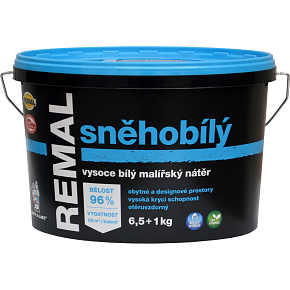
CompareFor painting residential and design spaces. Used for painting walls and ceilings indoors on plaster, drywall, and other substrates. REMAL Snow White is a water-based paint with high whiteness.
Code:
2505263
4.42 EUR
17.68EUR/1kg
In stock
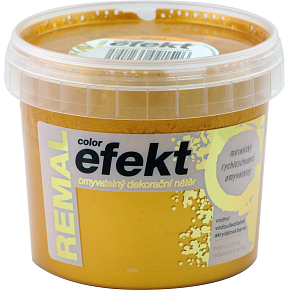
FavoriteCompareDecorative painting color with a metallic and pearlescent appearance for decorating modern designs using various painting techniques, e.g., painting with a brush or roller, spraying, dabbing with a sponge, and using painting stencils.

Code:
2504702
41.37 EUR
10.34EUR/1kg
In stock
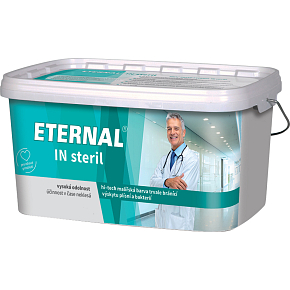
FavoriteComparePaint that permanently prevents the occurrence of mold and bacteria. For the prevention and suppression of biotic attacks on interior walls by mold, bacteria, and other microorganisms.
Code:
2500310
2.19 EUR
2.19EUR/1kg
In stock
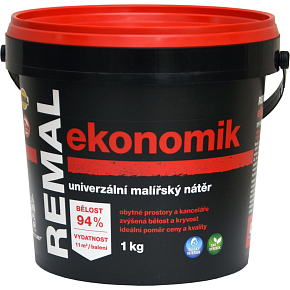
FavoriteCompareDispersion, velvet matte, whiteness 94 %. Paint with optically improved whiteness, opacity, and high vapor permeability. Used for painting plaster, concrete, drywall, cetris boards, chipboard, and renovation plasters in interiors. Made from natural ingredients.
Code:
2505254
14.97 EUR
2.5EUR/1kg
In stock
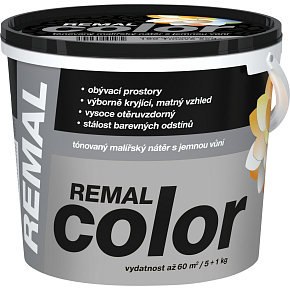
FavoriteCompareWater-dilutable toned paint with a pleasant scent in attractive shades.
Code:
2505262
7.50 EUR
18.75EUR/1kg
In stock
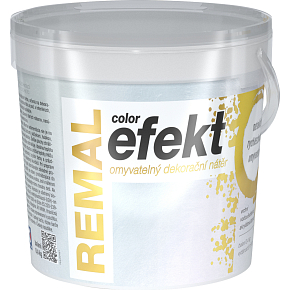
FavoriteCompareDecorative painting color with a metallic and pearlescent appearance for decorating modern designs using various painting techniques such as painting with a brush or roller, spraying, sponging, and using painting stencils.

Code:
2503515
10.51 EUR
2.63EUR/1kg
In stock
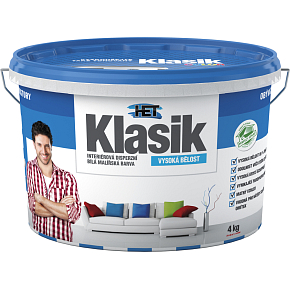
FavoriteCompareHet Klasik abrasion-resistant paint, interior dispersion high white color. Recommended for living and commercial spaces, children's rooms, hallways, offices, sales areas.
Code:
2500883
9.52 EUR
1.27EUR/1kg
In stock
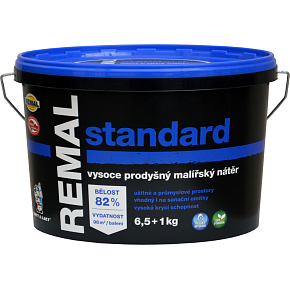
FavoriteCompareRemal Standard, highly breathable painting coating. It is recommended for coatings of utility and industrial areas. It is used for painting walls and ceilings indoors on plaster, drywall, and other substrates.

AKCE
Code:
2504785
17.66 EUR
5.52EUR/1kg
In stock
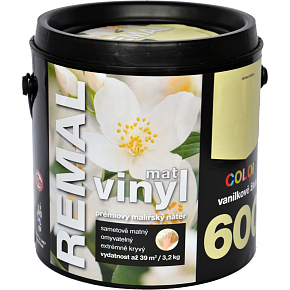
FavoriteCompareWashable wall paint with a velvety matte appearance, excellent coverage, and abrasion resistance. Washable paint for painting walls and ceilings in interiors on plaster, drywall, and other substrates.
Code:
2505303
11.15 EUR
2.79EUR/1kg
In stock
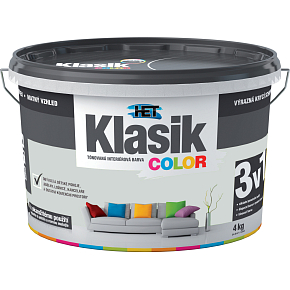
FavoriteCompareFor interior coatings of walls and ceilings, significant coverage and spreadability, matte appearance, resistance to dry abrasion, excellent vapor permeability.
Code:
2500316
7.61 EUR
1.9EUR/1kg
In stock
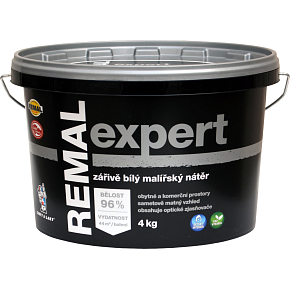
FavoriteComparePremium wall and ceiling paint, dispersion, tintable, vapor-permeable, velvet matte, whiteness 96%. The bright white wall paint is recommended for coatings of residential and commercial spaces.
Variants of this product

Code:
2502882
3.32 EUR
4.43EUR/1kg
In stock
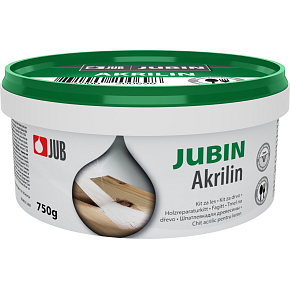
FavoriteCompareDesigned for high-quality repairs of surface defects (cracks, scratches, depressions, and grooves) in solid wood, veneered or non-veneered particle boards, etc. before their final surface treatment.
Code:
2502800
16 EUR
3.2EUR/1l
In stock
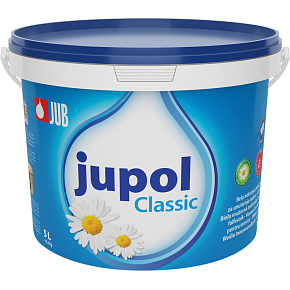
FavoriteCompareWater vapor permeable paint. Interior water-based paint. It features high water vapor permeability – it is also suitable for restoration systems. It has high whiteness, high coverage, is easy to apply, and is abrasion resistant.
Code:
2502883
3.32 EUR
4.43EUR/1kg
In stock
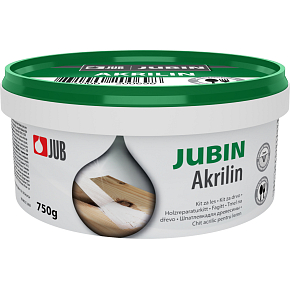
FavoriteCompareDesigned for high-quality repairs of surface defects (cracks, scratches, depressions, and grooves) in solid wood, veneered or non-veneered chipboard, etc., before their final surface treatment.
Code:
2503093
19.43 EUR
3.89EUR/1l
In stock
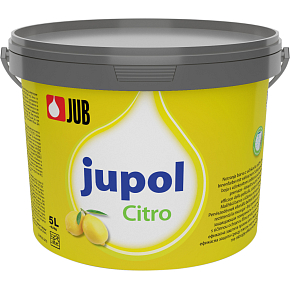
FavoriteCompareIt has a pleasant citrus scent, high whiteness, high opacity, high vapor permeability, is easy to apply, and is abrasion-resistant. The paint has an exceptionally low content of volatile organic compounds (VOC < 1 g/l) – it is safe for human health and the environment.
Code:
2503381
3.86 EUR
1.93EUR/1kg
In stock
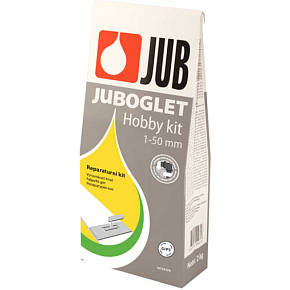
FavoriteCompareHOBI KIT is suitable for all types of plasters, unplastered concrete, brick and aerated concrete masonry, and other constructions.
Code:
2506307
4.39 EUR
2.2EUR/1kg
In stock
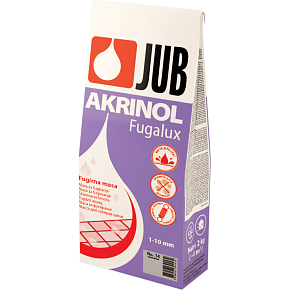
FavoriteCompareHigh-quality grout for indoor and outdoor use.
Code:
2503045
18.97 EUR
1.9EUR/1l
In stock
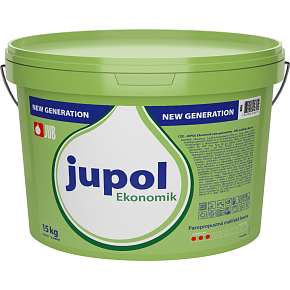
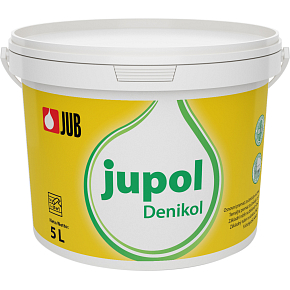
FavoriteCompareInterior water-based paint. Characterized by a very favorable price. It has high whiteness, high opacity, high vapor permeability, is easy to apply, and is abrasion-resistant.
Code:
2502884
3.32 EUR
4.43EUR/1kg
In stock
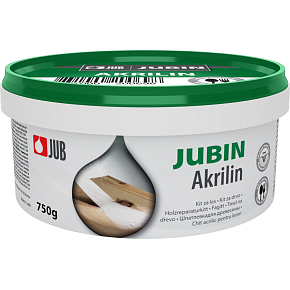
FavoriteCompareDesigned for quality repairs of surface defects (cracks, scratches, depressions, and grooves) in solid wood, veneered or non-veneered particle boards, etc., before their final surface treatment.
Code:
2503094
33.20 EUR
3.32EUR/1l
In stock
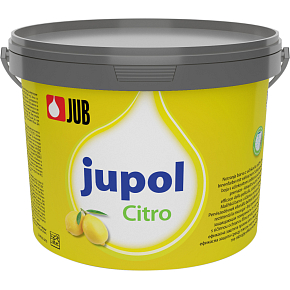
FavoriteCompareIt has a pleasant lemon scent, high whiteness, high hiding power, high vapor permeability, is easy to apply, and is abrasion-resistant. The paint has an exceptionally low content of volatile organic compounds (VOC < 1 g/l) – it is safe for human health and the environment.
Code:
2502803
12.25 EUR
2.45EUR/1l
In stock
FavoriteCompareAgent for isolating stains caused by water-soluble substances, such as nicotine, soot, seepage stains, grease residues, etc.
Code:
2502908
4.46 EUR
1.49EUR/1kg
In stock
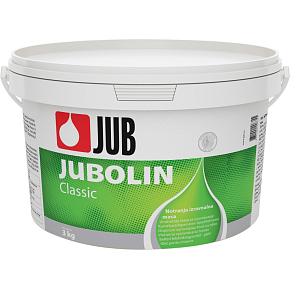
FavoriteComparePaste-like putty intended for fine leveling of interior wall and ceiling surfaces.
Code:
2503702
12.25 EUR
2.45EUR/1l
In stock
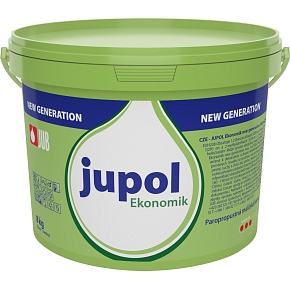
FavoriteCompareInterior water-based paint. It features a very favorable price. It has high whiteness, high coverage, high vapor permeability, is easy to apply, and is abrasion-resistant.
Recently visited products